■ Why Gels, Greases, and Phase Change Materials Are Needed
In thermal management, high-performance materials such as copper, aluminum, graphite, and ceramics attract attention.
However, no matter how high-performance a material is, heat will not flow if it is not in close contact with the heat-generating component.
In particular, in
● GPUs
● CPUs
● Power semiconductors
● EV batteries
● Power supply components
● Communication equipment
● AI servers
fine gaps form between heat-generating components and heat-dissipating components.
Soft TIMs are used to fill these gaps.
In other words, gels, greases, and phase change materials are materials for conducting heat and, at the same time, materials that create a contact state through which heat flows.
■ What Is Grease?
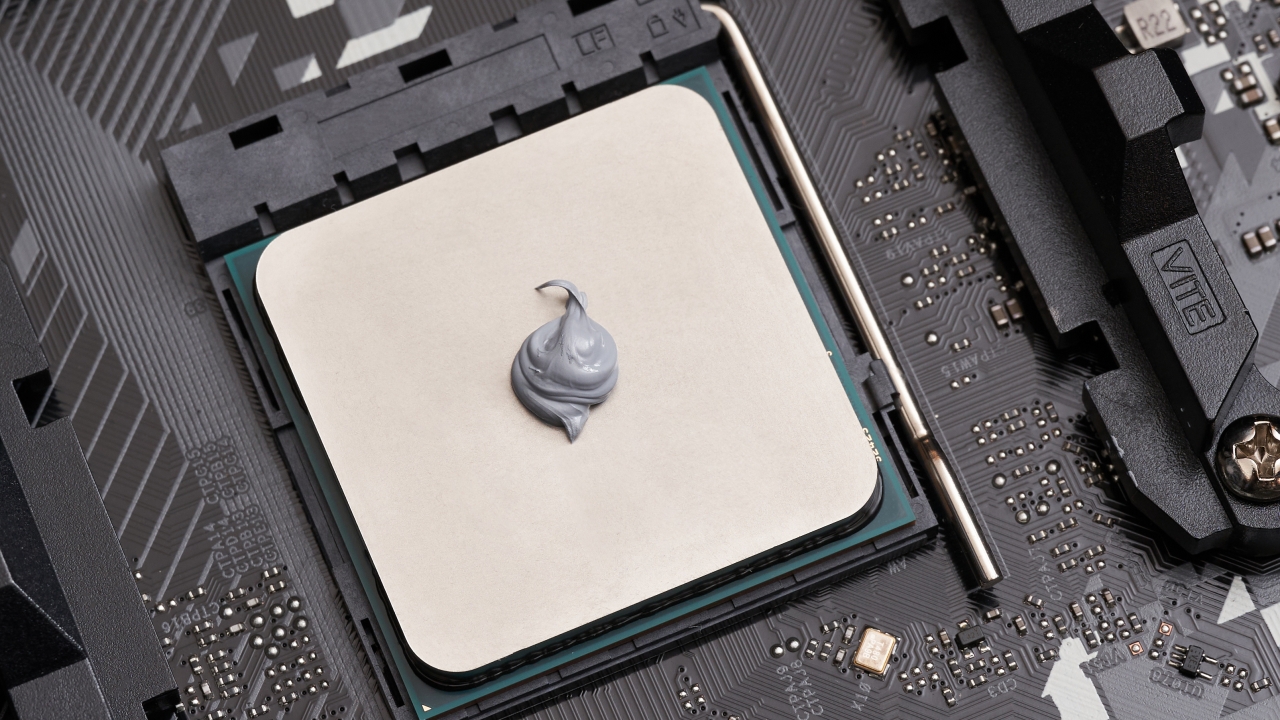
Thermal grease is a paste-type TIM.
It is a material often used for heat dissipation in CPUs and GPUs, applied between the heat-generating component and the heat sink.
The characteristic of grease is
that it is soft and easily penetrates fine gaps.
It penetrates the irregularities on component surfaces and reduces air layers.
As a result, it easily lowers contact thermal resistance.
■ Advantages of Grease
The main advantages of grease are as follows.
● High conformability to irregularities
● Easily lowers contact thermal resistance
● Easy to apply thinly
● Easy to use with high-heat components
● Easy to achieve initial performance
Especially in applications where components can be fixed with strong pressure, such as GPUs and CPUs, grease can be effective.
■ Points to Note About Grease
On the other hand, grease also has challenges.
● Controlling the amount applied is difficult
● Squeeze-out occurs
● Pump-out can occur
● It may dry out and harden over time
● Work variation tends to occur
● It can be difficult to control in automated processes
Especially in volume production,
how much to apply
where to apply it
whether it is applied uniformly are important.
Grease is high-performance, but it is also a material whose process control is difficult.
■ What Is Pump-Out?
A common problem with grease is pump-out.
Pump-out is a phenomenon in which grease is pushed out of the interface due to temperature changes, vibration, and differences in thermal expansion.
Even if it cools well in its initial state, the grease can move during long-term use and the contact state can deteriorate.
Then thermal resistance increases and the temperature rises.
In other words, with grease, not only initial performance but also long-term reliability is important.
■ What Is Gel?
Thermally conductive gel is a TIM that is soft and deforms easily.
It is sometimes used as an intermediate material that retains its shape better than grease and is softer than sheets.
Gel is suited to applications that fill steps and gaps between components.
In particular, it is sometimes used in
● Power supply components
● Automotive equipment
● Around EV batteries
● Communication equipment
● Inside AI servers
■ Advantages of Gel
The main advantages of gel are as follows.
● High step absorption
● Soft and easy to conform
● Easy to distribute pressure
● Easy to fill gaps
● Easy to reduce stress on components
When there are irregularities or steps that hard materials have difficulty adhering to, gel can be an effective option.
■ Points to Note About Gel
On the other hand, gel also has challenges.
● Thermal resistance increases when it is thick
● Care is needed regarding shape retention
● It can be difficult to handle
● There is a risk of squeeze-out and contamination
● Supply by automated machines can be difficult
● Its properties may change under long-term compression
Gel is not a simple material that is good just because it is soft.
The balance among softness and thermal resistance, workability, and long-term stability is important.
■ What Is a Phase Change Material?
A phase change material is a TIM whose state changes with temperature.
In English, it is called PCM, or Phase Change Material.
Above a certain temperature, it softens and conforms between the heat-generating component and the heat-dissipating component.
When cold, it is close to a solid; when heated, it softens and fills the interface.
In other words, a phase change material is
a TIM that conforms at the temperature at which it is used.
■ Advantages of Phase Change Materials
The main advantages of phase change materials are as follows.
● Easy to handle initially
● Easily conforms to the interface when heated
● Can be easier to control in application than grease
● Can sometimes be processed into sheet form
● Easily lowers contact thermal resistance
They are considered especially when you want to achieve both workability during assembly and close contact during use.
■ Points to Note About Phase Change Materials
Phase change materials also have points to note.
● Setting the phase change temperature is important
● Performance is hard to achieve if it does not match the operating temperature range
● Properties may change with repeated thermal history
● Squeeze-out or migration can occur
● Care may be needed regarding storage conditions
In other words, with phase change materials,
at what temperature it softens
in what temperature range it is used are important.
■ The Differences Among Gels, Greases, and Phase Change Materials
All three materials are materials that make the interface conform.
However, their characteristics differ.
Grease easily penetrates fine irregularities.
Gel easily absorbs steps and gaps.
Phase change materials soften at the operating temperature and conform to the interface.
In other words,
grease is characterized by its applicability
gel by its conformability
phase change materials by their temperature responsiveness.
They must be used selectively depending on the application.
■ They Cannot Be Compared by Thermal Conductivity Alone
When comparing gels, greases, and phase change materials, looking only at thermal conductivity can lead to wrong judgments.
For example, even with high thermal conductivity, if
● It is thick
● It does not adhere closely
● Air bubbles get in
● It degrades over time
● It squeezes out
● It is not suited to automation
actual performance will not be achieved.
Conversely, a material with slightly lower thermal conductivity that adheres well and can be used thinly and stably may cool better.
In other words, what matters is
not catalog specifications, but the thermal resistance after mounting.
■ Applications in AI Servers
In AI servers, GPUs, CPUs, memory, power supply components, and so on are generating more and more heat.
That is why interface management between heat-generating components and cooling plates is extremely important.
Gels, greases, and phase change materials may be used in
● Close contact between GPUs and cooling components
● Step absorption around power supply components
● Forming heat paths between high-density components
● Making the interface with liquid cooling plates work
and so on.
Because continuous operation is a given in AI servers, not only initial performance but also long-term reliability is important.
■ Applications in EVs and ESS
In EVs and ESS, heat must be controlled between battery cells, cooling plates, enclosures, and power supply components.
Gels and gap fillers are used to fill gaps between components and release heat to cooling components.
However, in EVs and ESS,
● Vibration
● Thermal history
● Compression
● Long-term reliability
● Flame retardancy
● Electrical insulation
are also important.
In other words, in EVs and ESS, not only thermal performance but also safety and durability must be considered at the same time.
■ Applications in Smartphones and Wearables
In smartphones and wearable devices, space is limited.
That is why TIMs that are thin, light, and usable in narrow places are required.
Sheet-type materials and phase change materials may be easier to handle than grease.
In addition, because wearable devices are used close to people,
surface temperature
comfort
long-term use are also important.
■ The Researcher's Perspective: Soft TIMs Are Interface Control Materials
In research and development, the following kinds of performance are required of gels, greases, and phase change materials.
● Low thermal resistance
● High thermal conductivity
● Flexibility
● Compression conformability
● Long-term reliability
● Heat resistance
● Flame retardancy
● Low outgassing
● Electrical insulation
● Pump-out suppression
These materials are not just thermally conductive materials.
Essentially, they are materials that control the interface.
■ The Shop-Floor Perspective: The Softer the Material, the Harder Process Control Becomes
On the shop floor, the softer a TIM is, the more difficult it can be to handle.
For example, problems arise such as
● Deforming
● Stretching
● Tearing
● Sticking
● Squeezing out
● Shifting position
● Being difficult to transport with automated machines
In other words, with soft TIMs,
not only material performance,
but also how they are handled in the process is extremely important.
■ Problems That Tend to Occur in Volume Production
In volume production of gels, greases, and phase change materials, the following kinds of problems can occur.
● Variation in the amount applied
● Air bubble entrapment
● Positional misalignment
● Squeeze-out
● Uneven thickness
● Deformation during transport
● Poor compatibility with release liners
● Shape changes during storage
● Changes in properties due to thermal history
● Instability during supply to automated machines
These affect not only thermal performance but also ease of assembly, yield, and reliability.
In other words, the softer the TIM, the more important bringing it into volume production processes becomes.
■ OTIS's Perspective
OTIS is not a materials manufacturer that develops gels, greases, or phase change materials themselves.
However, we may be able to contribute in the area of making these materials into a form that can be used in volume production processes.
What matters from OTIS’s perspective is
● Processing sheet-type materials into the intended shapes
● Die-cutting phase change materials
● Laminating with adhesive and insulating materials
● Designing release liner configurations
● Making them into a form that is easy to supply in automated processes
● Supporting reel supply
● Suppressing variation in volume production
● Shape processing of alternatives to each of them
Soft TIMs do not work on material performance alone.
How to make them into a form that can be handled is important.
■ What OTIS Can Do
At OTIS, through
● Processing of thermally conductive sheets
● Evaluating the processing of phase change materials
● Evaluating the processing of gel sheet-type materials
● High-precision die-cutting
● High-precision lamination
● Lamination with adhesive materials
● Stacking with insulating materials
● Irregular-shape processing
● Reel supply
● Designing supply formats for automated processes
● Improving customers’ yield
and more, we may be able to contribute to bringing soft TIMs closer to a state in which they are easy to use in volume production.
Especially in AI servers, EVs, ESS, smartphones, and wearable devices, not only material performance but also stability during mounting is important.
■ Outside OTIS's Expertise
On the other hand, OTIS is not a company that specializes in
● Development of gel materials themselves
● Grease formulation design
● Formulation design of phase change materials
● Filler development
● Resin design
● Dedicated thermal simulation analysis
● Cooling equipment design
However, in the area of making soft TIMs into a form that can be used in volume production processes,
we may be able to play an important role.
■ Industries Where This Technology Will Be Important
★★★★★ AI servers
★★★★★ GPUs and semiconductors
★★★★★ EVs and batteries
★★★★★ ESS and energy storage systems
★★★★☆ Smartphones
★★★★☆ Wearable devices
★★★★☆ Communication equipment
■ Summary
Gels, greases, and phase change materials are materials for “conforming to the interface”
Gels, greases, and phase change materials are extremely important TIMs in thermal management.
Their essence is not only high thermal conductivity.
The essence is to conform between heat-generating components and heat-dissipating components, reduce air layers, and lower contact thermal resistance.
Grease easily penetrates fine gaps.
Gel easily conforms to steps and tolerances.
Phase change materials soften at the operating temperature and easily conform to the interface.
However, the softer the material, the more difficult it is to handle in volume production processes.
That is precisely why, not only material selection, but also
in what shape to use them
how to apply them
how to supply them
whether contact can be maintained over the long term must be considered.
It is not enough for thermal management materials to be excellent as materials.
Only when they take a form that can be used correctly in volume production processes do they function as thermal management.
Column Supervisor: Koji Kakumoto (President, OTIS Co., Ltd.)
After studying abroad and working in planning and development at a trading company, he joined OTIS Co., Ltd. in 2011. While primarily working in the Corporate Planning Department, he has also served concurrently in manufacturing and technical divisions, and since 2018 has served as President, working to drive business growth and strengthen the organization.
This article is a general technical explanation intended for educational purposes and does not refer to any specific company, product, or technology.