■ Each Thermal Management Material Has a Different Role
Lumping thermal management materials together makes it easy to lose sight of the essence.
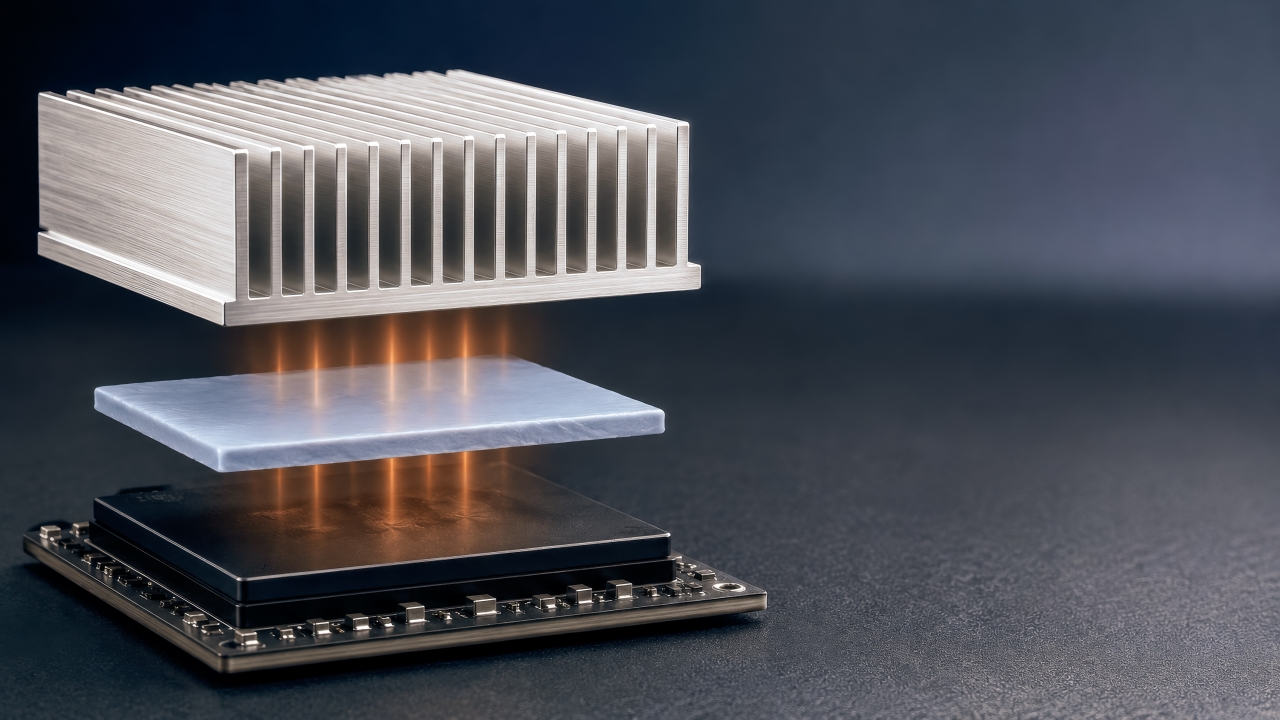
For example, TIM mainly connects interfaces.
Graphite spreads heat in the in-plane direction.
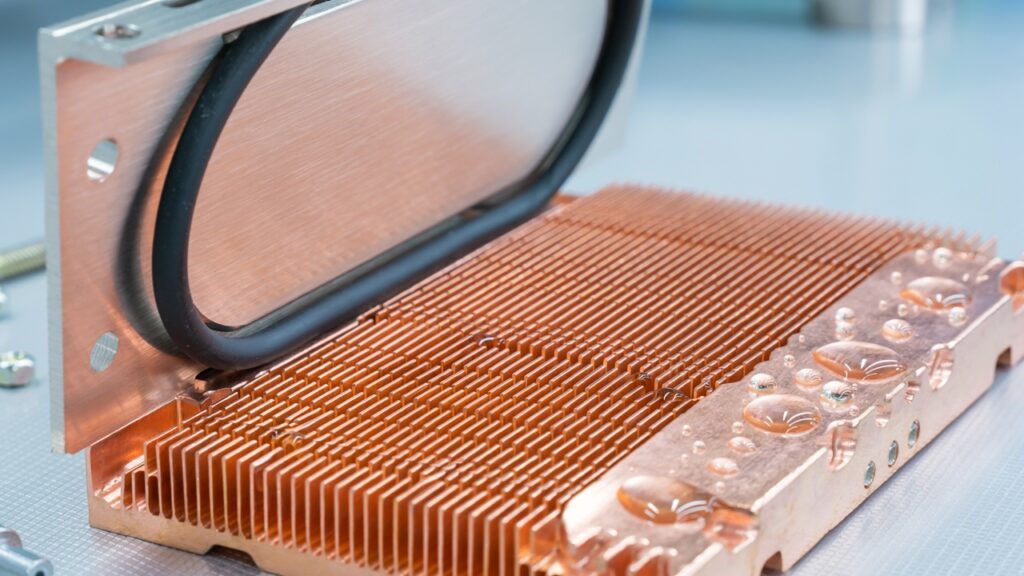
Copper foil and aluminum foil carry heat while also providing other functions such as EMI.
Insulating thermally conductive materials pass heat while stopping electricity.
Thermal insulation materials, conversely, make heat harder to pass.
In other words, within the single category of
“thermal management materials,”
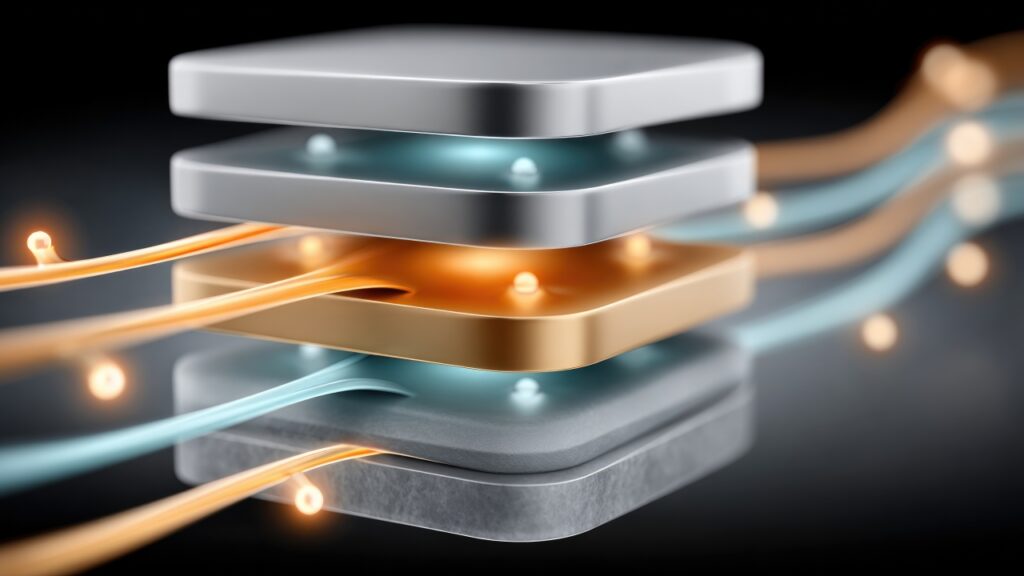
there are materials that pass heat, materials that spread heat, and materials that stop heat.
What matters is to think in terms of roles, not material names.
■ TIM Is Not Just "a Material That Conducts Heat"
The role of TIM is not simply thermal conduction.
The surfaces of the heat source and cooling component have fine irregularities.
TIM fills those irregularities.
It increases contact area.
It reduces air layers.
In other words, TIM is
a thermally conductive material and at the same time a material that establishes the interface.
That is why in TIM processing, one cannot look only at thermal conductivity.
Thickness,
softness,
compressibility,
tackiness,
and shape
must also be considered.
■ TIM Is Difficult to Process Precisely Because It Is Soft
Highly conformable TIM is soft.
This is thermally advantageous.
But it makes processing difficult.
It is die-cut.
It is pressed.
It deforms.
The blade is withdrawn.
It springs back.
That is why it sometimes does not come out exactly matching the die shape.
Furthermore, it also deforms during
peeling,
suction,
and transport.
In other words, TIM processing requires not only cutting accuracy but the technology to anticipate deformation before and after processing.
■ TIM Thickness Is Very Important
Too thick.
Thermal resistance increases.
Too thin.
It cannot absorb steps.
Part of it lifts.
In other words, with TIM,
the thinnest material
is not necessarily optimal.
What is needed is the appropriate thickness that takes into account even the warping, steps and pressure of the mating parts.
The processing company does not decide the material thickness, but there is meaning in processing with an understanding of the mounting conditions.
■ TIM Shape Changes Thermal Performance
The TIM is smaller than the heat-generating surface.
It cannot cover the entire heat source.
Conversely, it is too large.
It interferes with surrounding components.
Or it lets heat flow to unnecessary places.
In other words, the outer shape of TIM is not just a dimension.
It is a shape that determines the area through which heat enters.
■ Graphite Is a Material That "Releases Heat Sideways"
Graphite sheets are sometimes used to spread heat in the in-plane direction.
For example,
releasing heat from a semiconductor
to the enclosure,
the frame,
or a wide metal surface.
In this case, graphite plays a role like wiring for heat.
That is why in processing,
where to take heat from,
where to carry heat to,
and what to avoid
are important.
In other words, graphite processing can also be called processing that gives the heat path a shape.
■ Graphite Is High-Performance but Hard to Handle
Depending on the material, graphite has characteristics such as being
brittle,
easy to chip,
shedding powder,
and being conductive.
That is why it is sometimes used in combination with
protective film,
insulating film,
and adhesive.
In other words, in actual products,
value emerges from processing it not as graphite alone,
but as a composite component centered on graphite.
■ Graphite Edges Are Also a Design Target
Edges are exposed.
Conductive parts are close by.
Powder is shed.
To avoid such problems,
covering edges with film,
insulating only the perimeter,
and exposing only the necessary parts
are sometimes done.
In other words, rather than making the entire surface the same state,
processing that differentiates roles within the surface
is important.
■ Copper Foil Relates to Both Heat and Electricity
Copper has high thermal conductivity.
That is why it can be used for heat spreading and heat transport.
On the other hand, it also conducts electricity.
It can also be used as an EMI shield.
In other words, copper foil relates to multiple functions:
heat,
electricity,
and EMI.
While this is a major advantage,
errors in insulation design lead to short circuits and noise.
In other words, in copper foil processing,
it is necessary to be aware not only of heat but also of electrical placement.
■ The Thinner the Copper Foil, the More Important Processing Quality Becomes
Thin copper foil is light and flexible.
However,
burrs,
edge curling,
warping,
and folding
are more likely to occur.
Especially when combined with insulating film,
small burrs may damage the insulating material.
In other words, in metal foil processing,
outer shape accuracy + edge quality
are important.
■ Aluminum Foil Is Well Suited to Weight Reduction
Aluminum is lighter than copper.
That is why it is a strong option for applications with strict weight constraints.
On the other hand, it is necessary to consider
the required thermal performance,
conductivity,
surface treatment,
adhesion,
and so on.
In other words, copper or aluminum is not decided by a simple comparison of thermal conductivity.
It must be chosen based on
the balance of heat, weight, electricity and cost.
■ Insulating Thermally Conductive Materials "Pass Heat and Stop Electricity"
In
power semiconductors,
inverters,
power supplies,
and around batteries,
there is the requirement:
we want to release heat,
but we do not want electricity to flow.
That is where insulating thermally conductive sheets and the like are used.
In this case,
thickness,
dielectric strength,
thermal resistance,
and compressibility
are important at the same time.
In other words, in processing thermal management materials, it is not possible to maximize only one performance aspect.
■ Processing Quality of Insulating Materials Connects to Safety
Even if the insulating material itself has high withstand voltage performance,
if it is scratched during processing,
a metal burr pierces it,
the edge chips,
or the position shifts,
performance drops in the product.
In other words, it is necessary to think of the insulation performance of the material and the insulation performance after processing as separate things.
■ Thermal Insulation Materials Are Also Thermal Management Materials
Thermal management tends to bring to mind only releasing heat.
However, in
battery thermal runaway,
heat transfer to the human body,
and thermal interference with adjacent components,
stopping heat is also important.
In other words, thermal insulation materials are also a type of thermal management material.
By appropriately using thermally conductive materials and thermal insulation materials, it is possible to design where heat flows and where it does not.
■ Using Heat Dissipation and Thermal Insulation Differently Within a Single Product
Take a battery, for example.
During normal operation, we want to release heat from the cells to the cooling plate.
But during abnormal heat generation, we do not want heat to spread to the adjacent cell.
In other words, a structure of
heat dissipation below the cells
and thermal insulation between cells
can be considered.
In this way, in thermal management, rather than solving with one type of material,
using multiple materials differently by location is important.
■ Adhesive Is Not a Material "Just for Fixing"
Adhesive is sometimes used to fix thermal management materials to products.
But adding adhesive may
increase thickness,
increase thermal resistance,
and change the contact state.
In other words, adhesive can be
a plus for fixing
and a minus for heat.
That is why
full-surface adhesion,
partial adhesion,
and temporary fixing
are used selectively.
■ Adhesive Placement Changes the Heat Path
For example, adhesive is applied to the entire surface of graphite.
Fixing is easy.
But an adhesive layer comes between it and the heat source.
On the other hand, a structure with adhesive only on the perimeter and direct contact in the center may reduce thermal resistance.
In other words, where to place the adhesive is also thermal design.
■ Seal Materials Are Not Unrelated to Heat Either
In
outdoor equipment,
batteries,
robots,
and power supplies,
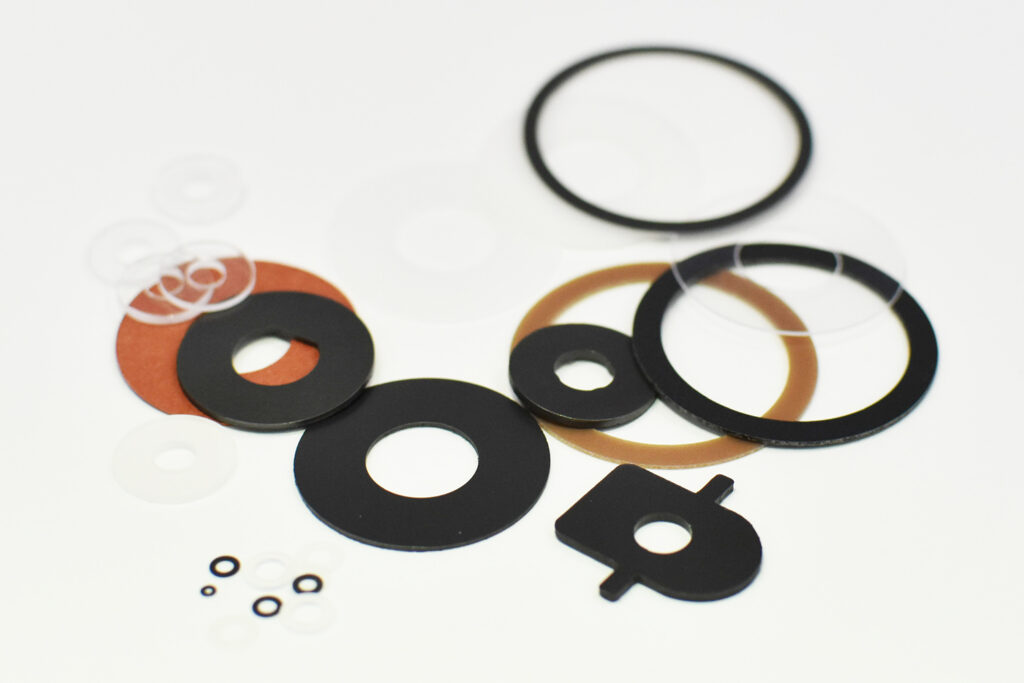
seal materials are used for waterproofing and dustproofing.
But sealing traps heat.
Also, if seal materials enter the heat path, heat may flow less easily.
In other words,
heat,
waterproofing,
and sealing
must also be considered simultaneously.
■ Foams Can Also Be Used for Step Absorption and Pressure Adjustment
Foams are used as
cushioning,
seals,
spacers,
and for pressure adjustment.
Near thermal management components, they may have roles such as
applying appropriate pressure to TIM,
absorbing vibration,
and filling gaps.
In other words, thermal management is not complete with TIM and graphite alone.
Surrounding mechanical components also support the thermal interface.
■ Summary of Part 1: "Thermal Management Materials" Include Materials with Opposite Roles
Lumping thermal management materials together loses sight of the essence.
TIM connects interfaces.
Graphite spreads heat sideways.
Copper foil and aluminum foil carry heat while also being involved in EMI.
Insulating thermally conductive materials pass heat while stopping electricity.
Thermal insulation materials do not pass heat.
In other words, within one category,
materials that pass heat, spread it and stop it coexist.
That is why in batteries,
the differentiated use of heat dissipation below the cells and thermal insulation between cells is established.
And every material changes its properties through processing.
Soft TIM escapes in front of the blade and springs back when cut.
Graphite chips, sheds powder, and its edges conduct.
With thin copper foil, burrs damage the insulating material.
With insulating materials, the withstand voltage of the material and the withstand voltage after processing become different things.
Adhesive is a plus for fixing but a minus for heat.
In other words,
material performance and component performance after processing are not the same.
And thermal management is not complete with TIM and graphite alone.
Adhesives, seal materials and foams also support the thermal interface.
In Part 2, we look at how to combine them
and how to turn them into volume production components.
Column Supervisor: Koji Kakumoto (President, OTIS Co., Ltd.)
After studying abroad and working in planning and development at a trading company, he joined OTIS Co., Ltd. in 2011. While primarily working in the Corporate Planning Department, he has also served concurrently in manufacturing and technical divisions, and since 2018 has served as President, working to drive business growth and strengthen the organization.
This article is a general technical explanation intended for educational purposes and does not refer to any specific company, product, or technology.