【1】Introduction
Logic circuits form the foundational technology behind a computer’s “thinking.” By processing combinations of 0s and 1s, they perform computation and decision-making, ultimately enabling the operation of high-performance processors such as the CPU (Central Processing Unit) and the GPU (Graphics Processing Unit).
CPUs and GPUs are built from an enormous number of MOSFETs — ranging from billions to hundreds of billions — all of which operate through combinations of logic circuits.
【2】What Is a Logic Circuit?
A logic circuit is a circuit that processes 0 (LOW) and 1 (HIGH) signals to perform logical decisions.
Logic circuits fall into two broad categories:
2-1. Combinational Logic
Circuits whose output is determined entirely by the current input. Representative examples include:
・AND
・OR
・NOT
・NAND / NOR (the basic building blocks of CMOS circuits)
・XOR
・Adders
・Multiplexers (MUX)
Applications: Computation, signal switching, address calculation, and more.
2-2. Sequential Logic
Circuits that retain a memory of past states. Representative examples include:
・Flip-flops
・Counters
・Registers (for holding data)
・State machines (control circuits)
Applications: CPU registers, control units, pipelines, and more.
【3】Overview of CPU Structure
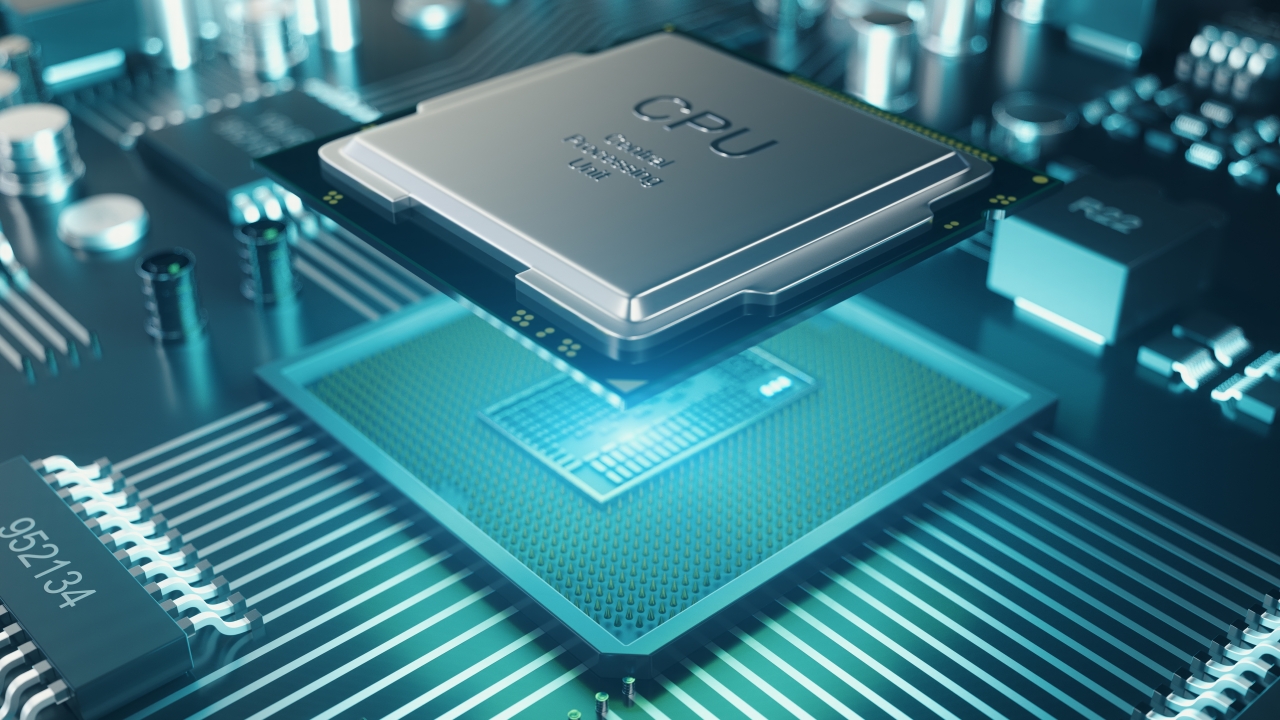
A CPU can be thought of as an optimized collection of logic circuits designed for general-purpose computation. Its internal structure can be broken down into several key blocks.
3-1. ALU (Arithmetic Logic Unit)
・Handles basic operations such as addition, subtraction, AND/OR/XOR, and bit shifting.
・Built from combinational logic and executes operations within a single clock cycle.
・Functions as the CPU’s “math department.”
3-2. Registers
・Ultra-high-speed memory located inside the CPU.
・Holds data currently being calculated, addresses, and temporary results.
・Consists of roughly 10 to 100 high-speed storage elements built on an SRAM structure.
3-3. Control Unit
・Reads instructions and issues directives to the ALU and registers.
・Built from sequential logic in the form of a state machine.
・Serves as the CPU’s “command center.”
3-4. Cache (L1/L2/L3)>
・Ultra-high-speed memory built from SRAM.
・Acts as a buffer to bridge the speed gap between the CPU and DRAM.
・Prefetches and holds data to improve processing efficiency.
3-5. Pipeline
・Divides processing into stages that execute in parallel.
・A technique for processing instructions at high speed.
・Example: IF → ID → EX → MEM → WB (fetch, decode, execute, memory access, write-back)
3-6. Multi-core structure
・Multiple CPU cores mounted on a single chip.
・Improves performance through parallel processing.
・Smartphones typically use around 8 cores; servers may use 32 to 128 cores or more.
【4】Overview of GPU Structure
A GPU is a processor specialized for processing massive amounts of data all at once. Its strength in image processing and AI workloads comes from its overwhelmingly parallel architecture.
4-1. Streaming Multiprocessors (SM / CU)
The computational units inside a GPU (called SMs by NVIDIA and CUs by AMD). A single SM contains dozens to hundreds of small computational units (ALUs). This large number of computational units is what enables highly parallel processing.
4-2. SIMD / SIMT Architecture
・Applies the same instruction to many pieces of data simultaneously.
・Extremely effective for matrix operations and image processing.
・Also well suited to the basic computations underlying AI and deep learning.
4-3. Global Memory and Shared Memory
・GPUs use their own dedicated memory architecture.
・High-bandwidth memory types such as GDDR6 and HBM are used.
・Shared memory acts as a high-speed buffer within each SM.
For GPUs, memory bandwidth is truly the lifeblood of performance.
【5】CPU vs. GPU: Key Differences
Here is a simple comparison of the two:
CPU
・A small number of high-performance cores
・Fast single-thread performance
・Strong at branching and control logic
・Suited to general-purpose processing
GPU
・Thousands to tens of thousands of small cores
・High parallel performance
・Strong at matrix computation, image processing, and AI
・A specialized processor
In short, it helps to think of the CPU as the command center and the GPU as a massive army of workers.
【6】From Logic Circuits to CPUs and GPUs
CPUs and GPUs are, at their core, enormous collections of logic circuits, built up through the following stages:
1.Transistors (MOSFETs)
2.Logic gates (NAND, NOR, and so on)
3.Combinational and sequential circuits
4.ALUs, registers, and control circuits
5.Large-scale CPU/GPU structures
6.Integration into an SoC (combining CPU, GPU, memory, and communications)
Everything ultimately runs on layer upon layer of logical operations built from 0s and 1s.
【7】Future Directions for CPU/GPU Evolution
・Chiplet architectures (adopted by AMD, Intel, and TSMC)
・3D stacking (vertically integrating CPU and cache using TSV technology)
・Dedicated AI circuits (Tensor cores, NPUs)
・Optical interconnects (addressing wiring bottlenecks)
・The rise of RISC-V (an open processor architecture)
In the future, it’s expected to become standard for CPUs, GPUs, and AI accelerators to work together as a unified trio.
【8】Summary
・Logic circuits are the smallest building blocks of digital electronic devices.
・CPUs use a small number of high-performance cores and excel at general-purpose processing.
・GPUs use thousands of small cores and excel overwhelmingly at parallel computation.
・Both are enormous logic-integrated systems built from billions of MOSFETs or more.
・Going forward, chiplet architectures, 3D structures, and AI-specialized designs are set to become the mainstream approach.
Comprehension Check
1.What is the difference between combinational logic and sequential logic?
2.Name three main components of a CPU.
3.Why are GPUs so well suited to AI workloads?
Column Supervisor: Koji Kakumoto (Otis Group Co., Ltd.)
After studying abroad and working in planning and development at a trading company, he joined Otis Group Co., Ltd. in 2011. While primarily working in the Corporate Planning Department, he has also served concurrently in manufacturing and technical divisions, and since 2018 has served as Representative Director, working to drive business growth and strengthen the organization.
This article is a general technical explanation intended for educational purposes and does not refer to any specific company, product, or technology.