【1】The Basic Flow of the Semiconductor Industry
The overall flow until a semiconductor becomes a product is as follows.
・Design
・Front-end process (Wafer Fabrication)
・Back-end process (Packaging / Test)
・Assembly
・Final product integration (Set Integration)
In a word, it is “design → manufacturing → assembly → productization,” but the reality is far more complex.
【2】Design
This is the brain of the semiconductor.
What is done here:
・Circuit design
・Logic design
・Layout design
・IP integration
・Power consumption optimization
Design-only companies (fabless) are the main players.
Examples:
・GPUs
・SoCs
・AI accelerators
・Mobile APs
It is even said that 80% of performance is determined here.
【3】Front-End Process
The process of physically forming the design data on a silicon wafer.
Main processes:
・Deposition
・Lithography
・Etch
・Ion implantation
・CMP (polishing)
Processing at the nanometer scale. This is handled by foundries.
【4】Back-End Process
The process of turning chips into products.
Content:
・Dicing (cutting)
・Mounting
・Interconnection
・Encapsulation
・Testing
Only here do they become “usable components.”
The main players are OSATs.
【5】Assembly
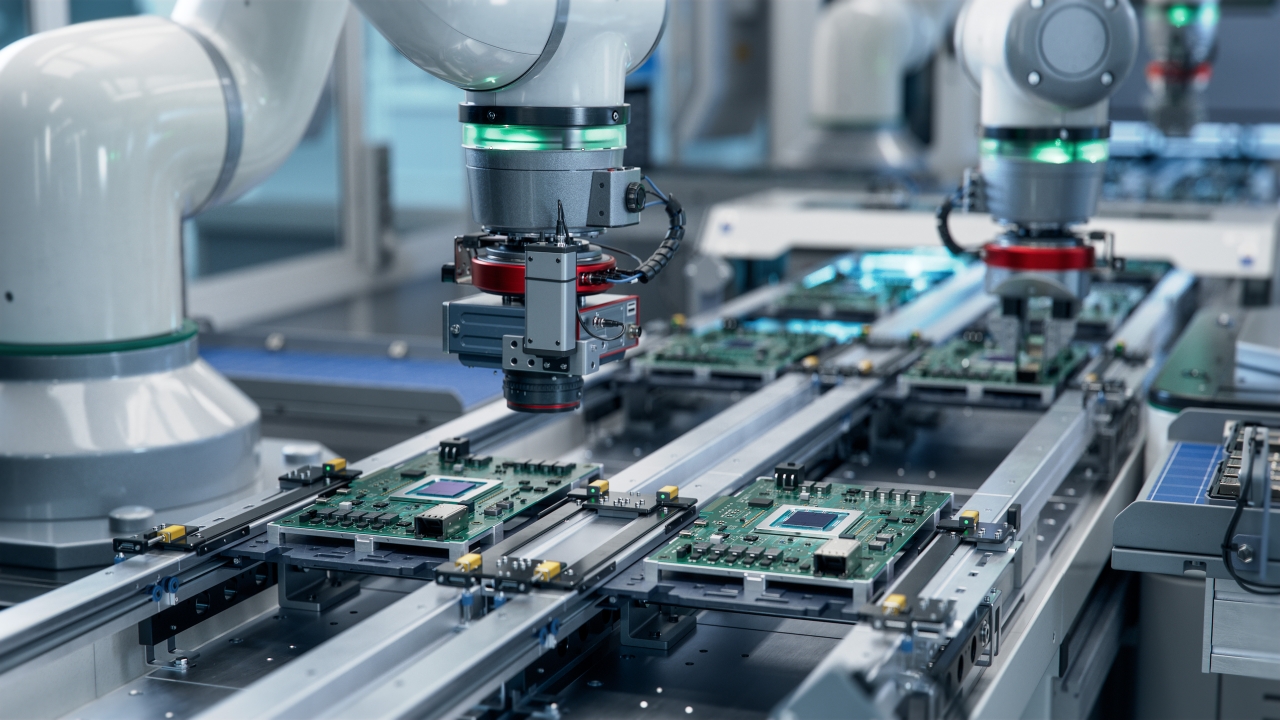
Mounting the package onto a board.
Process examples:
・Reflow
・Underfill
・Wire bonding
・Solder connection
Reliability design is required for each application, such as smartphones, automotive, and AI servers.
【6】Final Product Integration (Set Integration)
Only here does it become a final product.
Examples:
・Smartphones
・Automotive ECUs
・AI servers
・Base stations
A semiconductor alone is incomplete in terms of value.
It only creates value once it is incorporated into a system.
【7】What Is the Horizontal Division-of-Labor Model?
The current mainstream is horizontal division of labor.
Each company specializes in a role.
・Fabless → Design
・Foundry → Manufacturing
・OSAT → Back-end process
・Materials → Support
・Equipment → Technology supply
Reasons:
・Enormous capital investment
・High technical difficulty
・Fast development speed
Completing everything within a single company is unrealistic.
【8】The Distribution of Added Value
Added value is not evenly distributed.
High-value areas:
・Design
・Leading-edge manufacturing
・Advanced packaging
Middle:
・Substrates
・Materials
Low-margin areas:
・Mature-node manufacturing
・General-purpose assembly
Understanding the structure is directly linked to investment decisions.
【9】Why the Supply Chain Is Important
There are three reasons.
・Risk of supply disruption
・Competition for technological supremacy
・National security
Examples:
・Shortage of EUV equipment
・Shortage of ABF substrates
・Dependence on Taiwan
If one point stops, the whole stops.
【10】Recent Structural Changes
In recent years, the structure has been changing again.
Main changes:
・Revival of IDMs (Intel)
・Expansion of foundries
・Division of labor through chiplets
・Package-driven design
The structure is shifting from one centered on the front-end process to one centered on packaging.
【11】Summary
・The semiconductor industry is a horizontally divided industry
・Design → manufacturing → back-end process → assembly → product
・It is impossible for a single company to complete everything
・Added value is concentrated in design and leading-edge manufacturing
・The supply chain is national strategy itself
Comprehension Check
1.What is the biggest reason the semiconductor industry has become horizontally divided?
2.What is the difference between the roles of the front-end and back-end processes?
3.Why is it important to understand the supply chain as a whole?
Column Supervisor: Koji Kakumoto (President, OTIS Co., Ltd.)
After studying abroad and working in planning and development at a trading company, he joined OTIS Co., Ltd. in 2011. While primarily working in the Corporate Planning Department, he has also served concurrently in manufacturing and technical divisions, and since 2018 has served as President, working to drive business growth and strengthen the organization.
This article is a general technical explanation intended for educational purposes and does not refer to any specific company, product, or technology.