
【1】The Basic Structure of a Cleanroom
In a cleanroom, special air conditioning systems are used to maintain air cleanliness.
Particles are removed by HEPA filters and ULPA filters,
and “laminar flow,” in which air flows in one direction from top to bottom, is often adopted.
This prevents particles from lingering and maintains a constantly clean environment.
【2】Worker Protection
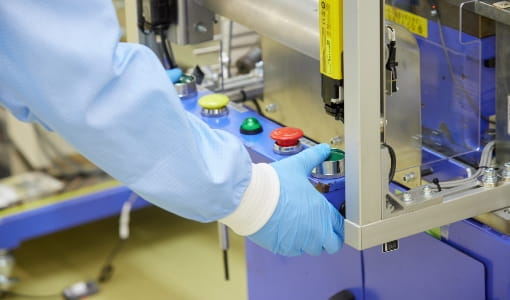
In a cleanroom, workers themselves can be a source of contamination, so they wear dedicated cleanroom suits.
The main equipment includes the following.
・Cleanroom suit
・Gloves
・Mask
・Hair cover
・Dedicated shoes
These not only suppress the generation of particles but also protect workers from chemicals and gases.
【3】Risks from Chemicals
Chemicals such as strong acids and strong alkalis are used in semiconductor manufacturing.
Examples include sulfuric acid, hydrofluoric acid, and hydrogen peroxide.
These are highly corrosive, and mishandling them can lead to serious accidents.
For this reason, safety equipment such as chemical supply units, leak detection systems, and emergency showers is installed.
【4】Safety Management of Specialty Gases
Flammable and toxic gases are also used in semiconductor manufacturing.
Examples include silane, ammonia, and fluorine-based gases.
These gases are managed through dedicated supply lines, and sensors that detect gas leaks and automatic shut-off devices are installed.
Gas management is a particularly important part of the safety design of a semiconductor factory.
【5】Fire and Explosion Risks
Because semiconductor manufacturing handles flammable gases and organic solvents, there is also a risk of fire and explosion.
For this reason, factories have introduced explosion-proof equipment, fire detection systems, gas exhaust units, and more.
It is important to take risks into account from the equipment design stage.
【6】Cleanroom Exhaust Systems
Because chemical gases and chemical vapors are generated, exhaust systems are important in cleanrooms.
Local exhaust systems and exhaust gas treatment units remove hazardous substances and limit emissions to the environment.
In this way, both worker safety and environmental protection are achieved.
【7】Safety Training and Work Procedures
Safety training for workers is thorough at semiconductor factories.
It covers chemical handling, gas management, emergency response, and more.
In addition, standard operating procedures (SOPs) are established to prevent accidents caused by work errors.
【8】Monitoring Systems
Safety monitoring systems at modern semiconductor factories are also becoming more sophisticated.
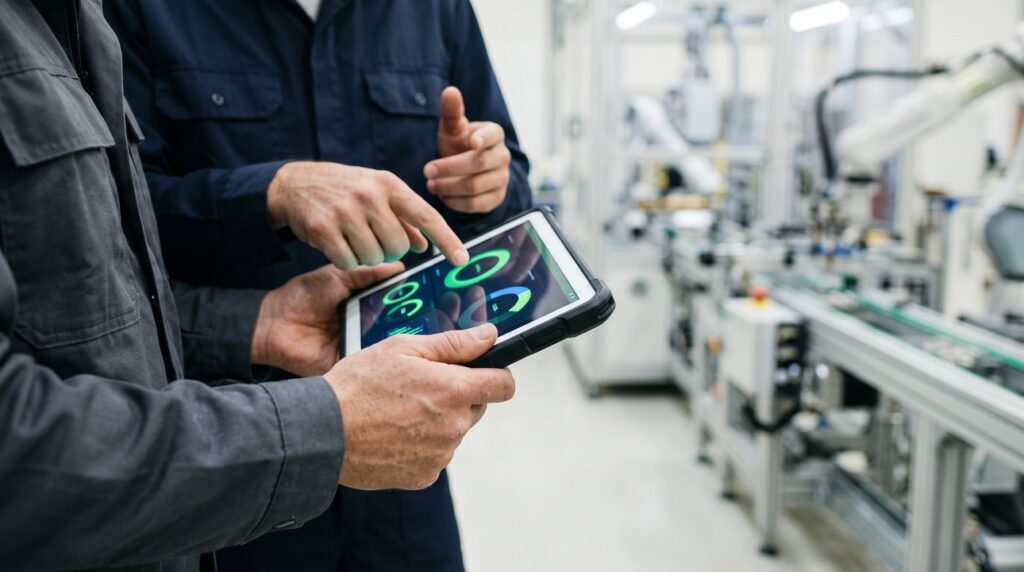
Gas concentration sensors, temperature sensors, equipment monitoring systems, and more are used to monitor abnormalities in real time.
When an abnormality is detected, equipment shutdowns and alarms are triggered automatically.
【9】Accident Response Systems
In preparation for the unlikely event of an accident, factories have emergency response systems in place.
Evacuation routes are secured, emergency stop devices and firefighting equipment are installed, and regular drills are conducted.
A rapid response prevents damage from spreading.
【10】The Importance of Safety Design
In semiconductor factories, safety management is not an afterthought; it is built in from the design stage.
Equipment design, building design, exhaust design, gas supply design, and more are integrated to reduce risk.
Safety design has become an element as important as manufacturing technology.
【11】Safety Culture
To maintain safety management, not only facilities but also a safety culture is important.
An environment in which workers can report hazards, a culture of sharing accidents, and continuous improvement activities lead to accident prevention.
Many semiconductor companies are putting effort into building a safety culture.
【12】Summary
・Semiconductor manufacturing takes place in cleanrooms
・Safety management of chemicals and specialty gases is important
・Measures against fire and explosion risks are necessary
・Exhaust systems and monitoring systems support safety
・Safety training and safety culture are important for accident prevention
Comprehension Check
1.What filters are used to maintain air cleanliness in a cleanroom?
2.What safety equipment is used in semiconductor factories to prevent gas leaks?
3.Why is safety culture important in semiconductor factories?
Column Supervisor: Koji Kakumoto (President, OTIS Co., Ltd.)
After studying abroad and working in planning and development at a trading company, he joined OTIS Co., Ltd. in 2011. While primarily working in the Corporate Planning Department, he has also served concurrently in manufacturing and technical divisions, and since 2018 has served as President, working to drive business growth and strengthen the organization.
This article is a general technical explanation intended for educational purposes and does not refer to any specific company, product, or technology.