■ The World Talks Too Much About Thermal Conductivity
In thermal management, attention often goes to things like
● Thermal conductivity of ○ W/mK
● High heat dissipation materials
● Next-generation TIM
Of course, these are important.
On the actual shop floor, however, using a good material but it does not cool happens all the time.
Why?
■ Heat Does Not Flow Only Through Materials
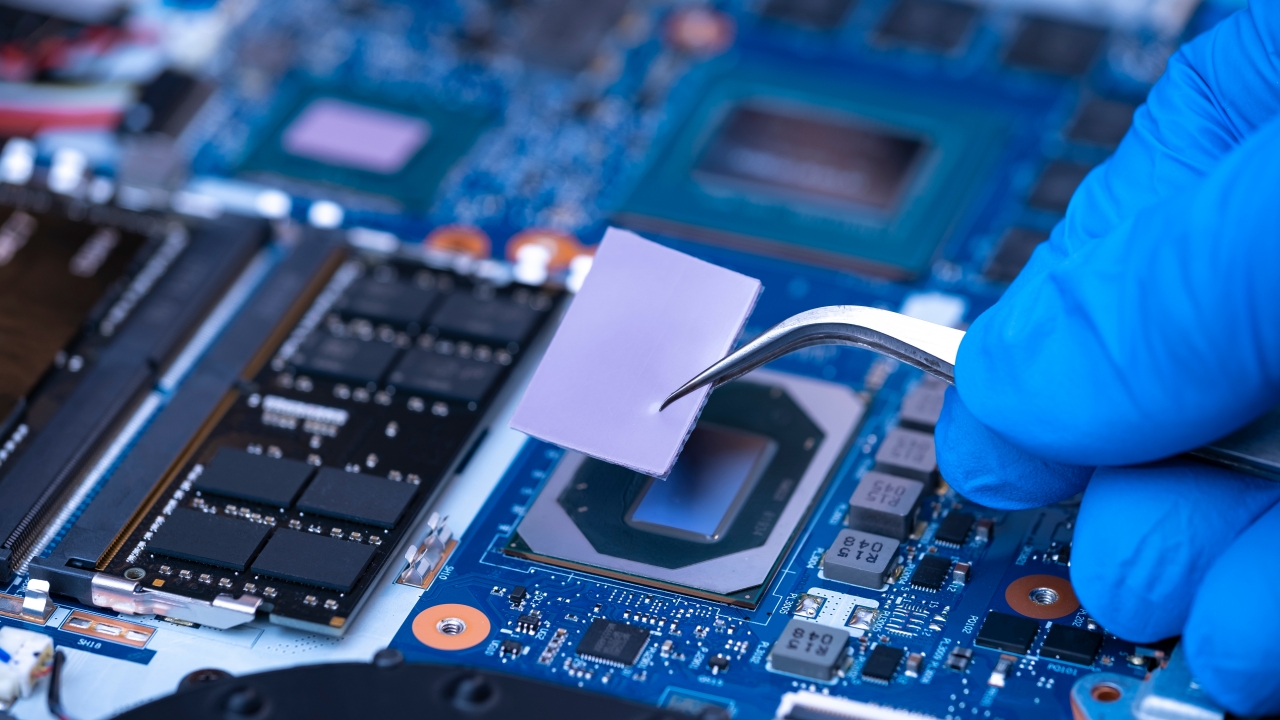
For example, suppose there is a structure like this:
CPU
↓
TIM
↓
Heat dissipation plate
↓
Enclosure
In this case, heat is not simply flowing only inside the material.
In reality, it passes through the boundary between materials.
In other words,
● Metal ↔ TIM
● TIM ↔ heat dissipation plate
● Resin ↔ adhesive
● Battery ↔ insulating material, and more.
In future industries, there are huge numbers of interfaces between dissimilar materials.
■ In Fact, Boundaries Stop Heat the Most
This is the essence.
No matter how high-performance the material, heat can stop at the boundary.
For example,
● Air layers
● Insufficient contact
● Insufficient pressure
● Surface roughness
● Tiny steps
In other words,
“Material A is good”
“Material B is good” is not enough.
What truly matters is how to connect A and B.
■ Dissimilar Materials Begin to Fight Through Thermal Expansion Differences
What makes it even more difficult is that
dissimilar materials move differently with temperature changes.
For example,
● Metals
● Resins
● Adhesives
● Ceramics
have different coefficients of thermal expansion.
As a result,
● Stress
● Delamination
● Lifting
● Changes in contact
occur.
In other words, in future industries, problems arise not only from breaking because of heat,
but from the contact state changing because of heat.
■ Lamination Can Sometimes Make Heat Worse
This is important on the shop floor.
For example, if you use
● Adhesives
● Pressure-sensitive adhesives
● Lamination
you can achieve bonding.
On the other hand, however,
● Uneven thickness
● Air bubbles
● Cure shrinkage
● Stress
● Air layers
can occur.
In other words,
there are even cases where lamination actually makes heat worse.
■ Miniaturization Makes Interface Problems Explode
In future industries,
● Miniaturization
● Higher density
● Stacking
are advancing.
As a result, interfaces between dissimilar materials increase rapidly.
For example,
● 3D semiconductors
● EV batteries
● AR glasses
● Robot joints
The more advanced the industry, the more the points of contact between materials matter compared with the material itself.
■ The AI Era Will Become an Interface Civilization
In the AI era,
● Higher density
● Higher heat density
● Stacking
are advancing.
In other words, in the future, what may matter more than how high-performance a material you can make
is how well you can make dissimilar materials work together.
■ Interfaces of a Few Tens of μm Can Stop the Future
For example, even just
● Lifting of a few tens of μm
● Tiny air bubbles
● Slight delamination
can change thermal performance.
In other words, in the future, interface abnormalities of a few tens of μm may determine
● AI performance
● EV lifetime
● Semiconductor performance
● Robot reliability
■ Making the Process Work Matters More Than Theoretical Performance
What matters here is volume production.
Even if something works in prototyping, it can fall apart in volume production due to
● Pressure variation
● Tolerances
● Material deformation
● Automation errors
● Aging degradation
In other words, heat problems are not only a material selection problem,
but also a question of making the process work.
■ In EVs, Interfaces Become a Matter of Safety
In EVs, components such as
● Batteries
● TIM
● Heat dissipation plates
● Insulating materials
are stacked.
If interface defects occur here, they may lead to
● Heat concentration
● Degradation
● Thermal runaway
In other words, interface problems are not only a performance problem,
but also a safety problem.
■ In Wearable Devices, Even Comfort Changes
Wearable devices also need
● Flexibility
● Conformity to curved surfaces
● Long-term contact
In other words, not only being able to release heat,
but also working without discomfort is necessary.
■ The Researcher's Perspective: The Era Is Shifting from Materials to Interfaces
Current research includes
● Next-generation TIM
● Nano-interface control
● Flexible heat dissipation materials
● Bonding of dissimilar materials
● Surface modification
● Thermally conductive adhesives
In other words, from now on, interface performance will matter more than
the performance of the material alone.
■ The Shop-Floor Perspective: In the End, You Lose on How It Is Applied
On the shop floor, problems include
● Air bubbles
● Lifting
● Uneven pressure
● Steps
● Uneven thickness
● Delamination
In other words, even if the material is the best,
losing because of how it is applied happens all the time.
■ What Matters from OTIS's Perspective
From OTIS’s perspective, what matters in heat problems includes
● Microfabrication
● High-precision die-cutting
● High-precision lamination
● Contact between dissimilar materials
● Pressure stability
● Tolerance control
● Thin-film processing
● Automated supply
● Volume production stability
In other words, OTIS is committed to making interfaces between dissimilar materials work in volume production.
■ What OTIS Can Do
At OTIS, through
● Microfabrication
● High-precision die-cutting
● High-precision lamination
● Processing of thermal management materials
● Stacking of irregular shapes
● Thin-film processing
● Support for reel supply
we may be able to contribute to making interfaces through which heat flows work in volume production.
■ Outside OTIS's Expertise
On the other hand, OTIS is not a company that specializes in
● Development of the materials themselves
● GPU design
● Semiconductor circuit design
● Dedicated CFD analysis
However, in the area of
making interfaces between dissimilar materials work in volume production processes, we may be able to play an important role.
■ Summary
What stops future industries may be not a lack of materials, but interface problems
In thermal management, high-performance materials alone are not enough.
In reality, thermal performance changes greatly depending on
● Contact
● Interfaces
● Air layers
● Bonding
● Tolerances
● Pressure
● Processes
And in future industries, due to
● Miniaturization
● Higher density
● Stacking
interfaces between dissimilar materials will increase rapidly.
In other words, in the future,
what will become extremely important is not only how good a material is,
but how well interfaces can be made to work.
Column Supervisor: Koji Kakumoto (President, OTIS Co., Ltd.)
After studying abroad and working in planning and development at a trading company, he joined OTIS Co., Ltd. in 2011. While primarily working in the Corporate Planning Department, he has also served concurrently in manufacturing and technical divisions, and since 2018 has served as President, working to drive business growth and strengthen the organization.
This article is a general technical explanation intended for educational purposes and does not refer to any specific company, product, or technology.