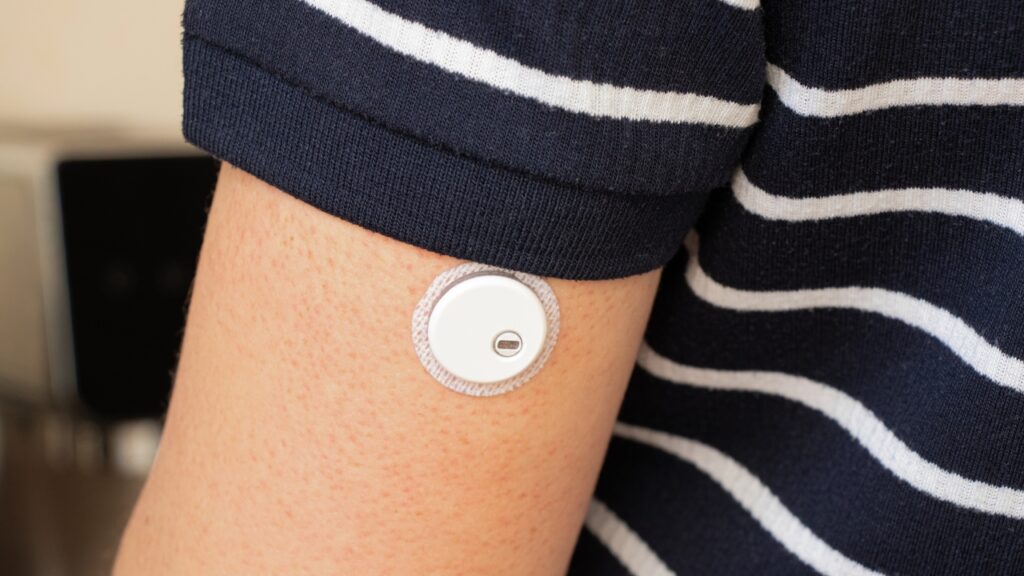
■ Wearable Devices Also Generate Heat
Wearable devices contain various heat sources.
● Batteries
● Communication modules
● Sensors
● AI processing chips
● Charging circuits
● Displays
● LEDs
● Small motors
When these operate, they consume power.
And much of the power consumed turns into heat.
In other words, wearable devices are also small heat sources.
■ The Problem Is That They Touch the Body
With a smartphone, if it gets hot, you can put it down.
Wearable devices, however, are different.
They are wrapped around the wrist.
They are inserted in the ear.
They are worn on the face.
They are attached to the skin.
In other words, they stay in contact with the human body while generating heat.
This is extremely important.
In wearable devices, a temperature at which the device does not break is not enough.
A temperature at which the human body does not feel discomfort
A temperature that does not place a burden on the human body is required.
■ Humans Are Sensitive to Heat
Human skin is sensitive to temperature changes.
A little hot.
A little stuffy.
A little uncomfortable.
That alone makes people not want to use it.
In other words, in wearable devices, the heat problem is not just a technical challenge.
It is a problem of wearing comfort and a problem of continued use.
■ The Risk of Low-Temperature Burns
In wearable devices, attention to low-temperature burns is also necessary.
A low-temperature burn is a phenomenon in which deep layers of the skin are damaged by prolonged contact even at temperatures that are not particularly high.
Particular care is needed with
● Long-term wear
● Use during sleep
● The elderly
● Children
● People with sensitive skin
● Conditions with sweat or humidity
In other words, in wearable devices, not only how many degrees it rises to,
but also how long and where it touches matters.
■ Small, Yet Increasingly Highly Functional
Wearable devices are small.
Yet the functions required of them are increasing.
● Heart rate measurement
● Blood oxygen measurement
● Body temperature measurement
● Sleep analysis
● Location information
● Communication
● Voice AI
● Image display
● Real-time translation
● AR display
In other words, they are evolving in the direction of packing many functions into a small device.
Thermally, this is quite severe.
■ AI Makes Heat Problems Even More Difficult
From now on, more and more AI will go into wearable devices.
For example,
● Continuous translation with AI earbuds
● Vision assistance with AR glasses
● Health anomaly detection with smartwatches
● Work support AI
● Biodata analysis
As more AI processing is done on the device side rather than only in the cloud, the computing load increases.
As the computing load increases, heat also increases.
In other words, wearable devices are becoming AI devices close to the body.
And the closer they get to the body, the more severe heat problems become.
■ AR Glasses Are Especially Difficult
Among wearable devices, AR glasses are especially difficult.
The reason is that they are close to the face.
The face is sensitive to temperature changes.
They are near the eyes.
They are worn for long periods.
Lightness is also required.
Design is also required.
Furthermore, AR glasses need
● Displays
● Cameras
● Sensors
● Communication
● AI processing
● Batteries
In other words, in AR glasses,
miniaturization
weight reduction
AI integration
proximity to the human body all happen at the same time.
As thermal management goes, the difficulty is quite high.
■ Ears Are Also Sensitive to Heat
AI earbuds and hearing-aid-type devices also have heat problems.
Ventilation inside and around the ear is limited.
Into that go
● Batteries
● Communication
● Audio processing
● Noise cancellation
● AI translation
Then even slight heat generation leads to discomfort.
In other words, in wearables around the ear, even a small amount of heat makes a big difference in how it feels.
■ It Is Hard to Fit Cooling Devices in Wearables
In wearable devices, it is difficult to fit large fans or cooling mechanisms.
The reasons are that
● They add weight
● They add thickness
● They make noise
● They consume battery
● They worsen the design
● They reduce waterproofing
In other words, in wearable devices, instead of cooling on a large scale,
heat must be released in a small, thin, and quiet way.
■ Spreading Heat Becomes Important
In wearable devices, localized heating must be avoided.
If only one part is hot, the human body immediately notices something is off.
That is why it is important not to concentrate heat at one point, but to spread it.
Here,
● Thin heat dissipation sheets
● Graphite sheets
● Heat spreading films
● Metal foils
● Flexible heat dissipation materials, and so on become important.
■ Softness and Heat Dissipation Clash
Wearable devices that touch the human body are required to be soft.
If too hard, they hurt.
If too thick, they get in the way.
If they do not conform to curved surfaces, they lift.
If worn for long periods, they become uncomfortable.
However, soft materials are not necessarily good at releasing heat.
In other words, in wearable devices, wanting to make it soft and
wanting to release heat clash.
■ Adhesion and Fixing Also Change with Heat
In wearable devices of the type attached to the skin, adhesive materials are also important.
However, heat and sweat can cause
● Reduced adhesive strength
● Peeling
● Shifting
● Skin irritation
● Stuffiness
● Poor contact
And when the state of contact changes, the way heat escapes also changes.
In other words, in wearable devices,
a problem arises in which heat changes adhesion, and changes in adhesion also change heat.
■ Sweat and Humidity Also Make Thermal Design Difficult
In body-worn types, sweat and humidity cannot be ignored either.
When you sweat, the state between the skin and the device changes.
● Contact state
● Adhesion state
● Breathability
● The way heat escapes
● Discomfort
all change.
In other words, in wearable devices,
thermal management that works in a dry state alone is not enough.
Thermal management that works even in a sweaty state is needed.
■ Wearables Are a Combined Problem of Heat × Comfort × Design
Heat problems in wearable devices are not simple heat dissipation problems.
In reality,
● Heat
● Comfort
● Weight reduction
● Flexibility
● Waterproofing
● Adhesiveness
● Design
● Long-term use
● Volume production stability
are all intertwined at the same time.
In other words, in wearable devices,
just cooling it does not make it work.
Only by including whether people want to wear it does it become thermal management.
■ The Researcher's Perspective: Toward Thermal Design That Coexists with the Human Body
In research and development,
● Flexible heat dissipation materials
● Thin heat spreading sheets
● Low-power AI chips
● Skin temperature management
● Ventilation structures
● Biocompatible materials
● AI temperature control, and so on become important.
In wearable devices, it is required not simply to release heat,
but to control heat without causing discomfort to the human body.
■ The Shop-Floor Perspective: Heat Changes with How Devices Are Actually Used
In wearable devices, conditions vary greatly depending on the user.
● Body temperature
● Sweat
● Skin condition
● Wearing position
● Wearing time
● Amount of exercise
● Outside air temperature
● Interference with clothing and hair
These change the way heat escapes.
In other words, in thermal management for wearable devices, cooling under standard conditions is not enough.
It is important that it does not become uncomfortable even in actual usage environments.
■ Thermal Performance Changes with Contact and Lamination
Many thin components are used in wearable devices.
● Heat dissipation films
● Insulating films
● Adhesive tapes
● Cushioning materials
● Waterproof films
● Sensor protection materials
Their performance changes with slight misalignment or lifting.
Especially when in contact with the curved surfaces of the human body, there are difficulties different from flat surfaces.
In other words, in wearable devices,
how to make them conform to curved surfaces
how to suppress lifting
how to make them work thin and light are important.
■ OTIS's Perspective
From OTIS’s perspective, what matters in heat problems for wearable devices is
● Thin-film processing
● Microfabrication
● High-precision die-cutting
● Flexible material processing
● Adhesive material processing
● Heat dissipation sheet processing
● Insulating film processing
● High-precision lamination
● Processing of components that conform to curved surfaces
● Reel supply
● Support for automation
● Volume production stability
In wearable devices,
it is important to be thin, light, soft, close to the human body, and still functional.
■ What OTIS Can Do
At OTIS, through
● Heat dissipation sheet processing
● Graphite sheet processing
● Insulating film processing
● Adhesive tape processing
● Flexible material processing
● High-precision die-cutting
● Microfabrication
● High-precision lamination
● Stacking of irregular shapes
● Reel supply of small components
● Designing supply formats for automated processes
and more, we may be able to contribute to making functional components for wearable devices work in volume production.
In devices close to the human body in particular,
processing accuracy
conformity to curved surfaces
lamination quality
stability during long-term use are important.
■ Outside OTIS's Expertise
On the other hand, OTIS is not a company that specializes in
● Wearable device body design
● AI algorithm development
● Biological analysis
● Communication system development
● Battery cell development
● Acting on behalf of clients to obtain medical certifications
However, in the area of making functional components used inside wearable devices and close to the human body work in volume production processes,
we may be able to play an important role.
■ Industries Where This Technology Will Be Important
★★★★★ Wearable devices
★★★★★ AR glasses
★★★★★ Smartwatches
★★★★☆ AI earbuds
★★★★☆ Healthcare devices
★★★★☆ Skin-attached sensors
■ Summary
In wearable devices, heat becomes the experience itself
Wearable devices are close to humans.
That is why the heat problem is not simply a matter of component temperature.
Hot.
Stuffy.
Heavy.
Painful.
Uncomfortable.
All of these worsen the user experience.
In other words, in wearable devices, just being able to cool it is not enough.
Thin, light, soft, comfortable, usable for long periods, and stable even in volume production.
Only when all of that works does it become true thermal management.
The closer AI gets to the body, the less heat problems can be glossed over.
However, this is based on the premise that AI comes closer to humans, in a setting where humans are the main characters.
If AI and robots become the main characters, all of these premises will change.
Column Supervisor: Koji Kakumoto (President, OTIS Co., Ltd.)
After studying abroad and working in planning and development at a trading company, he joined OTIS Co., Ltd. in 2011. While primarily working in the Corporate Planning Department, he has also served concurrently in manufacturing and technical divisions, and since 2018 has served as President, working to drive business growth and strengthen the organization.
This article is a general technical explanation intended for educational purposes and does not refer to any specific company, product, or technology.