■ What Is a Heat Dissipation Material?
A heat dissipation material is a material that makes heat move easily.
It is used when you want to release heat from heat-generating components.
For example,
● TIM
● Heat dissipation sheets
● Graphite
● Copper foil
● Aluminum foil
● Heat dissipation gel, and so on are typical examples.
Heat dissipation materials are used to create a heat path such as
Heat-generating component
↓
Heat dissipation material
↓
Heat sink
↓
Enclosure
↓
Air
■ What Is a Thermal Insulation Material?
A thermal insulation material, on the other hand, is a material that makes heat hard to conduct.
It is used when you want to suppress the movement of heat.
For example, there are
● Foams
● Aerogels
● Mica
● Glass fibers
● Ceramic fibers
● Hollow particle materials, and so on.
Thermal insulation materials are used not to release heat,
but to protect against heat.
■ Why Are Thermal Insulation Materials Needed?
In thermal management, cooling heat-generating components is not the only purpose.
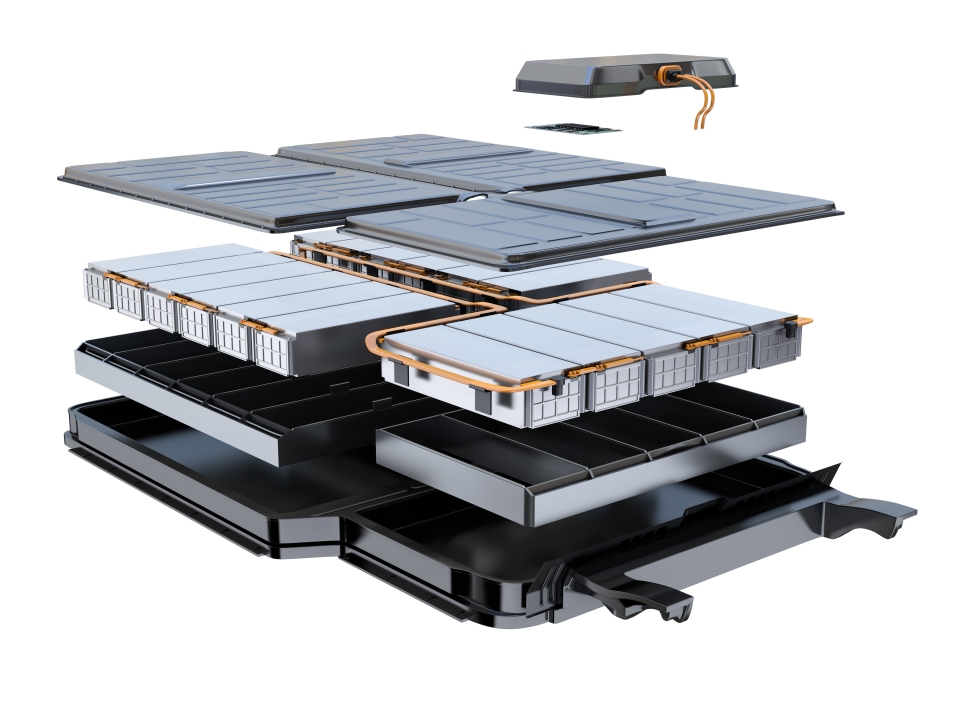
Take EV batteries, for example.
You want to release the heat of battery cells to the cooling plate.
At the same time, however, you do not want to transfer heat to the neighboring cell.
In other words, there is heat you want to release and heat you want to stop.
This is where thermal insulation materials become important.
■ Heat Spreads on Its Own
Heat has no will.
Heat flows from places of high temperature to places of low temperature.
That is why, without design, heat spreads on its own.
And sometimes, the way it spreads becomes a problem.
Take smartphones, for example.
The CPU is hot.
But you do not want the part you hold to get hot.
In other words, you want to spread the CPU’s heat.
But you do not want to spread it to the parts your fingers touch.
This, too, is achieved by combining heat dissipation materials and thermal insulation materials.
■ Heat Dissipation Materials Alone Lead to Failure
There is a misconception that beginners in thermal management tend to fall into.
That is the idea that you just need to add more heat dissipation material.
But reality is different.
For example, you want to cool a certain component.
So you add a high thermal conductivity material.
Then the component you wanted to cool did cool down.
But a nearby sensor also got hot.
This kind of thing actually happens often.
Heat moves.
That is why, together with design that releases heat,
design that stops heat is necessary.
■ Thermal Insulation Materials Alone Also Lead to Failure
The reverse is also true.
If you keep adding only thermal insulation materials,
heat will no longer escape.
For example,
you surround a heat-generating component with thermal insulation material.
Then heat transfer to the outside decreases.
However, the heat-generating component itself becomes hot.
In other words, thermal insulation materials are not a cure-all.
Thermal insulation materials are materials that stop heat,
not materials that make heat disappear.
This must not be misunderstood.
■ A Way of Thinking That Is Important in EVs and ESS
In EVs and ESS, heat dissipation materials and thermal insulation materials are used at the same time.
For example, heat is released through
Battery cell
↓
Heat dissipation material
↓
Cooling plate
On the other hand,
between cells
↓
Thermal insulation material is placed.
In other words, heat is allowed to flow in the direction you want to cool, and heat is stopped in dangerous directions.
Thermal runaway countermeasures, which have been a hot topic in recent years, are also based on this way of thinking.
■ A Way of Thinking That Is Important in AI Servers
The same applies to AI servers.
You want to cool the GPU.
But it is a problem if all the surrounding components get hot.
That is why, while releasing heat with
● TIM
● Heat dissipation sheets
● Graphite
insulating structures are also used as necessary.
The amount of heat generated by AI servers will increase further in the future.
That is why not only technology for releasing heat,
but also technology for containing heat will be important.
■ The Same Goes for Robots
In robots, motors and batteries generate heat.
However, the parts that people touch cannot be allowed to get hot.
Then a design is needed in which the motor side dissipates heat
and the human side is insulated.
The more robots come into contact with humans,
the more important this way of thinking becomes.
■ Wearable Devices Are the Most Difficult
In wearable devices, heat dissipation and thermal insulation are required at the same time.
Take AR glasses, for example.
You want to cool the AI chip.
But you do not want the ears or face to get hot.
In other words, a contradictory requirement arises: release heat while not transferring heat toward the human body.
As body-worn AI increases in the future, the importance of thermal insulation materials will also increase.
■ Why Aerogels Are Attracting Attention
In recent years, aerogels have been attracting attention.
The reason is that they have extremely high thermal insulation performance.
Their use is advancing in
AI servers
EVs
ESS
aerospace, and so on.
However,
there are also challenges such as processability, cost, particle shedding, and brittleness.
In other words, they will not be adopted on performance alone.
Mass producibility is also necessary.
■ Heat Dissipation Materials and Thermal Insulation Materials Do Not Conflict
There is something important here.
Heat dissipation materials and thermal insulation materials are not competing materials.
Rather, they are materials used as a set.
A design that is good at thermal management is not a design in which only the heat dissipation materials are excellent.
Nor is it a design in which only the thermal insulation materials are excellent.
It is a design that decides where to release heat and where to stop heat.
■ The Researcher's Perspective: Thermal Design Is Heat Flow Design
In research and development, what matters is not reducing heat,
but designing the flow of heat.
Where to let it flow.
Where to stop it.
How much to let flow.
In other words, thermal management = heat flow design.
Heat dissipation materials and thermal insulation materials are the tools for that.
■ The Shop-Floor Perspective: It Is Not Determined by Material Performance Alone
On the shop floor, the performance of both heat dissipation materials and thermal insulation materials changes depending on how they are applied and processed.
For example, performance changes greatly due to
● Lifting
● Air bubbles
● Thickness variation
● Compression ratio
● Lamination accuracy, and so on.
In other words, looking only at material performance is meaningless.
Performance is determined only by looking all the way to the mounting state.
■ OTIS's Perspective
OTIS is neither a heat dissipation material manufacturer nor a thermal insulation material manufacturer.
However, we may be able to contribute in the area of processing heat dissipation materials and thermal insulation materials into a form that can be used in volume production.
For example,
● Heat dissipation sheet processing
● Graphite processing
● Mica processing
● Evaluating the processing of aerogels
● Insulating material processing
● Lamination of dissimilar materials
● High-precision lamination
● Automated supply design, and so on.
In thermal management, neither heat dissipation materials alone nor thermal insulation materials alone will work.
Combining the two
and bringing them into volume production processes is important.
■ What OTIS Can Do
At OTIS, through
● Heat dissipation material processing
● Evaluating the processing of thermal insulation materials
● Lamination of dissimilar materials
● High-precision die-cutting
● Microfabrication
● Lamination processing
● Reel supply
● Design for automation, and so on,
we may be able to contribute to bringing thermal management materials closer to a form that can be used in volume production.
■ Outside OTIS's Expertise
On the other hand, OTIS is not a company that specializes in
● Development of thermal insulation materials themselves
● Aerogel manufacturing
● Dedicated CFD thermal analysis
● Cooling equipment design
However, in the area of combining heat dissipation materials and thermal insulation materials and making them work in volume production processes,
we may be able to deliver value.
■ Industries Where This Technology Will Be Important
★★★★★ EVs and batteries
★★★★★ ESS and energy storage systems
★★★★★ AI servers
★★★★☆ Robots
★★★★☆ Wearable devices
★★★★☆ Data centers
★★★★☆ Aerospace
■ Summary
Thermal management is both releasing and stopping
When it comes to thermal management, heat dissipation tends to get all the attention.
In real-world design, however, both heat dissipation materials and thermal insulation materials are necessary.
Places to release heat.
Places to stop heat.
Only by designing both can heat problems be solved.
In other words, thermal management is not a cooling technology.
It can be said to be traffic control for heat.
Column Supervisor: Koji Kakumoto (President, OTIS Co., Ltd.)
After studying abroad and working in planning and development at a trading company, he joined OTIS Co., Ltd. in 2011. While primarily working in the Corporate Planning Department, he has also served concurrently in manufacturing and technical divisions, and since 2018 has served as President, working to drive business growth and strengthen the organization.
This article is a general technical explanation intended for educational purposes and does not refer to any specific company, product, or technology.