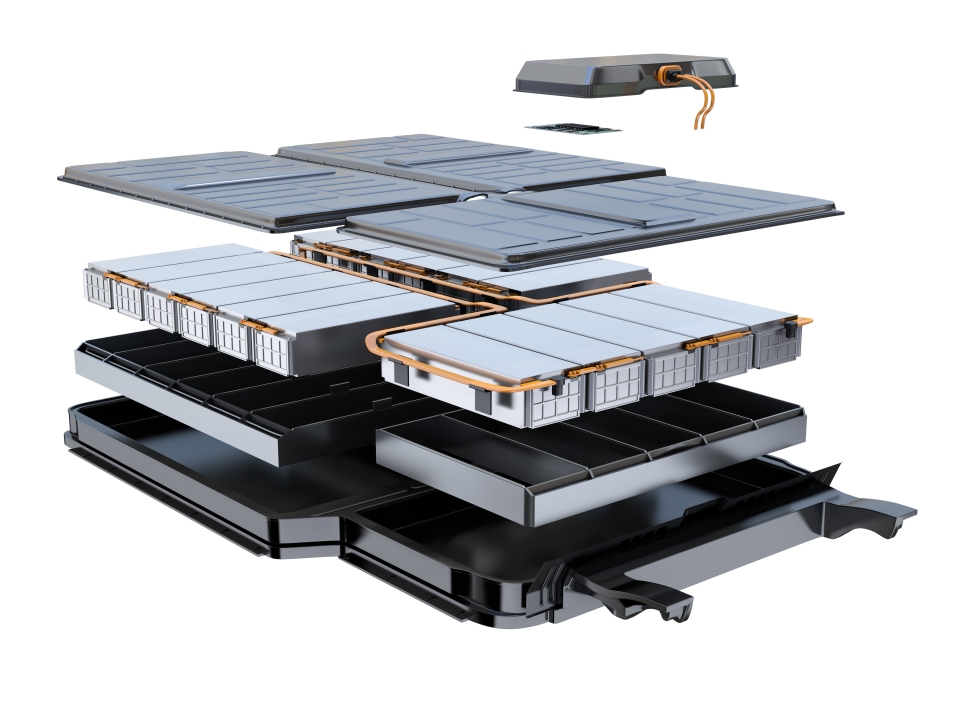
■ EVs Run Carrying Huge Batteries
In gasoline cars, the energy source was fuel.
In EVs, on the other hand, the energy source is the battery.
In other words, an EV can be described as a machine that runs carrying a huge battery.
This battery generates heat both while driving and while charging.
Heat problems become especially large during
● Fast charging
● High-speed driving
● Climbing hills
● High-output acceleration
● High outside temperatures
■ Battery Performance Changes with Temperature
Batteries are extremely sensitive to temperature.
If the temperature is too low, output drops.
If the temperature is too high, degradation progresses.
And at abnormally high temperatures, it leads to safety problems.
In other words, a battery is not just a box that stores electricity.
It is a component that can deliver performance only when its temperature is managed.
■ Fast Charging Is a Battle Against Heat
Something very important in EVs is fast charging.
Users want to charge in as short a time as possible.
However, putting a large amount of electricity in a short time also means putting a heavy load on the battery.
A large current flows.
Heat is generated by internal resistance.
The temperature rises.
Degradation progresses.
Safety decreases.
In other words, fast charging is a technology for shortening charging time and, at the same time,
a technology for controlling heat.
■ The Most Frightening Thing in EVs Is Thermal Runaway
The most frightening heat problem in batteries is thermal runaway.
Thermal runaway is a phenomenon in which some cells generate abnormal heat, that heat is transferred to surrounding cells, and temperatures rise in a chain reaction.
Simply put, it is a state in which heat begets heat.
If this progresses, it may lead to smoke, fire, and safety problems.
That is why, in EVs, just releasing heat is not enough.
Not spreading heat too far
Not transferring heat too much to neighboring cells
Not letting it escalate in abnormal situations: these ways of thinking also become important.
■ Both Heat Dissipation and Thermal Insulation Are Needed
This is what makes EV batteries difficult.
Normally, when people think of thermal management, they think of cooling.
In EV batteries, however, both technology for cooling and
technology for blocking heat are needed.
In normal operation, you want to release the battery’s heat appropriately.
In abnormal situations, however, you want to prevent the heat of one cell from spreading to its surroundings.
In other words, in EV batteries, how to use heat dissipation and thermal insulation appropriately is extremely important.
■ Battery Packs Are Collections of Dissimilar Materials
Various materials are used in EV battery packs.
● Cells
● Busbars
● Insulating materials
● Heat dissipation materials
● Adhesives
● Cushioning materials
● Cases
● Cold plates
● Flame-retardant materials
In other words, a battery pack is a stacked structure of dissimilar materials.
What becomes a problem here is interfaces.
Metal and resin.
Battery and heat dissipation material.
Heat dissipation material and cold plate.
Insulating material and adhesive.
Heat can stop at these points of contact.
■ The Points of Contact Can Become the Hottest Spots
In EV batteries, heat problems can occur at the points of contact between materials rather than in the materials themselves.
For example,
● Uneven adhesive thickness
● Lifting of heat dissipation materials
● Steps in insulating materials
● Insufficient pressure
● Air layers
● Differences in thermal expansion
As a result, heat does not escape well, and the temperature rises locally.
In other words, “material A is good” and “material B is good” are not enough.
What matters is how to bring A and B into contact.
This is an extremely important perspective in thermal management for EV batteries.
■ Differences in Thermal Expansion Break Contact
EVs are subject to temperature changes both while driving and while charging.
As a result, different materials each move differently.
Metal expands as metal does.
Resin expands as resin does.
Adhesive deforms as adhesive does.
As a result,
● Delamination
● Lifting
● Warping
● Stress concentration
● Poor contact
can occur.
In other words, heat problems are not only a problem of rising temperature.
They are also a problem of the structure changing with temperature.
■ In EV Batteries, Volume Production Variation Is Frightening
Even if there are no problems in prototyping, the results can change in volume production.
The reasons include
● Variation in material thickness
● Misalignment of lamination positions
● Differences in pressure conditions
● Variation in the assembly process
● Transport misalignment in automated equipment
● Aging degradation
In EVs, the same structure is used in huge quantities.
That is why even small variations become a large risk as the number of vehicles increases.
In other words, in EV thermal management, what matters more than cooling in prototyping
is cooling stably in volume production.
■ Heat Problems Do Not Disappear Even with All-Solid-State Batteries
All-solid-state batteries are attracting attention as next-generation batteries.
There are expectations for all-solid-state batteries in terms of safety and high energy density.
However, switching to all-solid-state batteries does not mean heat problems will disappear.
Rather, as higher output, fast charging, and higher density advance, thermal management may become even more important.
In other words, in the future too, the evolution of batteries and the evolution of thermal management will advance as a set.
■ The Same Heat Problems Occur in ESS
It is not just EVs.
With the expansion of renewable energy and data centers, the importance of ESS, or energy storage systems, is also increasing.
ESS are also systems that bring together large numbers of batteries.
As a result, they face problems such as
● Heat generation
● Degradation
● Thermal runaway
● Cell-to-cell variation
● Cooling
● Thermal insulation
In other words, the heat problems that occur in EV batteries are also important in ESS.
Although EVs and ESS have different applications,
they share common challenges in the sense of technology for operating batteries safely in large numbers.
■ The AI Era Will Be an Era in Which Accident Causes Become Visible
From now on, EVs will carry even more sensors and AI.
Temperature history.
Charge/discharge history.
Vibration.
Current.
Degradation.
Conditions when abnormalities occur.
As this kind of data accumulates, in the future,
why it broke may be analyzed quite clearly.
Problems that were previously attributed to “unknown cause” or “due to the usage environment” may, through AI analysis, be visualized as
● Insufficient heat dissipation design
● Poor contact
● Heat concentration
● Structural weaknesses
● Material degradation
● Volume production variation
To put it in extreme terms, in the future, it may become possible to see not broken products
but the design that will break itself.
As a result, design and structural problems may become clear, and recalls may increase.
That is precisely why, for EVs and ESS, thermal management must be considered at the process level starting now.
■ The Researcher's Perspective: Batteries Deliver Performance Only When Heat Is Controlled
In research and development, work is advancing on
● High-safety batteries
● All-solid-state batteries
● High thermal conductivity materials
● Inter-cell thermal insulation materials
● Phase change materials
● Cold plates
● Temperature control by the BMS
However, the essence is at what temperature range to use batteries stably.
The higher the battery performance, the more important thermal management becomes.
■ The Shop-Floor Perspective: Battery Thermal Management Changes with How It Is Applied
On the actual shop floor, things are not determined by material specifications alone.
What matters is
● Where to apply it
● With what pressure to bond it
● With what thickness to control it
● Whether air bubbles get in
● Whether contact is maintained after thermal expansion
● Whether it shifts in automated processes
In other words, thermal management for EV batteries is determined not by material selection
but by how to put materials into a usable state.
■ OTIS's Perspective
From OTIS’s perspective, what matters in EV and battery heat problems is
● Processing of heat dissipation materials
● Processing of insulating materials
● Processing of thermal insulation materials
● High-precision die-cutting
● Thin-film processing
● High-precision lamination
● Lamination of dissimilar materials
● Reel supply
● Support for automation
● Volume production stability
In EVs and ESS in particular, both materials that release heat and
materials that block heat are needed.
And it is important to make them into a form that can be used stably in volume production processes.
■ What OTIS Can Do
At OTIS, through
● Heat dissipation sheet processing
● Insulating sheet processing
● Evaluating the processing of mica and ceramic-based materials
● Shape processing of thermal insulation and heat shielding materials
● High-precision die-cutting
● High-precision lamination
● Stacking of irregular shapes
● Support for reel supply
● Designing supply formats for automated processes
we may be able to contribute to making functional components for EVs, batteries, and ESS work in volume production.
■ Outside OTIS's Expertise
On the other hand, OTIS is not a company that specializes in
● Battery cell development
● BMS development
● EV vehicle design
● Motor development
● Overall cooling system design
However, in the area of making thermal management components around batteries work in volume production processes,
we may be able to play an important role.
■ Industries Where This Technology Will Be Important
★★★★★ EVs and electrified vehicles
★★★★★ ESS and energy storage systems
★★★★★ Battery packs
★★★★☆ Fast-charging infrastructure
★★★★☆ Emergency power for data centers
★★★★☆ Industrial battery equipment
■ Summary
The future of EVs will not be decided by battery performance alone
EV competition tends to be discussed only in terms of driving range and charging speed.
Behind the scenes, however, how to control heat is extremely important.
Battery performance changes with temperature.
Batteries degrade at high temperatures.
In abnormal situations, there is a risk of thermal runaway.
And the flow of heat changes greatly depending on the points of contact between materials and the state of lamination.
In other words, thermal management in the EV and ESS era does not end with choosing good materials.
Only when releasing, blocking, contacting, and stabilizing in volume production all work does it become true thermal management.
Future mobility may be decided not only by battery performance,
but by how safely, stably, and calmly batteries can be used.
Column Supervisor: Koji Kakumoto (President, OTIS Co., Ltd.)
After studying abroad and working in planning and development at a trading company, he joined OTIS Co., Ltd. in 2011. While primarily working in the Corporate Planning Department, he has also served concurrently in manufacturing and technical divisions, and since 2018 has served as President, working to drive business growth and strengthen the organization.
This article is a general technical explanation intended for educational purposes and does not refer to any specific company, product, or technology.