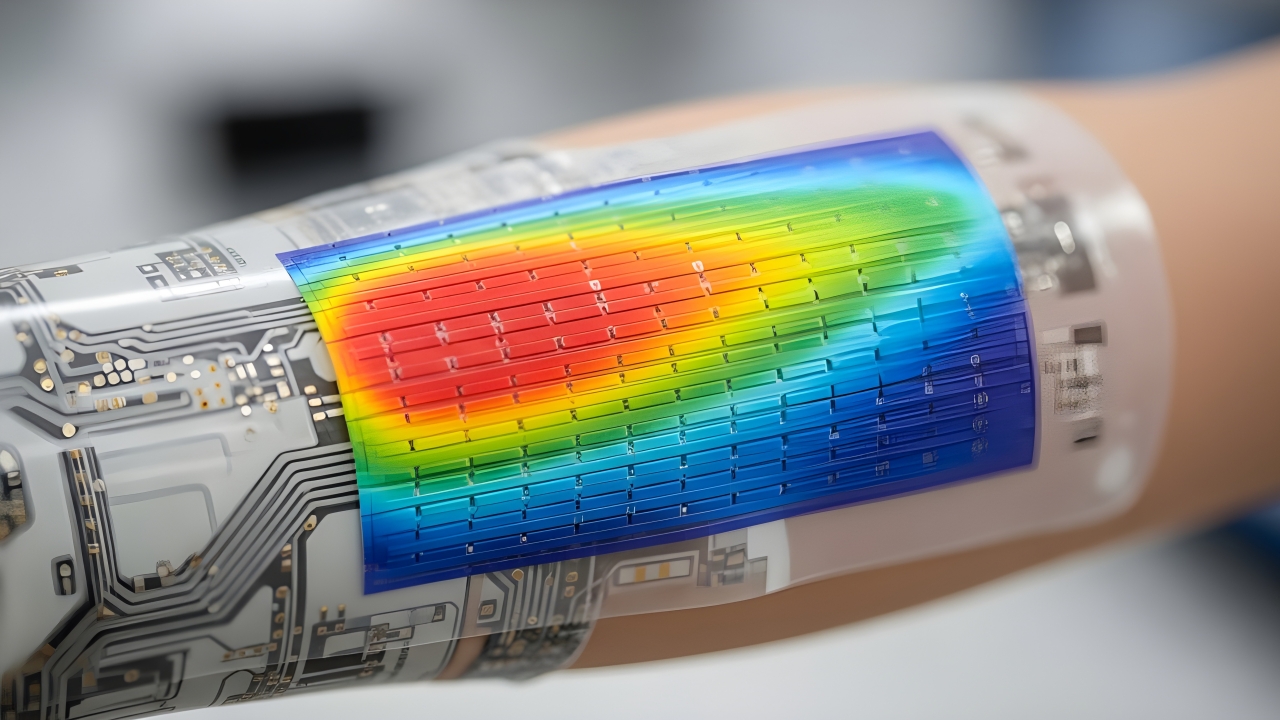
■ What Generates Heat in Medical Devices?
Medical devices have many heat sources, such as
● Computing ICs
● Communication ICs
● Batteries
● Motors
● LEDs
● Lasers
● Power supply circuits
● Sensors
In recent years in particular,
● Miniaturization
● Wireless operation
● Higher performance
● Battery operation
have been advancing.
As a result,
heat-generating components tend to gather in small enclosures.
■ The Closer to the Human Body, the Stricter the Temperature Constraints
For example, with large stationary medical equipment, even if the internal temperature rises somewhat, it is easier to cope if people do not touch those parts directly.
On the other hand, with
● Wearable sensors
● Biological monitors
● Body-worn medical devices
● Patient belts
● Patch-type devices
the device is in contact with the human body for long periods.
In this case, even a temperature that is safe for electronic components may be hot for people.
In other words, in medical devices, the surface temperature itself is important.
■ Localized Heat Becomes a Problem
Even if the average temperature of the entire device is low, only part of it may become hot.
For example,
● Directly above the battery
● Directly above the communication IC
● Near the charging circuit
● Near the computing IC
If hot spots form on the surface people touch, they may lead to
discomfort,
low-temperature burns,
and lower wearing continuation rates.
That is why, in medical and wearable devices,
not concentrating heat at one point
is important.
■ "Spreading" Can Be More Effective Than "Cooling"
In small wearable devices, it is difficult to use large fans or heat sinks.
So the idea of
dispersing local heat over a wide area
becomes important.
For example, a structure of
Heat-generating IC
↓
TIM
↓
Graphite
→→→ Spreading heat across the entire enclosure
This avoids only one part becoming hot and equalizes the surface temperature.
In other words, in medical devices, rather than aiming for the lowest temperature,
not creating places where heat is felt can be more important.
■ It Is Not Enough to Release Heat into the Human Body
Because the human body has a large heat capacity,
one is tempted to think,
“Just release heat into the body.”
However, concentrating heat on parts in contact with the body gives patients discomfort and thermal stimulation.
In other words, the human body is not a cooling device.
It is necessary to consider how much heat may flow toward the body.
That is why
● Places to spread heat
● Places to insulate
● Places to keep away from the body
are designed.
■ Separating Places That Pass Heat from Places That Stop It
In wearable devices,
you want to release heat on the heat-generating component side.
But you do not want to transfer too much heat to the body side.
In this case, there is the idea of
releasing heat inside the device
while
insulating on the body side.
For example,
Heat-generating part
↓
Heat-spreading material
→ Enclosure side
Body side
↓
Thermal insulation material
In this way, the direction of heat is controlled.
In other words, in medical devices too, what matters is not releasing heat as much as possible, but
where to release it.
■ Batteries Are Also Important Heat Sources
Many wearable medical devices are battery-powered.
During charging.
During high-load communication.
During continuous measurement.
These can raise battery temperature.
Furthermore, in small devices, the battery is close to the skin.
That is why it is necessary to consider
● Battery position
● Thermal insulation
● Heat spreading
● Enclosure structure
■ Sensors Are Also Affected by Temperature
Medical devices use
● Temperature sensors
● Optical sensors
● Pressure sensors
● Biological electrodes
When the device itself generates heat, it may end up measuring the device’s heat rather than the target.
For example, when you want to measure skin temperature, if heat from internal ICs reaches the sensor, the measured value changes.
In other words, heat problems affect not only
device protection but also measurement accuracy.
■ Just Moving Sensors Away from Heat Sources May Not Solve It
Moving the sensor away from heat sources can reduce the effect.
However, space is limited in small devices.
So
● Heat shielding
● Thermal insulation
● Heat spreading
● Layout design
are combined.
In other words, creating the temperature environment around the sensor is important.
■ Insulation Is Also Extremely Important in Medical Devices
For devices that contact the human body, electrical safety is important.
That is why
● Insulating films
● Insulating sheets
● Insulating adhesives
are used.
However, adding insulating material
can make it harder for heat to escape.
In other words,
You want heat to pass.
You want to stop electricity.
This creates a challenge.
■ Thinner Profiles Make It Harder to Balance Heat and Insulation
Wearable devices are required to be
thin,
light,
and soft.
That is why one wants to make insulating films thinner as well.
However, the thinner they become, the greater the effects of
● Scratches
● Burrs
● Foreign matter
● Pinholes
In other words,
achieving both thinner films and safety is important.
■ Adhesives Are Extremely Important in Medical Devices
In body-worn medical devices,
the device is fixed to the skin or a belt.
Sensors are fixed.
Internal components are fixed.
That is why many adhesives are used.
However, adhesives are required to have
● Fixing strength
● Flexibility
● Conformability to skin
● Long-term stability
Furthermore, when heat is applied, they may
● Soften
● Shift
● Peel more easily
In other words, heat and adhesion cannot be separated either.
■ Wearability and Thermal Management Are Connected
With devices that patients wear for long periods, if there is discomfort such as
being hot,
being hard,
being stuffy,
or being heavy,
patients may take them off.
In other words,
however good a medical device’s performance, it is meaningless if it is not worn.
That is why thermal management also relates to the wearing continuation rate.
This is a characteristic different from general industrial equipment.
■ Soft Materials Make Thermal Design Harder
To conform to the human body,
● Foams
● Elastomers
● Flexible films
are used.
However, many soft materials generally conduct heat less well than metals.
In other words,
wanting it soft and
wanting to release heat can conflict.
Here, not only material selection, but combining
● Partial heat-spreading materials
● Thin metal foils
● Graphite
can be considered.
■ Waterproofing and Sweat-Proofing Are Also Needed
Devices worn on the body are affected by
● Sweat
● Moisture
● Washing
● Disinfection
That is why
● Waterproofing
● Sealing
● Chemical resistance
are needed.
However, when sealed, heat becomes harder to release.
Here too, it is necessary to achieve both waterproofing and heat dissipation.
■ Seal Materials Also Change the Flow of Heat
Adding gaskets or seal materials increases waterproofing.
However, if thick seal material enters the heat path, it can become thermal resistance.
In other words, waterproof design is also part of thermal design.
■ Cleanliness Is Also Important in Medical Devices
If there is
● Powder
● Debris
● Adhesive squeeze-out
on device surfaces or components, it may affect hygiene and quality.
That is why processed components are also required to have low particle generation and stable edge quality.
■ In Small Components, Misalignment Has a Large Effect
In wearable sensors, components are small.
That is why even a 0.5 mm misalignment is a large proportion of the component size.
For example, if
insulating materials,
heat dissipation materials,
or adhesives
shift, it may affect
● Sensor position
● Heat path
● Wearing comfort
In other words, the smaller things become, the greater the significance of processing accuracy.
■ Compatibility with Automated Supply Is Also Important
When medical devices are mass-produced,
there are limits to processes in which small film components are applied by hand one at a time.
That is why
● Reel supply
● Automated peeling
● Automated application
are important.
Especially for small components, reel supply rather than loose pieces may make it easier to connect to automation.
■ Integrating Multiple Functions
For example, suppose
insulating film,
heat-spreading material,
and adhesive
are applied separately.
If these are laminated in advance, multiple functions can be provided with a single application.
Customer processes may be reduced.
The more medical devices are miniaturized, the higher the value of integrated components.
■ However, Over-Integration Loses Flexibility
Laminating
metal foil,
graphite,
insulating film,
and adhesive
can make the component stiff.
In devices that must conform to the human body, not only
thermal performance
but also
bendability
is important.
In other words, with integration,
● Thickness
● Hardness
● Bendability must also be considered.
■ The Researcher's Perspective: In Medical Devices, Look at "the Temperature the Body Feels" Rather Than "the Lowest Temperature"
In electronic devices, it is easy to focus on lowering component temperatures.
In medical devices worn on the body, however,
● Maximum surface temperature
● Temperature distribution
● Contact time
● Contact area
are also important.
In other words, it is necessary to look not only at what temperature the components are,
but at what temperature the body feels, and for how long.
■ The Shop-Floor Perspective: Even If the Device Is Working, It Is Not Functioning If the Patient Removes It
The medical device is technically working normally.
However, if the patient removes it because
it is hot,
it is stuffy,
or it feels uncomfortable,
the necessary data cannot be acquired.
In other words, in medical devices, thermal management is also part of ergonomics.
■ Things to Check at the Design Stage
In thermal management for medical devices, at least the following need to be checked.
Heat generation
● What generates heat?
● What temperature does it reach at maximum load?
● What about during charging?
● What about during long continuous use?
Human body
● Which parts contact the body?
● Is the surface temperature appropriate?
● Are there local hot spots?
● Is there no problem even with long wear?
Heat path
● Where will heat be released?
● Is too much heat released toward the body?
● Are graphite or metal foils needed?
● Where should be insulated?
Insulation
● Is insulation between the body and conductive parts sufficient?
● Is it safe even when made thinner?
● Are there effects from burrs or foreign matter?
Adhesion and wear
● Will it shift at high temperatures?
● Can it be worn for long periods?
● Can flexibility be maintained?
● Are there effects from sweat or moisture?
Waterproofing and cleanliness
● Is sealing needed?
● Does sealing trap heat?
● Are particles or debris a problem?
Volume production
● Can it be microfabricated?
● Can it be applied automatically?
● Can it be supplied on reels?
● Can multiple components be integrated?
In other words, in medical devices, it is necessary to consider heat, insulation, adhesion, waterproofing and wearability at the same time.
■ OTIS's Perspective
OTIS is not a company that designs medical devices themselves.
Nor is it a company that develops
sensors themselves,
medical diagnostic algorithms,
or medical device control software.
However, medical and wearable devices use many thin functional components, such as
● Thin-film insulating materials
● Heat dissipation sheets
● Graphite
● Metal foils
● Foams
● Adhesives
● Seal materials
● Sensor fixing components
In particular, combined challenges such as
heat + insulation
heat + adhesion
heat + flexibility
waterproofing + thin films
have a point of contact with OTIS.
■ What OTIS Can Do
At OTIS, through
● TIM and heat dissipation sheet processing
● Graphite processing
● Copper foil and aluminum foil processing
● Insulating film processing
● Foam processing
● Adhesive processing
● Seal material processing
● High-precision die-cutting
● Microfabrication
● High-precision lamination
● Lamination of dissimilar materials
● Partial lamination
● Reel-to-reel processing
● Supply formats for automated application
● Integration of multiple functional components
we may be able to contribute to processing the thin-film functional materials used in medical devices into forms that can be used in volume production.
■ Outside OTIS's Expertise
OTIS is not a company that specializes in
● Design of medical devices themselves
● Medical diagnostic technology
● Development of biosensors themselves
● Medical software
● Thermal design of entire medical devices
As needed, collaboration with material manufacturers, medical device manufacturers and sensor manufacturers is necessary.
■ Markets Where This Technology Will Be Important
★★★★★ Wearable medical devices
★★★★★ Biosensors
★★★★☆ Patient monitoring equipment
★★★★☆ Portable medical devices
★★★★☆ Rehabilitation and nursing care equipment
★★★★☆ Medical robots
★★★☆☆ Stationary diagnostic equipment
■ Summary
Thermal management for medical devices creates “a temperature that can be touched with peace of mind and continuously” rather than “cooling”
In medical devices, heat is generated by
semiconductors,
batteries,
communication ICs,
sensors,
and so on.
However, in devices that contact the human body, a temperature at which components do not break is not enough.
Not feeling hot.
Not becoming locally hot.
Not disturbing measurement accuracy.
Maintaining insulation.
Being waterproof.
Being wearable for long periods.
These must be achieved at the same time.
That is why thermal management for medical devices is not a technology that aims for the highest heat dissipation performance.
It is a technology that guides heat to the appropriate places between the human body, sensors and electronic components.
And what OTIS should target is not the medical device itself.
It is the common challenges within it: heat, insulation, adhesion, thin films, flexibility and supply format.
Column Supervisor: Koji Kakumoto (President, OTIS Co., Ltd.)
After studying abroad and working in planning and development at a trading company, he joined OTIS Co., Ltd. in 2011. While primarily working in the Corporate Planning Department, he has also served concurrently in manufacturing and technical divisions, and since 2018 has served as President, working to drive business growth and strengthen the organization.
This article is a general technical explanation intended for educational purposes and does not refer to any specific company, product, or technology.