■ What Generates Heat in Smart Devices?
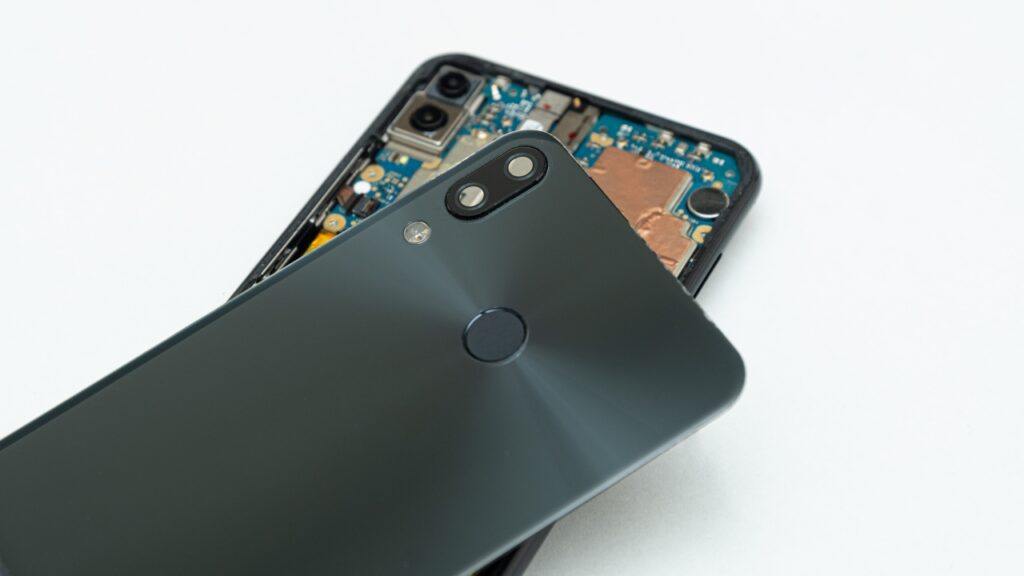
The main heat sources include
● SoCs
● CPUs and GPUs
● Communication ICs
● 5G and Wi-Fi circuits
● Batteries
● Charging circuits
● Cameras
● Display drivers
● AI computing circuits
Recently in particular,
● High-performance AI processing
● High-quality video
● Games
● High-speed communication
● Fast charging
have increased the situations in which a lot of heat is generated in a short time.
In other words, a smart device is a product that holds many heat sources inside a small enclosure.
■ Fans Are Hard to Use in Smartphones
In PCs, fans can be installed.
In servers, large heat sinks can be used.
In smartphones, however, there are constraints of
● Thinness
● Waterproofing
● Noise
● Power consumption
● Design
That is why, in many cases, it is hard to rely on forced air cooling.
What becomes important there is technology for spreading heat.
■ Rather Than Cooling One Point, Spread Heat Across a Surface
For example, suppose the SoC becomes locally hot.
A large heat sink cannot be placed there.
In that case, a structure such as
SoC
↓
TIM
↓
Graphite
→→→ Spreading heat across the entire enclosure
can be considered.
It avoids only one part becoming hot
and disperses heat over a wider area.
This lowers local temperature.
In other words, in smart devices, rather than discarding heat,
the idea of spreading heat to lower its concentration is important.
■ Why Graphite Is Often Used
Graphite has the characteristics of being
● Thin
● Light
● Highly thermally conductive in the in-plane direction
In products with severe thickness constraints like smartphones, these characteristics are extremely effective.
Rather than inserting a thick copper plate,
heat is spread with thin graphite.
This makes it possible to disperse local heat while keeping weight and thickness down.
■ However, Graphite Has Processing Difficulties
Graphite is not all-powerful.
Depending on the material, it has characteristics such as
● Being brittle
● Edges chipping easily
● Shedding powder
● Being electrically conductive
● Becoming harder to handle the thinner it gets
That is why, in practice, it is sometimes used in combination with
● Protective films
● Insulating films
● Adhesives
In other words, it is often handled not as
graphite alone
but as
a composite component.
■ Spreading Heat Too Far Makes the Places People Touch Hot
In smartphones,
spreading heat throughout the enclosure lowers local temperature more than leaving only the SoC hot.
However, if the spread heat moves to surfaces the user’s hand touches,
the entire device feels hot.
In other words, in smart devices, it is not enough just to spread heat.
Where to spread it is important.
■ Heat Must Not Flow to Cameras or Batteries
Inside smartphones there are also components affected by temperature, such as
camera modules,
batteries,
and sensors.
As a result of spreading the SoC’s heat sideways,
warming the battery,
or warming the area around the camera,
is to be avoided.
That is why it is necessary to control the direction of heat.
The shape of the graphite.
The placement of metal foils.
Thermal insulation materials.
Contact positions.
These create the heat path.
■ Vapor Chambers Are Also Used in Smart Devices
In high-performance smartphones, vapor chambers are sometimes used to cope with local high heat generation.
A structure of
SoC
↓
TIM
↓
Vapor chamber
↓
Heat spreading into the enclosure
The vapor chamber moves heat from a small heat source over a wide area.
In smartphones, however, thinness is extremely important.
That is why vapor chambers themselves are also required to be thinner.
■ The Thinner the Vapor Chamber, the Thinner One Wants the Surrounding Components
Even if a vapor chamber is made 0.1 mm thinner, if the
● TIM
● Adhesives
● Insulating films
above and below it are thick, the product as a whole does not become thinner.
In other words, for thinner designs, it is necessary to look not at the cooling component alone,
but at the stack thickness including surrounding components.
This is where the value of thin-film processing rises.
■ In Smart Devices, 0.1 mm Is Large
When the overall thickness of a smartphone is only a few mm,
0.1 mm is very large.
For example,
TIM 0.2 mm.
Insulating film 0.05 mm.
Adhesive 0.05 mm.
Protective film 0.05 mm.
Stacking these easily increases thickness.
In other words,
the tens of μm of each component govern the freedom of product design.
■ Making Things Thinner Makes Processing Harder
Thinner films have the advantages of being
● Light
● Thin
● Easier to reduce thermal resistance
On the other hand,
● Wrinkles
● Stretching
● Tearing
● Folding
● Application misalignment
occur more easily.
In other words, thinner films and processing stability work in opposite directions.
■ Metal Foils Can Also Be Used for Thermal Management
Copper foil and aluminum foil have the characteristics of being
● Thin
● Heat-conducting
● Easy to process
By placing metal foil only where needed,
heat can be guided in a specific direction.
For example,
Near the SoC
→→→ Metal frame
heat is guided this way.
In other words, the idea of
using thin metal foil as “wiring” for heat is also possible.
■ However, Metal Foils Also Conduct Electricity
Copper and aluminum are conductive.
That is why, when used near boards or antennas, effects on
● Short circuits
● Noise
● Antenna characteristics
must be considered.
In other words, thermal management and electrical design must be considered at the same time.
■ With 5G and High-Speed Communication, Heat and Radio Waves Come Closer
In smartphones,
antennas,
communication ICs,
and RF components
are placed in a narrow space.
Adding metal heat-spreading components there may affect antenna characteristics.
In other words,
a thermally good layout and a good layout for radio waves do not necessarily coincide.
That is why the placement of
● Metal foils
● Graphite
● Insulating materials
must be carefully designed.
■ EMI Countermeasures and Heat Dissipation May Also Be Integrated
On the other hand, metal foil can also be used as EMI shielding.
In other words, it may be possible to give it the combined function of
heat dissipation + EMI.
For example, copper foil is used for both
noise countermeasures
and heat spreading.
However, design including conductive paths and grounding methods is needed.
■ Battery Heat Is Also Important
In smart devices, the battery occupies a large volume.
Fast charging.
High-load use.
These can raise battery temperature.
However, for batteries,
you do not want them hot.
That is why design that does not let the heat of SoCs and communication ICs flow toward the battery is important.
■ With Fast Charging, Heat Increases in a Short Time
Fast charging handles large amounts of power in a short time.
Then
● The battery
● The charging IC
● The area around the connector
generate heat.
In other words, in smart devices, not only heat during use,
but also heat during charging must be considered.
■ Cameras Are Also Affected by Heat
High-performance smartphones carry large image sensors and multiple cameras.
When the temperature around the camera rises, it may affect
● Sensor noise
● Image quality
● Optical components
In other words, the layout challenge arises that
you want to cool the SoC.
But you do not want heat to flow to the camera.
■ In AR/VR, Heat Comes Even Closer to People
In AR/VR devices,
● Displays
● High-performance computing
● Cameras
● Sensors
● Communication
are placed close to the face.
Furthermore, the product should be light.
In other words,
the distance between heat sources and the human body is very short.
That is why
● Surface temperature
● Weight
● Wearing comfort
are important.
■ In AR/VR, Heat Cannot Be Released Toward the Face
If parts that directly touch the face become hot, it leads to
● Discomfort
● Sweating
● Reduced willingness to keep wearing it
That is why a heat path of
insulating on the face side
and
releasing heat toward the outside
is important.
This is similar to medical wearables.
■ In Smartwatches, Space Is Even Smaller
In smartwatches,
● SoCs
● Batteries
● Sensors
● Wireless communication
go into a very small enclosure.
Moreover, they directly contact the skin.
That is why
large cooling components cannot be used.
Spreading heat.
Insulating the body side.
Releasing heat to the case side.
Such measures are needed.
■ In Wearables, Heat and Wearability Are Connected
The device is hot.
It is stuffy.
It feels uncomfortable.
Then the user takes it off.
In other words,
thermal management also affects the usage continuation rate.
For smartwatches and health management devices, where wearing them for long periods is the value, this is highly significant.
■ Waterproofing Makes It Harder for Heat to Escape
In smartphones and smartwatches, waterproof performance is important.
However, when the enclosure is sealed for waterproofing,
air does not flow.
In other words, it becomes hard to release internal heat outside.
So heat must be moved to the exterior using
● The enclosure
● Frames
● Heat-spreading materials
■ Seal Materials Are Also Needed
Waterproof structures use
● Gaskets
● Double-sided tapes
● Seal materials
These have the role of
stopping water.
On the other hand, depending on their placement, they also affect the heat path.
In other words,
waterproof design and thermal design cannot be separated either.
■ Adhesives Are Extremely Important in Smart Devices
Inside smart devices, many components are fixed with adhesives, such as
● Display fixing
● Battery fixing
● Graphite fixing
● Insulating film fixing
● Camera fixing
In other words,
the technology of applying itself becomes an important part of product design.
■ Summary
As we have seen, the heat problems of smart devices exist within constraints completely different from those of large equipment.
With neither fans nor large heat sinks available, local heat is spread with graphite or vapor chambers to lower local temperature.
However, spreading heat alone is not enough; where that heat goes is what matters.
The battery must not be warmed.
Camera image quality must not be affected.
And above all, the surfaces users touch must not become hot.
In devices that come even closer to the human body, such as AR/VR and smartwatches, this question of “where to release heat” becomes even more pressing.
Insulate the face side and skin side, and release heat to the exterior side.
Thermal design becomes a technology for choosing the destination of heat, even more than a technology for discarding heat.
In Part 2, we look at how such thermal design is actually realized as thin components, and incorporated in complex shapes, in large quantities and automatically.
We look at those processing and volume production challenges, and at OTIS’s role.
Column Supervisor: Koji Kakumoto (President, OTIS Co., Ltd.)
After studying abroad and working in planning and development at a trading company, he joined OTIS Co., Ltd. in 2011. While primarily working in the Corporate Planning Department, he has also served concurrently in manufacturing and technical divisions, and since 2018 has served as President, working to drive business growth and strengthen the organization.
This article is a general technical explanation intended for educational purposes and does not refer to any specific company, product, or technology.