
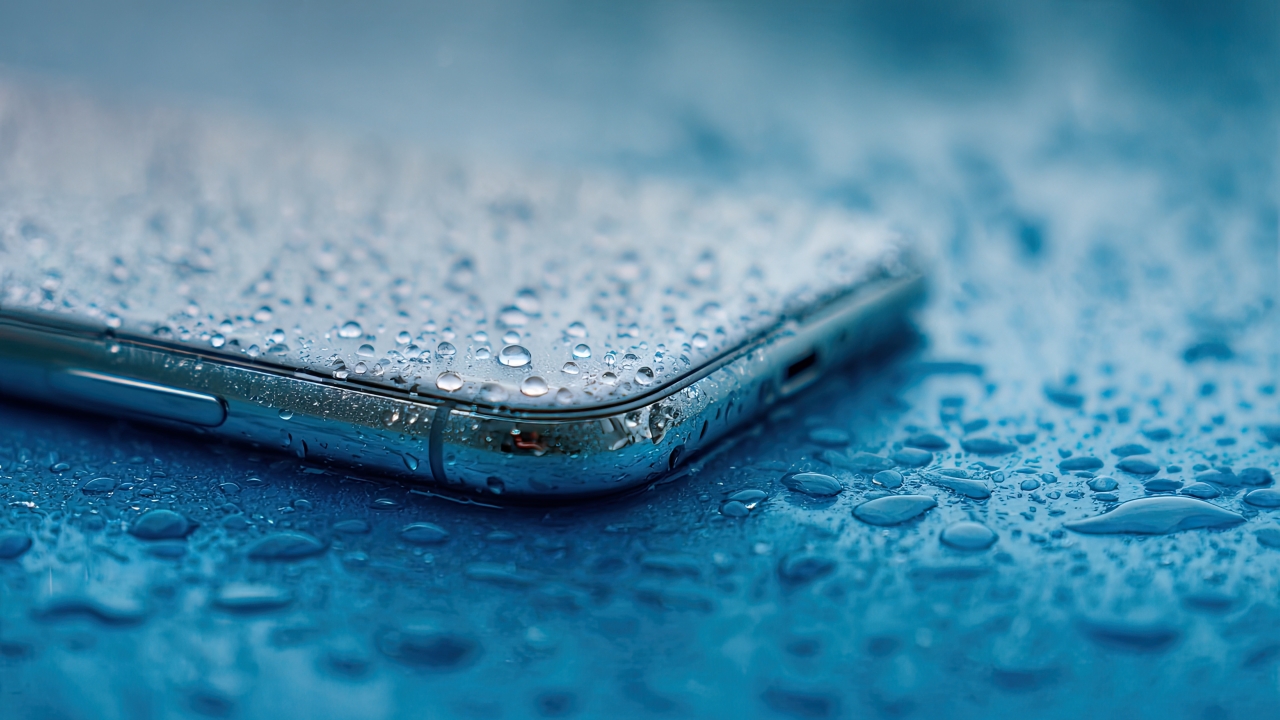
■ What Is Waterproofing?
Waterproofing is design that keeps water from getting inside a product.
When water gets inside, it may lead to
● Circuit shorts
● Corrosion
● Insulation degradation
● Sensor failures
● Battery failures
● Breakdowns
● Reduced safety
That is why waterproof design is important for products used in environments exposed to water or with high humidity.
■ Waterproofing Demands Sealing
To increase waterproofing, in many cases the inside of a product must be sealed.
For example, water entry paths are blocked using
● Sealants
● Gaskets
● Waterproof tapes
● Adhesive materials
● Packings
● Waterproof films
● Coatings
and so on.
In other words, waterproof design is design that eliminates gaps.
■ Thermal Management Demands Escape Routes
Thermal management, on the other hand, requires releasing heat to the outside.
Heat moves from heat-generating components to their surroundings and must ultimately be discharged to the outside.
That is why thermal management requires an escape route for heat.
In other words, waterproofing wants to close gaps.
Thermal management wants to create escape routes.
Here lies a contradiction.
■ Sealing Traps Heat
When a product is sealed, airflow decreases.
Then heat dissipation by convection weakens.
In other words, air has a harder time carrying heat.
As a result, heat builds up inside.
This becomes a major problem in smartphones, wearables, outdoor equipment, EV electrical components, and so on.
In other words, design that stops water
tends to become design that also stops heat.
■ What Is Happening in Smartphones
The smartphone is a typical product that requires waterproofing.
It must withstand rain, sweat, use around water, and outdoor use.
That is why the inside is highly sealed.
However, inside a smartphone there are many heat sources, such as
● CPU
● GPU
● AI processing chips
● Battery
● Charging circuit
● Display
● Communication module
In other words, in smartphones, wanting to waterproof and
wanting to release heat occur at the same time.
■ It Is Even More Difficult in Wearable Devices
In wearable devices such as smartwatches, smart rings, AR glasses, and AI earbuds, waterproofing is important.
This is because they must withstand sweat, rain, humidity, sebum, washing, and so on.
However, wearable devices are small.
Moreover, they touch the human body.
In other words, the conditions
● Must be sealed
● Small
● Little area for releasing heat
● Must not make the human body feel heat
arise at the same time.
In wearable devices, waterproofing, heat dissipation, and comfort must be achieved at the same time.
■ What Is Happening in EVs and Automotive Equipment
Waterproofing is also important in EVs and automotive equipment.
Cars are used in rain, snow, mud, puddles, car washes, and high-humidity environments.
In EVs in particular, waterproof and dustproof design is needed in
● Battery packs
● Inverters
● Around motors
● Power supply circuits
● Sensors
● Connectors
and so on.
However, these also generate heat.
In other words, in automotive equipment, not letting water in and
releasing heat must be considered at the same time.
■ It Is Also Important in Outdoor Communication Equipment
In outdoor equipment such as 5G base stations, outdoor sensors, surveillance cameras, and communication boxes, waterproofing is essential.
Outdoor equipment is exposed to rain, humidity, sunlight, and temperature changes.
Sealing makes it harder for water to get in.
However, sunlight and internal heat generation raise the internal temperature.
In other words, in outdoor equipment,
both heat from outside and heat from inside must be considered.
■ Waterproofing Materials Can Become Thermal Resistance
Materials used for waterproofing may conduct heat poorly.
For example,
● Rubber packings
● Foam sealants
● Waterproof tapes
● Resin coatings
● Adhesive materials, and so on.
These are effective for stopping water.
However, if they get into the path for releasing heat, they can become thermal resistance.
In other words, waterproofing materials may become a wall against heat.
■ Adhesive Materials Can Also Stop Heat
Adhesive materials are often used in waterproof tapes and sealants.
However, adhesive materials do not conduct heat as well as metals or graphite.
That is why, when an adhesive layer enters the heat path, thermal resistance can increase.
In other words, as a result of adding adhesive material for waterproofing, heat can have a harder time escaping.
■ A Way of Thinking That Achieves Both Waterproofing and Heat Dissipation
With heat × waterproofing, prioritizing only one or the other is not enough.
What is needed is design that stops water but lets heat through.
For that,
● Placement of waterproof sealants
● Securing heat dissipation paths
● Using thermally conductive adhesives
● Connection with metal enclosures
● Structures that release heat while waterproofing
● Lamination design of heat dissipation materials and waterproofing materials, and so on are important.
■ Lamination Accuracy Is Important for Waterproofing Components
Waterproof tapes and sealants lose performance if they are misaligned.
For example, if
● The seal line shifts
● The edges lift
● Air bubbles get in
● Compression bonding is insufficient
● Thickness varies
● Foreign matter gets in
water may get in.
At the same time, the heat path also changes.
In other words, with heat × waterproofing, lamination accuracy is extremely important.
■ Compression Ratio Is Also Important
With waterproof gaskets and foam sealants, the compression ratio is important.
If compression is insufficient, waterproofing drops.
If compressed too much, the material may be crushed too far or stress may increase.
In addition, the way heat passes through also changes with the compression state.
In other words, with waterproofing materials, how much to compress them determines performance.
■ Waterproofing Can Change with Temperature Changes
Heat can change the state of waterproofing materials.
For example,
● Reduced adhesive strength
● Hardening of sealants
● Degradation of rubber
● Compression set of foam materials
● Peeling
● Cracks
● Lifting, and so on.
In other words, heat problems can cause waterproofing problems.
Even if waterproofing is achieved in the initial state, it may decline with temperature changes and long-term use.
■ When Water Gets In, Heat Problems Also Worsen
Conversely, when water gets in, heat problems can worsen.
Moisture causes
● Insulation degradation
● Corrosion
● Poor contact
● Reduced adhesion
● Material swelling
● Sensor failures
As a result, it can lead to heat generation and failures.
In other words, heat and waterproofing are not a one-way relationship.
Heat can break waterproofing, and
water can worsen heat problems.
■ In the AI Era, Waterproof Devices Will Also Generate More Heat
From now on, AI processing will increase in smartphones, wearables, automotive equipment, and outdoor equipment.
As AI processing increases, the amount of computation increases.
As the amount of computation increases, heat generation also increases.
In other words, the more a device requires waterproofing, the more it may come to generate heat.
This is extremely difficult.
Because you want to seal it, yet the heat increases.
■ The Researcher's Perspective: Heat × Waterproofing Is Sealed-Enclosure Thermal Design
In research and development, waterproofing and heat dissipation must be considered at the same time.
● Thermally conductive sealants
● Waterproof heat dissipation sheets
● Thermally conductive adhesives
● Thermal connection with metal enclosures
● Achieving both waterproof membranes and heat dissipation paths
● Thermal analysis inside sealed structures
● Long-term reliability evaluation, and so on are important.
In other words, heat × waterproofing is the design challenge of how to release heat inside a sealed structure.
■ The Shop-Floor Perspective: Waterproofing Is Broken by Misalignment
On the shop floor, not only material performance but also processing and lamination are extremely important.
Waterproofing materials lose performance with even slight misalignment or lifting.
● Die-cutting dimensions
● Lamination position
● Compression bonding conditions
● Edge treatment
● Release liner design
● Automated supply
● Foreign matter management
are important.
In other words, waterproofing is not determined by materials alone.
It is determined by how accurately they can be processed and how accurately they can be applied.
■ Problems That Tend to Occur in Volume Production for Heat × Waterproofing
In volume production processes, the following kinds of problems can occur.
● Misalignment when applying waterproof tape
● Air bubbles in sealants
● Insufficient compression bonding
● Thickness variation
● Edge lifting
● Poor release liner peeling
● Positional misalignment on automated machines
● Foreign matter caught in
● Adhesive squeeze-out
● Adhesive degradation due to heat
These affect not only waterproofing but also thermal performance and insulation.
In other words, with heat × waterproofing,
materials
processing
lamination
compression bonding
volume production stability must be considered at the same time.
■ OTIS's Perspective
OTIS is neither a waterproofing materials manufacturer nor a cooling equipment manufacturer.
However, we may be able to contribute in the area of combining waterproofing materials, heat dissipation materials, adhesive materials, and insulating materials and processing them into a form that can be used in volume production processes.
What matters from OTIS’s perspective is
● Waterproof tape processing
● Heat dissipation material processing
● Proposing waterproof pressure-equalizing membranes
● Adhesive material processing
● Insulating material processing
● High-precision die-cutting
● High-precision lamination
● Lamination of dissimilar materials
● Automated supply
● Dimensional stability in volume production
With heat × waterproofing, the result is often not a single material but a composite component.
This is where the importance of processing technology lies.
■ What OTIS Can Do
At OTIS, through
● Waterproof tape processing
● Thermally conductive adhesive processing
● Heat dissipation sheet processing
● Insulating film processing
● Pressure-equalizing membranes
● High-precision die-cutting
● Microfabrication
● High-precision lamination
● Stacking of irregular shapes
● Reel supply
● Designing supply formats for automated processes
and more, we may be able to contribute to bringing heat × waterproofing countermeasure components closer to a state in which they can be used in volume production.
Especially in smartphones, wearable devices, EVs, outdoor equipment, and medical devices, heat, waterproofing, insulation, and adhesion must be considered at the same time.
■ Outside OTIS's Expertise
On the other hand, OTIS is not a company that specializes in
● Development of waterproofing materials themselves
● Design of entire waterproof structures
● Acting on behalf of clients for IP rating testing
● Cooling system design
● Enclosure design
However, in the area of making waterproofing materials and thermal management materials into composite components that work in volume production processes,
we may be able to play an important role.
■ Industries Where This Technology Will Be Important
★★★★★ Smartphones
★★★★★ Wearable devices
★★★★★ EVs and automotive equipment
★★★★☆ Outdoor communication equipment
★★★★☆ Medical devices
★★★★☆ Industrial equipment
★★★★☆ Robots
■ Summary
When you waterproof, heat has a harder time escaping
The essence of heat × waterproofing is achieving both wanting to stop water and
wanting to release heat.
Waterproof design requires sealing.
However, sealing makes heat build up more easily.
In other words, the higher the waterproofing, the more difficult thermal design becomes.
And waterproofing materials themselves can become thermal resistance.
That is why, with heat × waterproofing, material selection alone is not enough.
What to close off.
Where to release heat.
Which materials to apply.
At what thickness to compress them.
Whether they can be applied without misalignment in volume production.
Only by thinking all of this through can heat and waterproofing coexist.
Thermal management is not just cooling.
It is design that leaves an escape route for heat while stopping water.
Column Supervisor: Koji Kakumoto (President, OTIS Co., Ltd.)
After studying abroad and working in planning and development at a trading company, he joined OTIS Co., Ltd. in 2011. While primarily working in the Corporate Planning Department, he has also served concurrently in manufacturing and technical divisions, and since 2018 has served as President, working to drive business growth and strengthen the organization.
This article is a general technical explanation intended for educational purposes and does not refer to any specific company, product, or technology.


