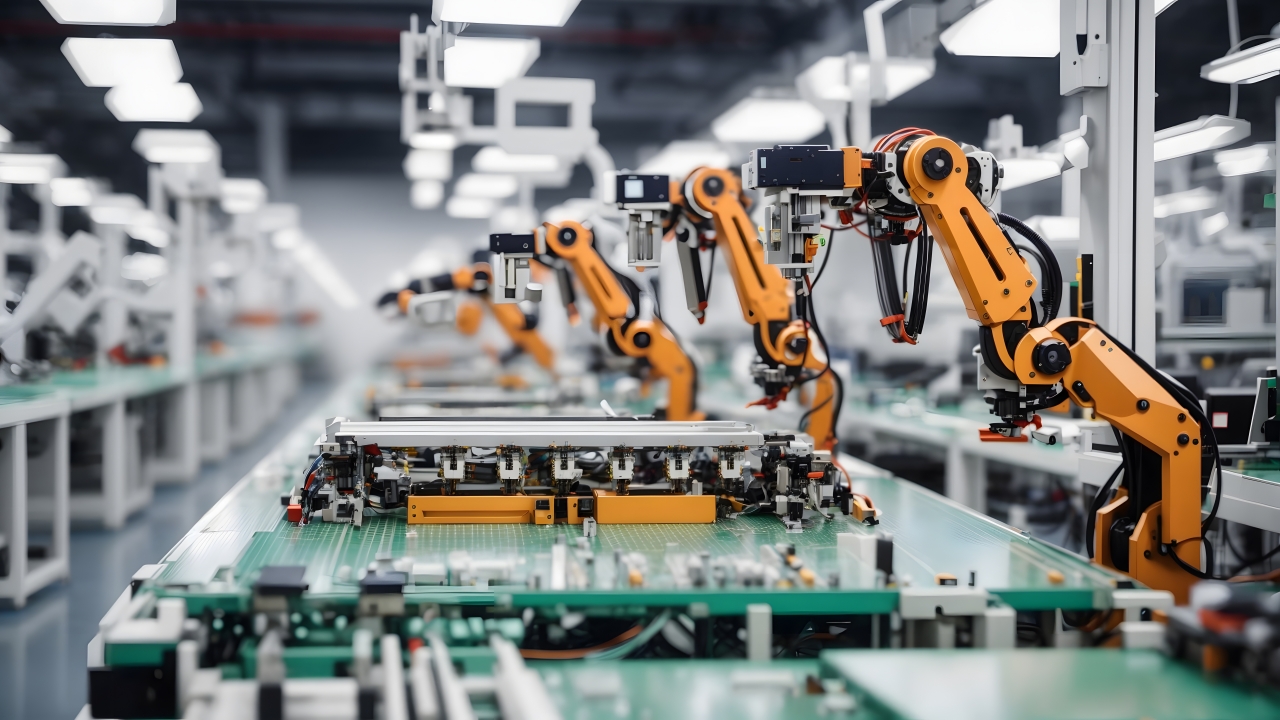
■ What Is Automation?
Automation means advancing processes stably with equipment and robots, without relying on human hands.
For example, tasks such as
● Supplying materials
● Peeling off release liners
● Transporting components
● Applying them in the specified position
● Compression bonding
● Inspecting
● Winding
● Sending them to the next process
In volume production, these must be repeated stably.
In other words, in automation, what matters is not being able to do it once,
but being able to do it the same way tens of thousands or hundreds of thousands of times.
■ Thermal Management Materials Can Be Difficult to Automate
Many thermal management materials are difficult to automate.
For example, they may have properties such as being
● Soft
● Thin
● Stretchable
● Prone to cracking
● Prone to shedding particles
● Sticky
● Prone to warping
● Prone to curl from winding
● Prone to sticking due to static electricity
In other words, even if thermal management materials have high performance, they can be difficult to handle in the process.
This becomes a major problem in volume production.
■ Even a Good Material Cannot Be Used If It Stops the Automated Machine
In prototyping, engineers can apply materials by hand.
Even if a material is somewhat hard to handle, careful work makes it possible.
In volume production, however, things are different.
Automated machines must supply, peel, apply, compression-bond, and inspect the material.
At this point, if
● The material jams
● The release liner will not peel
● The position shifts
● It cannot be picked up by suction
● It deforms during transport
● Particles fall off
volume production stops.
In other words, with thermal management materials, not only whether they cool,
but also whether they can be automated is important.
■ Automation Is Also Important in AI Servers
In AI servers, many thermal management components are used around GPUs, power supply components, and memory.
Heat dissipation sheets, TIM, graphite, insulating materials, EMI materials, and so on are placed at high density.
It is difficult to apply these accurately by hand every time.
Especially as production volumes increase, support for automation becomes important.
In other words, in AI servers, whether thermal management components can be applied with high precision and stability is important.
■ In EVs and ESS, Mass Producibility Is Even More Important
In EVs and ESS, similar components are used in large quantities.
Between battery cells.
Around cooling plates.
Around busbars.
Insulating components.
Heat dissipation components.
Thermal insulation components.
These must be assembled in large quantities, stably, and with the same quality.
In other words, in EVs and ESS, the automation suitability of thermal management materials is extremely important.
Even if a material is high-performance, adoption for volume production is difficult if it does not run on automated processes.
■ In Wearables and Smartphones, There Is the Problem of Being Too Small
In smartphones and wearable devices, thermal management components are extremely small.
Thin.
Narrow.
Complex shapes.
Narrow application positions.
To apply such components accurately, positional accuracy in automated processes is important.
In addition, small components are easily affected by static electricity and adhesive strength.
In other words, in small devices, how to supply small materials stably is a major challenge.
■ Support for Automation Is Also Needed in Robot Production
Robots themselves have heat problems, but automation is also needed in the processes that build robots.
Inside robots,
● Heat dissipation materials around motors
● Insulating materials for control boards
● Thermal management materials around batteries
● Sensor fixing materials
● EMI materials
● Adhesive materials, and so on are used.
To apply these stably, material shape, release liners, supply format, and automatic applicability must all be considered.
■ In Automation, Supply Format Is Important
In automated processes, not only the material itself but also the supply format is important.
Typical supply formats include
● Sheet supply
● Individual piece supply
● Reel supply
● Tray supply
● Supply with carriers
● Supply with release liners, and so on.
Even with the same material, if the supply format is poor, it is difficult to handle on automated machines.
In other words, in automation, not only material performance,
but also how it is supplied is important.
■ The Importance of Reel Supply
In mass production, reel supply is often required.
Reel supply makes it easy to supply material continuously on automated machines.
However, not all thermal management materials are suited to reel supply.
For example,
● Thick materials
● Hard materials
● Materials prone to cracking
● Materials that shed particles
● Materials weak against bending
can be difficult to supply on reels.
In other words, for reel supply,
the bendability of the material
peelability
dimensional stability
winding stability are important.
■ Release Liner Design Is Also Important
For adhesive-backed thermal management components, release liners are important.
A release liner is not just protective paper.
In automated processes,
● Ease of peeling
● Timing of peeling
● Whether the material stays behind
● Whether the material lifts
● Peeling angle
● Peeling force
● Static electricity
are important.
In other words, if the release liner design is poor, the material cannot be applied correctly.
Even for thermal management components, in automation the release liner is also included in what must be designed.
■ Whether It Can Be Picked Up by Suction Is Also Important
Automated machines sometimes pick up and transport components by suction.
However, some thermal management materials are difficult to pick up by suction.
For example, if
● The surface is rough
● It sheds particles
● It is too soft
● It deforms
● It is breathable
● The adhesive surface is exposed
suction transport becomes unstable.
In other words, in automation,
whether it has a shape that can be picked up by suction
whether it deforms during transport are also important.
■ Application Position Accuracy Determines Thermal Performance
When thermal management components are applied in the wrong position, their performance changes.
Slightly off the heat-generating component.
Off the heat dissipation path.
Unable to cover the area to be insulated.
Exposed edges.
Such misalignment changes not only thermal performance but also insulation, waterproofing, and noise performance.
In other words, in automated processes, application position accuracy is extremely important.
■ In Automation, Material Variation Becomes a Problem
If the material itself varies, its behavior on automated machines also changes.
For example, if there is
● Thickness variation
● Hardness variation
● Adhesive strength variation
● Peeling force variation
● Dimensional variation
● Warping
● Curl from winding
equipment conditions do not stabilize.
In other words, in automation, not only material performance
but also material stability is important.
■ In Automation, Not Breaking in the Process Is Necessary
Thermal management materials can break during the process.
For example, problems such as
● Graphite cracking
● Aerogel shedding particles
● Ceramic-based materials chipping
● Gel deforming
● Adhesive material squeezing out
● Metal foil wrinkling
In other words, in automation, not only performance after it becomes a product,
but also performance that can pass through the process is necessary.
■ The Researcher's Perspective
Toward an era in which thermal management materials are evaluated even for process suitability
In research and development, material properties are emphasized.
Thermal conductivity.
Thermal resistance.
Electrical insulation.
Heat resistance.
From now on, however, that alone will not be enough.
Considering volume production, evaluation will be needed all the way to
● Automatic applicability
● Reel suppliability
● Peelability
● Transportability
● Shape stability
● Long-term storability
● Risk of breakage in the process
In other words, thermal management materials will evolve from physical property materials
to process-suitable materials.
■ The Shop-Floor Perspective
Even if prototyping succeeds, automation can fail
What often happens on the shop floor is
that it went well in prototyping.
But when it is put on mass production equipment, it fails.
This kind of case.
The reasons include
● It could be adjusted when applied by hand
● On automated machines the material shifts
● The release liner is unstable
● It cannot be picked up by suction
● It deforms during transport
● The application position is unstable
In other words, prototype success and
automation success are different things.
■ Problems That Tend to Occur in Volume Production for Heat × Automation
In volume production processes, the following kinds of problems can occur.
● Meandering during reel supply
● Peeling defects
● Components left behind
● Suction pickup errors
● Application misalignment
● Air bubble entrapment
● Uneven compression bonding
● Remaining die-cut scrap
● Particle shedding
● Lifting due to curl from winding
● Automated machine stoppages
These affect not only thermal performance but also yield, productivity, and quality assurance.
In other words, with heat × automation,
material performance
processing accuracy
supply format
equipment suitability
must be considered at the same time.
■ OTIS's Perspective
OTIS is neither a thermal materials manufacturer nor an automated machine manufacturer.
However, we may be able to contribute in the area of processing thermal management materials into a form that can be used in automated processes.
What matters from OTIS’s perspective is
● High-precision die-cutting
● Microfabrication
● High-precision lamination
● Lamination of dissimilar materials
● Release liner design
● Reel supply
● Shape design for automated processes
● Dimensional stability in volume production
● Component design that looks at the customer’s process
It is not enough for thermal management materials just to cool.
It is important that they can be applied stably on automated machines without stopping or shifting.
■ What OTIS Can Do
At OTIS, through
● Heat dissipation sheet processing
● Graphite processing
● Insulating material processing
● Adhesive material processing
● EMI material processing
● High-precision die-cutting
● Microfabrication
● High-precision lamination
● Stacking of irregular shapes
● Support for reel supply
● Designing supply formats for automated processes
and more, we may be able to contribute to bringing thermal management components closer to a state in which they are easy to use on mass production equipment.
Especially in AI servers, EVs, ESS, smartphones, and wearable devices, not only thermal performance but also support for automation is a condition for adoption in volume production.
■ Outside OTIS's Expertise
On the other hand, OTIS is not a company that specializes in
● Design of automated machines themselves
● Robot control development
● Development of materials themselves
● Dedicated thermal simulation analysis
● Equipment design for customers’ entire lines
However, in the area of converting thermal management materials into a form that runs on automated processes,
we may be able to play an important role.
■ Industries Where This Technology Will Be Important
★★★★★ EVs and batteries
★★★★★ ESS and energy storage systems
★★★★★ AI servers
★★★★★ Smartphones
★★★★☆ Wearable devices
★★★★☆ Robots
★★★★☆ Semiconductor and electronic component manufacturing
■ Summary
Thermal management materials that cannot be automated are hard to use in volume production
Thermal management materials must not be evaluated on performance alone.
No matter how well they cool, if they
● Do not run on automated machines
● Cannot be peeled
● Cannot be picked up by suction
● Cannot be applied
● Shift
● Shed particles
● Stop the process
they are hard to use in volume production.
In other words, the essence of heat × automation is
making materials that cool into a form that can be used stably in volume production.
In future AI servers, EVs, ESS, smartphones, and wearable devices, the amount and complexity of thermal management materials used will increase further.
What will be important among all this is not only material performance.
It is thermal management that includes processing accuracy, supply format, automation suitability, and volume production stability.
Thermal management is not something completed on a design drawing.
It is completed only when it runs correctly through automated processes, is applied correctly, and functions correctly.
Column Supervisor: Koji Kakumoto (President, OTIS Co., Ltd.)
After studying abroad and working in planning and development at a trading company, he joined OTIS Co., Ltd. in 2011. While primarily working in the Corporate Planning Department, he has also served concurrently in manufacturing and technical divisions, and since 2018 has served as President, working to drive business growth and strengthen the organization.
This article is a general technical explanation intended for educational purposes and does not refer to any specific company, product, or technology.