
■ Air Conducts Heat Poorly
Air is a material that conducts heat extremely poorly.
Metals such as copper and aluminum conduct heat well.
Graphite also easily spreads heat in the in-plane direction.
Air, however, is different.
Air acts as a thermal insulation material.
In other words, in the world of thermal management,
air is a wall against heat.
■ Even a Tiny Amount of Air Stops Heat
Air layers are a problem even if they are not thick.
Tens of μm.
In some cases, even finer air layers affect thermal performance.
For example, even if there is a structure such as
Heat-generating component
↓
Heat dissipation sheet
↓
Cooling component
if there is an air layer between the heat dissipation sheet and the component, heat has difficulty flowing.
In other words, it may look applied,
but thermally it is not applied.
■ They Seem to Be in Contact, but Air Actually Remains
Component surfaces are not perfectly flat.
Metals, resins, and films all have irregularities at the microscopic level.
That is why, even when components are stacked, the entire surface is not in contact.
Only the high points are in contact, and air remains in the low points.
This becomes the cause of contact thermal resistance.
In other words, in thermal management, surface irregularities and air layers must always be considered.
■ TIM Is Used to Reduce Air Layers
TIM is a thermally conductive interface material placed between heat-generating components and heat-dissipating components.
The role of TIM is not simply to have high thermal conductivity.
The essence is filling air layers.
Greases, gels, heat dissipation sheets, phase change materials, and so on are used to penetrate the irregularities of component surfaces and reduce air.
In other words, before being a material that conducts heat, TIM is a material that drives out air.
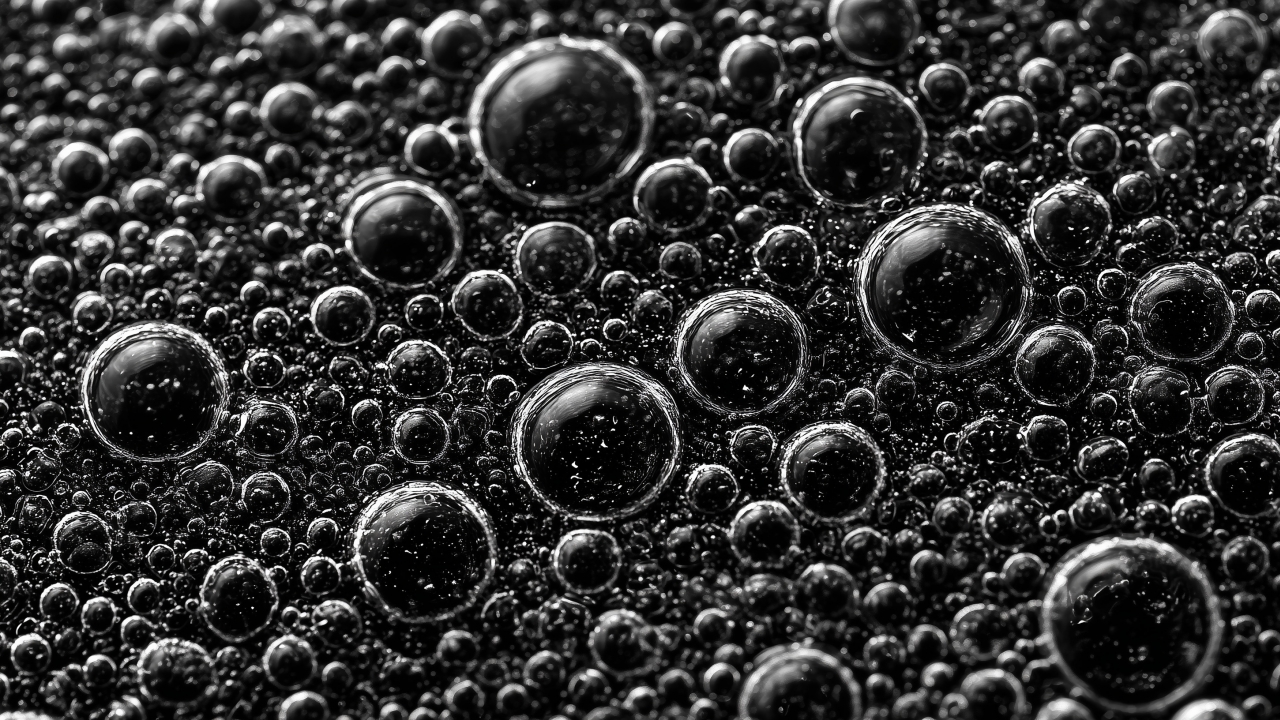
■ Air Bubbles Are Also Air Layers
What is particularly problematic on the volume production floor is air bubbles.
When air bubbles get in while applying heat dissipation sheets or adhesive materials, those parts become air layers.
Heat has difficulty flowing where there are air bubbles.
In other words, air bubbles are invisible thermal resistance.
Even if they look like small bubbles from the outside, they can become a major problem thermally.
■ Lifting Also Creates Air Layers
The edges of components lift.
They lift at steps.
They lift because they cannot conform to curved surfaces.
They lift because adhesive strength is insufficient.
Such lifting also causes air layers.
Air gets into the lifted parts.
As a result, heat has difficulty flowing.
In other words, lifting is the entrance to heat dissipation failure.
■ Insufficient Compression Bonding Leaves Air Behind
Simply applying heat dissipation sheets and adhesive materials can be insufficient.
Unless they are compression-bonded with appropriate pressure, air remains.
When the pressure is weak, the material cannot fully conform to surface irregularities.
As a result, air layers remain.
In other words, in thermal management, not only what to apply,
but also how to compression-bond it is important.
■ If the Thickness Does Not Match, Air Remains
When there are steps or tolerances between components, air layers remain if the material thickness does not match.
If it is too thin, it cannot fill the gap completely.
If it is too thick, insufficient compression or lifting can occur.
In other words, to eliminate air layers, material thickness design is important.
Thinner is not necessarily better.
Nor is thicker necessarily safer.
■ Hard Materials Tend to Leave Air Behind
Even materials with high thermal conductivity cannot conform to surface irregularities if they are too hard.
Then air remains between the material and the mating component.
As a result, it happens that it does not cool even though thermal conductivity is high.
In other words, in thermal management, both high thermal conductivity and
adhesion are necessary.
■ Soft Materials Make It Easier to Reduce Air
Soft materials easily conform to surface irregularities.
That is why they are advantageous for reducing air layers.
This is also why gels and greases are used.
However, if they are too soft, they may
● Squeeze out
● Deform
● Have unstable thickness
● Shift position
● Lose long-term reliability
In other words, softness is important, but softer is not necessarily better.
■ Air Layers Create Thermal Unevenness
Heat has difficulty flowing where there are air layers.
On the other hand, heat flows where there is contact.
As a result, temperature unevenness occurs.
In other words, air layers cause localized hot spots.
In AI servers, EVs, smartphones, and wearable devices, this localized heat becomes a major problem.
■ Air Layer Problems in AI Servers
In AI servers, GPUs and AI semiconductors generate a lot of heat.
To release that heat to the cooling plate, it is important not to leave air layers at the interfaces.
If there are air layers between the GPU and the TIM, or between the TIM and the cooling plate, heat has difficulty flowing.
As a result, it leads to
● Temperature rise
● Thermal throttling
● Reduced performance
● Shorter lifespan
In other words, in AI servers, controlling air layers determines cooling performance.
■ Air Layer Problems in EVs and ESS
In EVs and ESS, if air layers remain between battery cells and cooling components, temperature differences between cells increase.
When temperature differences are large, degradation rates differ.
In addition, localized temperature rises also affect safety.
In other words, in EVs and ESS, variation in air layers
can lead to variation in battery life and safety.
■ Air Layer Problems in Wearable Devices
In wearable devices, thermal management is done in places close to the human body.
If components cannot conform to curved surfaces and lift, air layers form.
As a result, heat can build up locally.
The human body is sensitive to temperature changes.
In other words, in wearable devices, a small air layer
can lead to great discomfort.
■ The Researcher's Perspective: Air Layers Are the Main Cause of Interfacial Thermal Resistance
In research and development, it is necessary to look not only at the thermal conductivity of materials alone, but also at interfacial thermal resistance.
Air layers are a main factor that increases interfacial thermal resistance.
That is why what matters is
● Surface roughness
● Pressure
● Material flexibility
● Thickness
● Compression ratio
● Viscoelasticity
● Changes over time
In other words, to reduce air layers, materials, structure, and process must be considered at the same time.
■ The Shop-Floor Perspective: Air Layers Are Born from How Things Are Made
On the shop floor, air layers are not determined by materials alone.
They are born from how things are made.
For example, air bubbles and lifting occur depending on
● Where application starts
● Application speed
● Compression bonding conditions
● Roller pressure
● How the release liner is peeled
● Automatic application conditions
● Warping of the material
● Work environment
In other words, air layers often occur as process defects.
■ Problems That Tend to Occur with Air Layers
In volume production processes, the following kinds of problems can occur.
● Air bubble entrapment
● Edge lifting
● Lifting at steps
● Insufficient compression bonding
● Insufficient conformity to curved surfaces
● Insufficient adhesive strength
● Air entrainment caused by the release liner
● Air entrapment during automatic application
● Lifting due to foreign matter
These affect not only thermal performance but also waterproofing, insulation, and adhesive reliability.
■ What to Check to Reduce Air Layers
To reduce air layers, the following must be checked.
● Whether the material can conform to surface irregularities
● Whether the thickness is appropriate
● Whether the compression bonding conditions are appropriate
● Whether the application method makes it hard for air bubbles to get in
● Whether the edges are lifting
● Whether it conforms to curved surfaces
● Whether foreign matter has gotten in
● Whether the same state can be reproduced in automated processes
● Whether it does not lift even after thermal cycling
In other words, air layer countermeasures are not just material selection, but process design itself.
■ OTIS's Perspective
OTIS is not a company that develops thermal materials themselves.
However, we may be able to contribute in the area of processing thermal management materials into forms that resist air layers and putting them into a state in which they can be used stably in volume production.
What matters from OTIS’s perspective is
● High-precision die-cutting
● High-precision lamination
● Stacking with adhesive materials
● Release liner design
● Reel supply
● Supply formats for automated processes
● Lamination configurations that suppress air bubbles
● Lamination of dissimilar materials
● Dimensional stability in volume production
Air layers are hard to see.
That is precisely why component configurations and process designs that make it hard for air to get in from the start are important.
■ What OTIS Can Do
At OTIS, through
● TIM processing
● Heat dissipation sheet processing
● Graphite processing
● Insulating material processing
● Adhesive material processing
● High-precision die-cutting
● Microfabrication
● High-precision lamination
● Lamination of dissimilar materials
● Reel supply
● Designing supply formats for automated processes
and more, we may be able to contribute to suppressing the occurrence of air layers and bringing thermal management components closer to a state in which they can be used stably in volume production.
■ Outside OTIS's Expertise
On the other hand, OTIS is not a company that specializes in
● Formulation design of materials themselves
● Filler development
● Thermal analysis of entire finished products
● Cooling equipment design
● Equipment design for customers’ entire lines
However, in the area of making thermal management components into forms that resist air layers and stabilizing them in volume production processes,
we may be able to play an important role.
■ Industries Where This Technology Will Be Important
★★★★★ AI servers
★★★★★ GPUs and semiconductors
★★★★★ EVs and batteries
★★★★★ ESS and energy storage systems
★★★★☆ Smartphones
★★★★☆ Wearable devices
★★★★☆ Robots
■ Summary
The most frightening thing in thermal management is the invisible air layer
Air conducts heat poorly.
That is why even a slight air layer between heat-generating components and heat-dissipating components makes it harder for heat to flow.
No matter how high-performance the heat dissipation material is, performance will not be achieved if air layers remain.
Air layers are caused by
● Surface irregularities
● Air bubbles
● Lifting
● Insufficient compression bonding
● Thickness mismatch
● Foreign matter
● Application misalignment
In other words, in thermal management, design that leaves no air behind is important.
Heat does not flow on the performance of materials alone.
It flows only when materials are in correct contact, air layers are minimal, and the same state can be reproduced in volume production.
That is precisely why controlling air layers is a fundamental of thermal management and one of the most important challenges on the shop floor.
Column Supervisor: Koji Kakumoto (President, OTIS Co., Ltd.)
After studying abroad and working in planning and development at a trading company, he joined OTIS Co., Ltd. in 2011. While primarily working in the Corporate Planning Department, he has also served concurrently in manufacturing and technical divisions, and since 2018 has served as President, working to drive business growth and strengthen the organization.
This article is a general technical explanation intended for educational purposes and does not refer to any specific company, product, or technology.



