■ Insulation Is Extremely Important in EV Batteries
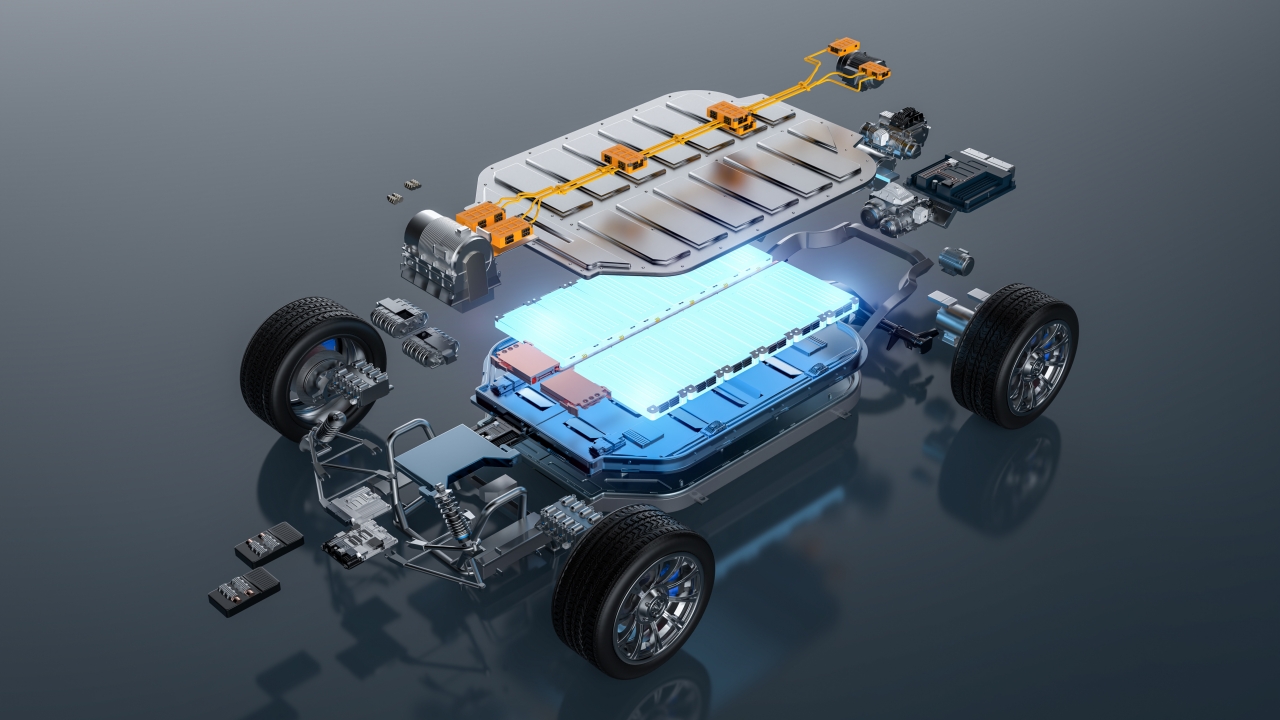
High voltages exist in battery packs.
Cells.
Busbars.
Cooling plates.
Metal cases.
Unwanted electrical contact between these must be prevented.
That is why
● Insulating films
● Insulating sheets
● Insulating coatings
● Insulating adhesives
are used.
In other words, in EV batteries, the requirement that
heat should pass through.
Electricity must never pass through.
is very strong.
■ Cooling Plates Are Often Metal
Metal is sometimes used for cooling plates because of its thermal conductivity and light weight.
Because there is metal near cells and electrode components,
insulation failure
is a major safety issue.
The insulating film tears.
A metal burr pierces through.
Metal is exposed due to misalignment.
Foreign matter gets in.
Such small defects may lead to major risks.
■ You Want Insulating Materials Thin, but Too Thin Is Also Dangerous
Making insulating film thinner is advantageous for
● Weight reduction
● Space saving
● Reduced thermal resistance
However, the thinner it becomes, the more susceptible it is to
● Pinholes
● Scratches
● Foreign matter
● Burrs
In other words, there is the contradiction that
thermally, you want it thinner.
Electrically, you want margin.
In EV batteries, this balance is important.
■ Burrs May Destroy Insulating Films
Copper foil.
Aluminum foil.
Busbars.
Metal cases.
There are many metal components around batteries.
If there are sharp burrs on the edges,
they apply local pressure to thin insulating films.
Through vibration,
temperature cycling,
and long-term use,
they may damage the insulating material.
In other words, the edge quality of metal processing also relates to battery safety.
■ Flame Retardancy Is Also Important
In batteries, if an abnormality occurs,
a large amount of heat may be generated.
That is why surrounding materials are required to have
● Flame retardancy
● Heat resistance
● Fire spread suppression
However, making materials thicker or adding another layer to increase flame retardancy
can increase thermal resistance and weight.
Here too, the contradiction arises that
in normal times, you want to release heat.
In abnormal times, you do not want to spread heat.
■ Heat Dissipation in Normal Times and Heat Blocking in Abnormal Times Are Different
In normal operation,
you want to release heat efficiently from the cells to the cooling plate.
But if abnormal heat generation occurs in one cell,
you do not want to transfer heat to the neighboring cells.
In other words, within the same battery pack, there are different requirements:
Normal times
= release heat
Abnormal times
= block heat
This is what makes battery thermal design very difficult.
■ What Is Thermal Runaway?
There is a state in which an abnormal temperature rise occurs inside a battery,
internal reactions further increase heat generation,
and the temperature rise accelerates.
When such thermal runaway occurs,
the abnormality of one cell may spread to surrounding cells.
That is why, in battery packs, it is important not to let one abnormality spread to the entire pack.
■ Placing Heat Shielding Materials Between Cells
To suppress the propagation of thermal runaway,
it is conceivable to place between cells
● Thermal insulation materials
● Heat-resistant materials
● Flame-retardant materials
● Aerogel-based materials
This delays heat transfer from the abnormal cell to adjacent cells.
However, thermal insulation materials also hinder heat movement in normal times.
In other words, it is necessary to achieve both normal cooling performance and safety in abnormal situations.
■ "Materials That Pass Heat" and "Materials That Stop Heat" Go into the Same Pack
In an EV battery pack,
thermally conductive materials,
thermal insulation materials,
insulating materials,
adhesives,
seal materials,
and cushioning materials
exist at the same time.
In other words,
battery thermal management is not completed by considering heat dissipation materials alone.
Where to pass heat.
Where to stop heat.
Where to insulate.
Where to fix.
These must be combined.
■ Seals Are Also Important in Liquid Cooling
Coolant flows inside the cooling plate.
Piping.
Fittings.
Joints.
If liquid leaks from these, it is a major problem.
That is why
● O-rings
● Gaskets
● Seal materials
are important.
In EVs, they must not leak even while vibrating and subjected to temperature changes over long periods.
The usage environment differs greatly from liquid cooling in data centers.
■ Cars Are Always Vibrating
Battery packs receive vibration and shocks from the road.
Furthermore, temperature also changes with
winter,
summer,
charging,
driving,
and parking.
In other words, seal materials and adhesives are subjected to
vibration + temperature cycling
over long periods.
Not leaking initially is not enough.
■ Compatibility Between Coolant and Materials Is Also Important
When coolant is in long-term contact with
● Seal materials
● Rubber
● Resins
● Adhesives
swelling,
hardening,
and degradation
may occur.
That is why, in liquid-cooled batteries, not only thermal performance but material compatibility with the coolant is also important.
■ Waterproofing and Dustproofing Are Also Needed
Battery packs are often placed at the bottom of the vehicle.
That is why the inside must be protected from
● Water
● Mud
● Salt
● Dust
In other words, seals are needed around the outer perimeter of the pack.
However, if the thickness and compression state of seal materials are not stable, waterproofing cannot be maintained.
■ Shape Accuracy Is Important for Gaskets
In large battery cases, the perimeter seal also becomes long.
The longer the seal line, the more
even one spot of
● Chipping
● Insufficient thickness
● Misalignment
● Foreign matter
may lead to leakage.
In other words, for large-area gaskets, it is important to make the entire perimeter with stable shape and thickness.
■ Adhesives Are Used Everywhere Inside Batteries
In EV batteries, adhesives may be used for
● Fixing insulating films
● Fixing cells
● Fixing cushioning materials
● Fixing sensors
● Fixing thermally conductive materials
● Fixing cables
However, adhesive properties change with temperature.
They soften at high temperatures.
They harden at low temperatures.
They creep over long periods.
That is why what matters is not “as long as it sticks,” but remaining in the required position for the life of the vehicle.
■ Adhesive Layers Also Become Thermal Resistance
Suppose an adhesive is used to fix thermally conductive material to the cooling plate.
Adhesives are convenient.
However, if they enter the heat path,
the adhesive layer also becomes thermal resistance.
Full-surface adhesion or partial adhesion?
Use a thermally conductive adhesive?
This choice also changes thermal performance.
In other words, the fixing method itself becomes thermal design.
■ Sensors Are Also Important Components of Thermal Management
In batteries,
● Temperature
● Voltage
● Current
are monitored.
If temperature sensors are poorly positioned, they may not be able to detect where it is truly getting hot.
Furthermore, the measurement response also changes with
contact between the sensor and the cell,
the adhesive used for fixing,
and insulating films.
In other words, where and how to attach temperature sensors is also thermal design.
■ The BMS Uses the Battery While Watching the Heat
The battery management system, or BMS, monitors
● Cell voltage
● Current
● Temperature
If the temperature is too high, it
limits charging output,
limits discharging output,
and raises cooling capacity.
In other words, battery performance and thermal management are also connected in terms of control.
■ Temperature Prediction by AI Is Also Advancing
In the future, control such as predicting battery temperature from
● Driving conditions
● Outside temperature
● Charging schedules
● Cell degradation state
and
cooling in advance,
or warming in advance
will also become important.
In other words, EV thermal management is also moving from responding after seeing the temperature
to predicting and controlling temperature.
■ However, Even Control Cannot Fix Physical Poor Contact
Even if the BMS strengthens cooling,
if the thermally conductive material between the cell and the cooling plate is lifting, that cell is hard to cool.
In other words, even with AI control and an advanced BMS,
it is meaningless unless the physical heat path
is correct.
Here too, processing accuracy is important.
■ Summary
The balance between thinness and safety of insulating films.
The risk of metal burrs damaging insulating materials.
The contradictory requirements of heat dissipation in normal times and heat blocking in abnormal times.
The sealing of liquid cooling, and the durability of adhesives continuously subjected to vibration and temperature cycling.
And temperature monitoring by sensors and the BMS, and predictive control by AI.
All of these are mechanisms for continuing to use batteries safely over long periods.
However, no matter how advanced the control technology, if the thermally conductive material is physically lifting, that cell will not cool.
Control only functions when there is a correct heat path.
In Part 3, we look at how these heat, insulation and safety requirements are actually mass-produced, lightly and in large quantities.
We look at the practical perspectives of thinner films, large-area processing and automation, as well as application areas such as next-generation batteries and ESS, and OTIS’s role.
Column Supervisor: Koji Kakumoto (President, OTIS Co., Ltd.)
After studying abroad and working in planning and development at a trading company, he joined OTIS Co., Ltd. in 2011. While primarily working in the Corporate Planning Department, he has also served concurrently in manufacturing and technical divisions, and since 2018 has served as President, working to drive business growth and strengthen the organization.
This article is a general technical explanation intended for educational purposes and does not refer to any specific company, product, or technology.