Almost every day, news stories report
“which AI is the smartest” and “which country is ahead.”
At first glance, this looks like a competition of intelligence.
But is that really the case?
What is actually happening is less an intelligence war and more like a competition over resources, energy, and cooling.
AI looks like a brain industry.
But in reality, I think it is a gigantic resource-consuming industry.
The smarter AI becomes, the more computation it requires.
Massive computation requires a massive number of GPUs.
A massive number of GPUs requires a massive amount of electricity.
And a massive amount of electricity ultimately becomes a massive amount of heat.
In other words,
Improved AI performance
↓
More GPUs
↓
Higher power consumption
↓
More heat generation
↓
More cooling equipment
↓
Even more power: a gigantic cycle is taking place.
What matters here is that AI is not free intelligence.
AI looks like invisible software.
Behind the scenes, however, gigantic physical infrastructure is running, including
・Power plants
・Semiconductor factories
・Cooling equipment
・Data centers
・Water
・Rare metals
・Power grids
・Communications infrastructure
In other words, AI is not magic in the cloud but a gigantic industry in the real world.
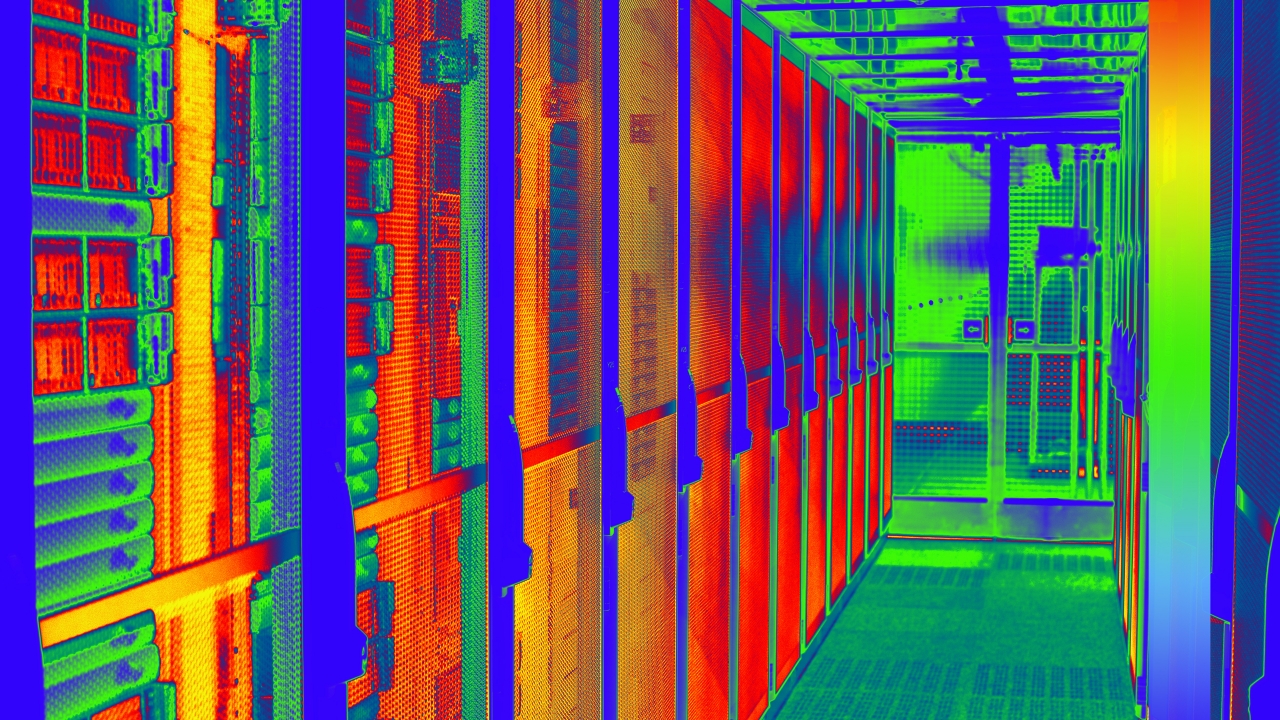
In fact, recent data centers are no longer simple server rooms.
They are becoming closer to giant heat-generating facilities.
There are a growing number of cases in which a single AI server consumes more electricity than an ordinary household.
Moreover, most of that electricity turns into heat.
In other words, an AI data center is an intelligence factory and, at the same time, a gigantic heat-generating factory.
That is why what will truly matter from now on is not only
how smart an AI you can build.
Rather, it is highly likely to become a contest of
how much electricity you can secure
how much heat you can dissipate
how much you can cool
More than just “highly likely,” I can personally state that this will be an absolute requirement until around 2035.
In fact, the world has already started moving.
・Collaboration with nuclear power
・Use of geothermal energy
・Arctic data centers
・Undersea cooling
・Liquid cooling technology
・Waste heat reuse
・Securing water resources, and more
In other words, the future is a race to develop AI and, at the same time,
a race to secure energy and a cooling race.
If you look at the world’s news from this perspective, I think your understanding will deepen.
This is not limited to AI.
EVs face the problems of fast charging and thermal runaway.
In robots, heat generation in the joints will increase as they become smaller and more powerful.
Semiconductors are starting to lose their escape routes for heat through stacking.
In wearable and medical devices, the closer they get to the human body, the more important thermal safety becomes.
In other words, future industries will always come back, in the end, to heat problems.
And heat problems are not simply a matter of cooling.
On the actual shop floor,
・A good material does not cool well
・An air layer at the contact surface stops heat
・Performance changes due to tiny lifting or air gaps
・The process is not stable in automated production
・Something that succeeded in prototyping does not work in volume production, and so on
many problems occur that cannot be solved by theory alone.
In other words, thermal solutions cannot be achieved by material performance alone.
Only when
・Processing accuracy
・Contact method
・Lamination
・Microfabrication
・Supply format
・Process design
・Volume production stability
are all achieved does it become a true thermal solution.
OTIS is
not a thermal materials manufacturer.
Nor is it a cooling equipment manufacturer.
Nor is it a semiconductor design company.
However, for many years, through
・High-precision processing
・Microfabrication
・Thin-film processing
・Lamination
・Automated supply
・Bonding of dissimilar materials, and more
we have worked on making functions work in volume production.
In the process, heat problems have always been an important theme, and we have built up a large track record that has contributed to the world’s technological progress.
In this heat series, which will run for several months, we will organize
・What heat is
・Why heat problems occur
・Why they are becoming important in future industries
・Why things do not go according to theory
・Why things become difficult in volume production
・How heat conflicts with other performance requirements
・What is happening on the shop floor
as clearly as possible, covering research, design, volume production, the shop floor, and future forecasts.
The real theme of this series is technology that makes heat solutions work in volume production.
Beyond that, we are also looking ahead to technology that makes the high-performance society of the future possible.
The future will become even higher-performance.
At the same time, however, it will also become an era of even greater struggle with heat.
That is why, from now on, technology that achieves the final 0.01mm of heat will become increasingly important.
Column Supervisor: Koji Kakumoto (President, OTIS Co., Ltd.)
After studying abroad and working in planning and development at a trading company, he joined OTIS Co., Ltd. in 2011. While primarily working in the Corporate Planning Department, he has also served concurrently in manufacturing and technical divisions, and since 2018 has served as President, working to drive business growth and strengthen the organization.
This article is a general technical explanation intended for educational purposes and does not refer to any specific company, product, or technology.