
【1】What Is a Qubit?
In conventional computers, one bit takes either the state “0” or “1.”
Quantum computers, on the other hand, use quantum bits (qubits).
Qubits have the following characteristics.
・Superposition
・Entanglement
・Interference
Through superposition, a qubit can represent 0 and 1 at the same time.
This property makes enormous parallel computation possible for certain calculations.
【2】Representative Types of Quantum Computers
There are several types of quantum computers.
Main types:
・Superconducting qubits
・Ion trap method
・Photonic quantum method
・Silicon qubits
What Google, IBM, and others are currently developing is mainly the superconducting qubit method.
On the other hand, what is attracting attention from the semiconductor industry is silicon qubits.
【3】The Relationship with Semiconductor Technology
Quantum computers may seem like a completely separate technology, but in fact they are deeply related to semiconductor technology.
Main reasons:
・Silicon qubits can make use of CMOS technology
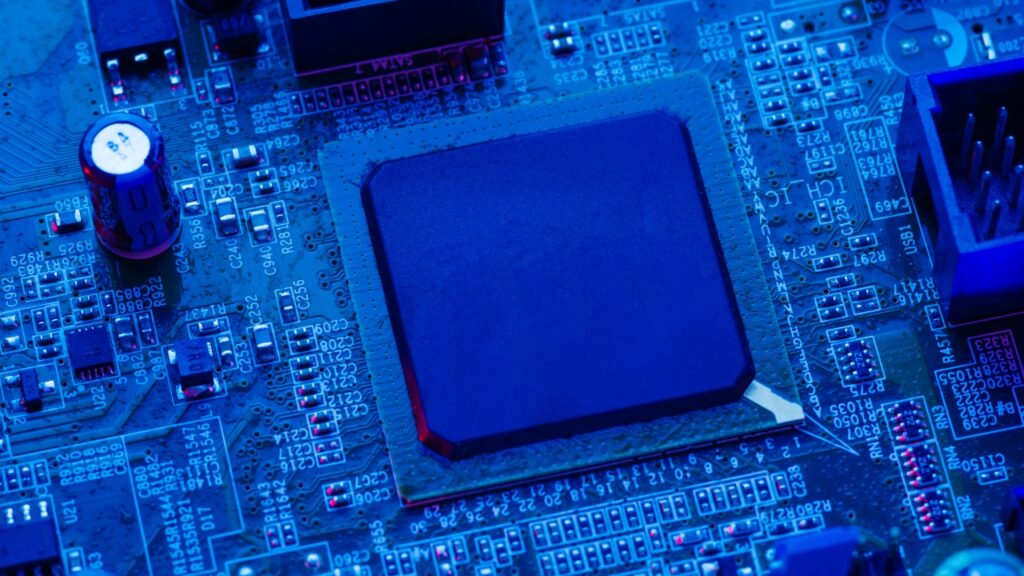
・Control circuits are made of semiconductors
・Microfabrication technology is needed to manufacture quantum chips
For this reason, many semiconductor manufacturers have entered quantum computer research.
【4】Current Challenges
Quantum computers still face many challenges.
Main challenges:
・Qubit stability
・Error correction
・Large cooling equipment
・Scaling up the number of qubits
Today’s quantum computers remain at the scale of a few hundred qubits, and practical computation is said to require even larger systems.
【5】The Future of Quantum Computers
Even if quantum computers become widespread, it is thought that conventional computers will not be completely replaced.
Expected configuration:
・Conventional computers (general-purpose processing)
・Quantum computers (high-speed computation for specific problems)
In other words, quantum computers are likely to develop as special-purpose computers that complement conventional computers.
【6】Summary
・Quantum computers are a new computing technology that uses quantum mechanics
・Qubits have superposition states
・Integration with semiconductor technology, such as silicon qubits, is also advancing
・Many technical challenges remain before practical use
Comprehension Check
1.How do qubits differ from conventional bits?
2.What types of quantum computers are there?
3.Why is semiconductor technology related to quantum computers?
Column Supervisor: Koji Kakumoto (President, OTIS Co., Ltd.)
After studying abroad and working in planning and development at a trading company, he joined OTIS Co., Ltd. in 2011. While primarily working in the Corporate Planning Department, he has also served concurrently in manufacturing and technical divisions, and since 2018 has served as President, working to drive business growth and strengthen the organization.
This article is a general technical explanation intended for educational purposes and does not refer to any specific company, product, or technology.