【1】What Is Spin?
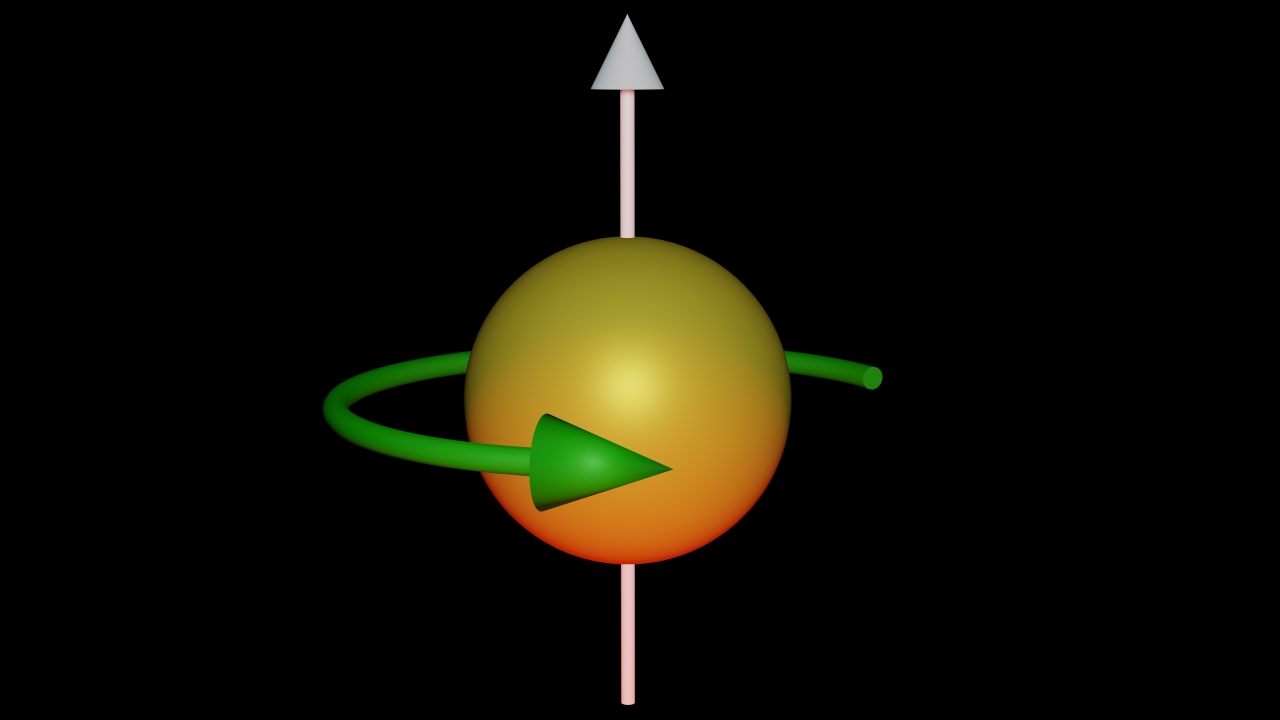
Electrons have not only charge but also magnet-like properties.
This magnetic property is spin.
Spin mainly has two states.
・Spin up
・Spin down
By using these two states, the digital information 0 and 1 can be represented.
【2】Characteristics of Spintronics
Spintronics technology has characteristics that conventional memory does not.
Main characteristics:
・High-speed operation
・Low power consumption
・Non-volatility (data is retained even when power is turned off)
・High endurance
For this reason, spintronics is expected to be a next-generation memory technology.
【3】Representative Spintronic Memories
There are several types of spintronic memory currently being researched and commercialized.
Main examples:
・MRAM (Magnetoresistive RAM)
・STT-MRAM (Spin Transfer Torque MRAM)
・SOT-MRAM (Spin Orbit Torque MRAM)
STT-MRAM in particular is already being put to practical use in some semiconductor products.
【4】Why It Is Attracting Attention as Next-Generation Memory
In today’s computers, multiple memory technologies are used for different purposes.
Typical examples:
・DRAM: fast but requires power
・NAND: non-volatile but slow to write
Spintronic memory has the potential to combine these characteristics.
Expected characteristics:
・High-speed access
・Non-volatility
・High endurance
For this reason, its potential as a “universal memory” is being researched.
【5】Current Challenges
Spintronics technology still faces several challenges.
Main challenges:
・Reducing write current
・Scaling technology
・Manufacturing costs
・Establishing volume production processes
However, as a new direction for semiconductors, spintronics is a field that many research institutions and companies are working on.
【6】Summary
・Spintronics is a technology that uses electron spin
・Research is advancing on it as next-generation memory
・Some technologies such as MRAM are already in practical use
・It has the potential for high-speed, low-power memory
Comprehension Check
1.What kind of technology is spintronics?
2.What are the characteristics of MRAM?
3.Why is spintronic memory expected to be a next-generation memory?
Column Supervisor: Koji Kakumoto (President, OTIS Co., Ltd.)
After studying abroad and working in planning and development at a trading company, he joined OTIS Co., Ltd. in 2011. While primarily working in the Corporate Planning Department, he has also served concurrently in manufacturing and technical divisions, and since 2018 has served as President, working to drive business growth and strengthen the organization.
This article is a general technical explanation intended for educational purposes and does not refer to any specific company, product, or technology.