【1】Differences Between the Human Brain and Computers
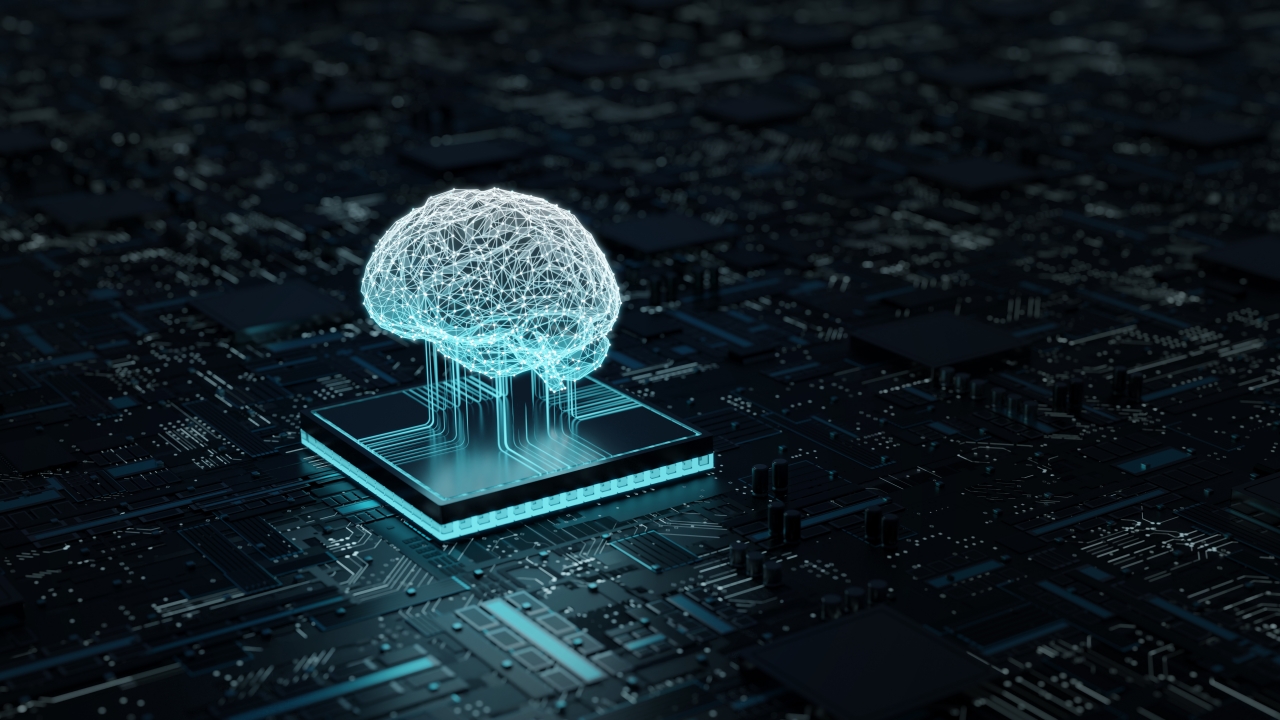
Conventional computers and the human brain have very different information processing structures.
Main differences:
・Computers: sequential processing
・Brain: massively parallel processing
In addition, the human brain can perform advanced information processing with very little power.
The power consumption of the human brain is said to be about 20W, which is orders of magnitude lower than that of a high-performance GPU.
This high efficiency is the motivation for neuromorphic research.
【2】The Basic Structure of Neuromorphic Computing
Neuromorphic semiconductors have a structure that mimics the neural circuits of the brain.
Main elements:
・Neurons (compute units)
・Synapses (connection strength)
・Spike signals
Spiking neural networks (SNNs) that use these elements are at the center of research.
【3】Examples of Neuromorphic Chips
Several companies and research institutions are developing neuromorphic semiconductors.
Representative examples:
・Intel Loihi
・IBM TrueNorth
・BrainChip Akida
These chips adopt computing methods different from those of conventional GPUs.
【4】Expected Application Fields
Neuromorphic semiconductors are expected to be applied particularly in the following fields.
Main fields:
・Robotics
・Autonomous driving
・Edge AI
・Sensor processing
In these fields, low power consumption and real-time processing are important.
【5】Current Challenges
Much of neuromorphic technology is still at the research stage, and there are several challenges to practical use.
Main challenges:
・Software development environments
・Maturity of algorithms
・Manufacturing technology
・Compatibility with existing AI
For this reason, GPUs remain mainstream for AI computation today, but in the long term, neuromorphic computing is attracting attention as a new computing paradigm.
【6】Summary
・Neuromorphic computing is brain-inspired computing
・It has the potential to solve the von Neumann bottleneck
・It is expected to enable ultra-low-power AI
・It is still at the research stage but is attracting attention as a future computing technology
Comprehension Check
1.What is the von Neumann bottleneck?
2.What is the basic structure of neuromorphic semiconductors?
3.Why are expectations high for neuromorphic technology?
Column Supervisor: Koji Kakumoto (President, OTIS Co., Ltd.)
After studying abroad and working in planning and development at a trading company, he joined OTIS Co., Ltd. in 2011. While primarily working in the Corporate Planning Department, he has also served concurrently in manufacturing and technical divisions, and since 2018 has served as President, working to drive business growth and strengthen the organization.
This article is a general technical explanation intended for educational purposes and does not refer to any specific company, product, or technology.