■ Also Look at the Customer's Preceding Processes
Before applying the component,
cleaning,
heating,
and plasma treatment
are performed.
Adhesiveness changes depending on those conditions.
Or the surface roughness of the mating material differs.
In other words, looking only at one’s own component is not enough.
The customer’s processes before application also affect adhesion and thermal performance.
■ Look at the Condition of the Mating Material
Aluminum.
Resin.
Painted surfaces.
Glass.
Depending on surface condition,
adhesiveness,
contact,
and thermal resistance
change.
In other words, rather than just processing material A and delivering it,
understanding what it will be applied to is important.
■ Also Look at Processes After Application
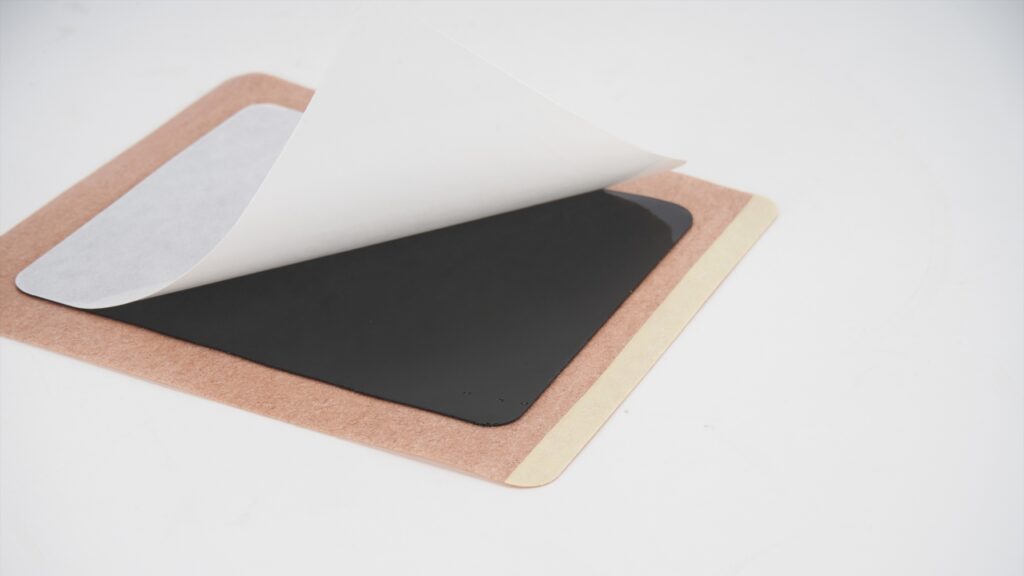
TIM is applied.
Then
a heat sink is fixed with screws,
pressed,
and heated.
These later processes change the TIM’s compression state and position.
In other words, by looking before and after the customer’s process, it becomes clear where component performance is determined.
■ The Value of Knowing Even the Final Assembly Pressure
TIM thickness is considered.
But without knowing
how much it will be compressed
in the customer’s assembly,
it is hard to judge the optimal thickness.
In other words, there is value in the processing manufacturer also knowing, to the necessary extent, what state the component will ultimately be in.
■ Screw Fastening Positions Also Affect Thermal Performance
A heat sink is fastened with four screws.
Pressure in the center is weak.
In another structure, the center is also uniform.
Then the TIM contact state differs.
In other words, even if it looks like a component problem, the cause may be the fixing structure.
The processing company does not need to design everything.
However, the perspective of not limiting the cause to the processed material is important.
■ Look Not Only at Component Temperature but at the Heat Path Beyond
The customer says,
“We want higher-performance TIM.”
But the cooling plate itself is thermally saturated.
In this case, changing the TIM has little effect.
In other words, it is necessary to look at
where the real bottleneck is.
OTIS does not need to become a CFD analysis company.
But there is value in questioning whether the problem can be solved by a material change alone.
■ In Thermal Management Consultations, Ask "Where Should Heat Be Released?"
The heat source is known.
But the exit for heat is unclear.
The enclosure.
The cooling plate.
Air.
Another metal component.
Where should it be released?
If this is known,
the roles of
TIM,
graphite,
and metal foil
are also determined.
In other words, it is important to know not only the heat source but the exit for heat.
■ Do Not Start Thermal Management Consultations from Material Names
“We want graphite processed.”
Rather than proceeding with just that,
ask
why graphite,
and what they want to solve.
In some cases,
copper foil,
TIM,
or contact improvement
may be more suitable.
In other words, material specifications are taken back to the customer’s challenge and reconsidered.
■ Looking at the Customer's Later Processes Enables Integration Proposals
The customer
applies insulating film,
then graphite,
then adhesive.
Three processes.
OTIS laminates the three materials.
Turns them into one component.
The customer may be able to
do it in one process.
In other words, by looking at the customer’s process, proposals to move processes to the processing company’s side can be made.
■ Consider Which Processes Should Be Outsourced
There are processes better left with the customer
and processes better pre-processed at OTIS.
For example,
lamination with strict positional accuracy
and thin-film components that are hard to handle
go to OTIS.
Processes whose final position is determined only in product assembly
stay with the customer.
In other words, it is important to design the division of processes.
■ Process Transfer Is Not Simply Outsourcing
The customer outsources three processes.
Costs simply increase.
Then it is meaningless.
On the OTIS side, by
continuous processing,
reel processing,
and integration,
it can be done more efficiently than the customer.
Only then does value emerge.
In other words, process transfer is moving processes to a more efficient place.
■ Reducing Positional Deviation Through Process Integration
Materials A,
B,
and C.
Applied individually by the customer.
Each process ±0.3 mm.
Integrated at OTIS.
Position between materials ±0.1 mm.
If this can be done,
the final functional position can be stabilized.
In other words, process integration also has the value of quality improvement.
■ Reducing Customer Processes Also Reduces Foreign Matter Risk
Opening the component.
Touching.
Applying.
The more processes there are, the more opportunities for foreign matter contamination.
Integrated in a clean environment on the processing manufacturer’s side.
Applied only once on the customer’s side.
This may reduce foreign matter risk.
■ Reducing Customer Processes Also Reduces Operator Differences
Three manual applications.
Human skill enters three times.
One application with an integrated component.
Opportunities for human judgment can be reduced.
In other words, reducing part count is not just cost reduction, but also leads to variation reduction.
■ Look for Bottlenecks in the Customer's Process
There is no problem with the processed product itself.
But in the customer’s process,
component supply,
application,
and inspection
are bottlenecks.
If so, propose there.
In other words, what OTIS should look at is not only “whether its own component is good,” but
how that component flows through the customer’s entire line.
■ Look at Process Cost, Not Just Component Unit Price
Loose parts 100 yen.
Reel product 110 yen.
By unit price alone, loose parts are cheaper.
But loose parts require
operators,
alignment,
application,
and inspection.
Reel products can be automated.
The total cost may reverse.
In other words, when proposing, widen the perspective from component price to total process cost.
■ Looking Only at the Customer's Labor Costs Is Not Enough Either
The effects of automation are not only
personnel reduction.
There are also
defect rate,
equipment uptime,
takt,
traceability,
and quality stability.
In other words, customer process proposals need to look at effects across QCD as a whole.
■ There Is Room for Improvement Even in Processes the Customer Is Not Troubled By
The floor has made it the same way for years.
Operators are used to it.
It is not recognized as a problem.
However,
1,000 peels a day,
5 seconds per sheet,
can amount to large man-hours over a year.
This happens.
In other words, by observing the customer’s process, challenges the customer has not yet recognized as challenges can be found.
■ "Are You Having Any Trouble?" Alone Does Not Bring Out Challenges
The customer is asked,
“Are you having any trouble?”
The answer may be
“Not particularly.”
But looking at the process,
it looks hard to apply,
component management is complex,
and people are sorting out defective parts.
Problems become visible.
In other words, challenges are found not only through interviews but through observation.
■ A Relationship Where the Customer Shows Its Process Is Strong
If a processing company is just a price comparison target, customers find it hard to show their processes.
But if it becomes
a company that thinks about volume production improvement together,
processes will be shared.
Then even more proposals can be made.
In other words, customer process proposals are not only technical, but also
activities that deepen trust with customers.
■ Sales Should Not Stop at Receiving Drawings Either
If sales
receives drawings
and passes them on to quoting,
processing proposals do not expand.
Ask
which process it is for,
how many people currently make it,
whether automation is planned,
and what becomes defective.
In other words, sales also needs to change from sales that sell processed products to sales that understand processes.
■ Engineers Should Not Answer Only "Can Process / Cannot Process"
Do not end with
“This shape is difficult.”
What is difficult?
Too narrow.
Waste cannot be stripped.
It cannot be peeled automatically.
Then propose that
changing the shape slightly would make it work.
In other words, impossibility answers are turned into proposals of conditions for success.
■ The Quality Department Also Needs to Understand the Customer's Process
A defect appeared.
Processing dimensions are within specification.
So it is not an OTIS problem.
It ends there.
But in the customer’s process,
insufficient pressing,
high-temperature transport,
or application deviation
may be occurring.
In other words, in investigating causes,
do not separate one’s own process from the customer’s process.
■ Understanding the Customer's Process Also Clarifies the Scope of Quality Assurance
What OTIS guarantees,
and where customer conditions begin,
can be clarified.
For example,
component positional accuracy is OTIS’s,
final compression ratio is the customer’s.
They are separated.
In other words, process understanding does not blur the scope of responsibility, but rather clarifies it.
■ Summary of Part 2: Component Performance Is Determined Before and After the Customer's Process
A component is not complete the moment it is applied.
Surface treatment in the preceding process.
The mating material.
Compression during assembly.
Screw fastening positions.
The exit for heat.
These combine to determine final performance.
That is why the cause is not limited to the processed material, and one looks at where the real bottleneck is.
And looking across the customer’s process,
proposals emerge such as
combining three processes into one component,
reducing positional deviation, foreign matter and operator differences at the same time,
and judging by total process cost rather than component unit price.
For that, sales, engineers and the quality department all need to understand the customer’s process outside the drawing.
In other words, what we looked at in Part 2 is the perspective of looking not at whether one’s own components are good or bad, but at how components flow through the customer’s entire line.
In Part 3, we consider collaboration with material manufacturers and equipment manufacturers, the value of getting involved from the early stages of development, and the form of “a company that establishes processes” that OTIS aims to be.
Column Supervisor: Koji Kakumoto (President, OTIS Co., Ltd.)
After studying abroad and working in planning and development at a trading company, he joined OTIS Co., Ltd. in 2011. While primarily working in the Corporate Planning Department, he has also served concurrently in manufacturing and technical divisions, and since 2018 has served as President, working to drive business growth and strengthen the organization.
This article is a general technical explanation intended for educational purposes and does not refer to any specific company, product, or technology.