■ What Is Graphite?
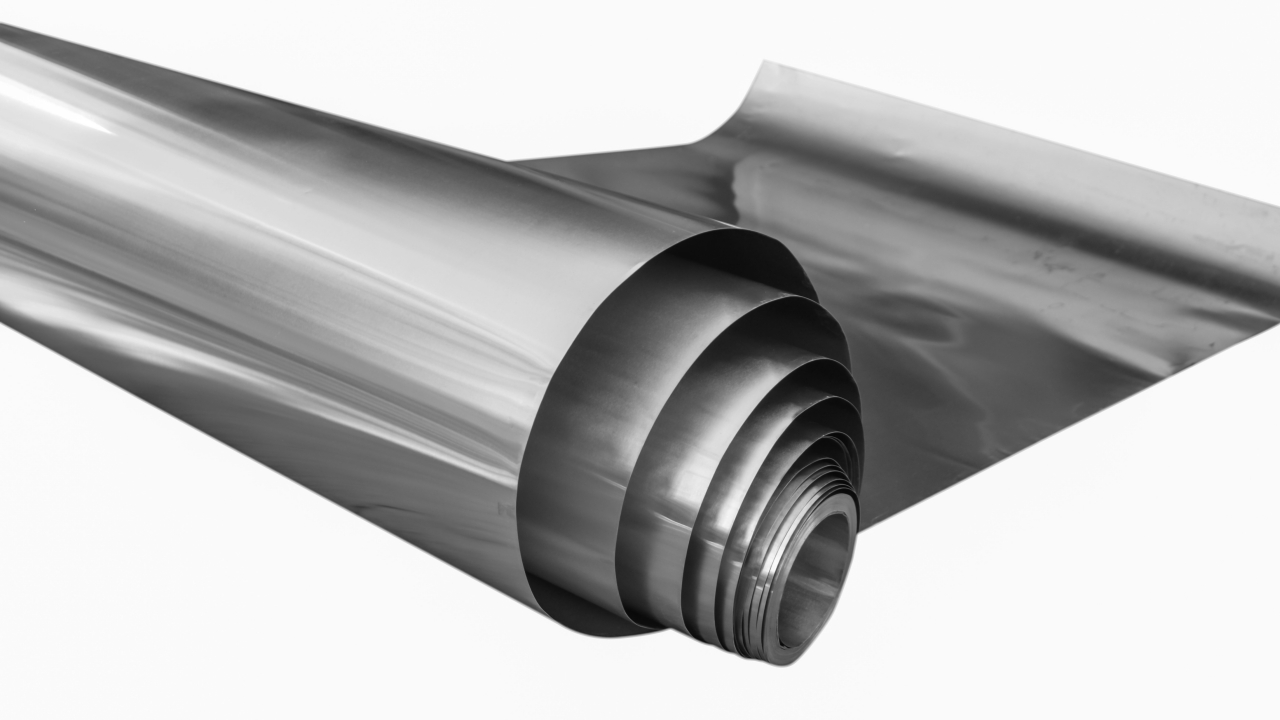
Graphite is a material in which carbon atoms are arranged in layers.
In Japanese, it is also called “kokuen” (black lead).
It is also the material used in pencil leads.
However, the graphite sheets used in thermal management differ from ordinary pencil graphite; they are materials with enhanced thermal conductivity and sheet properties.
Synthetic graphite sheets in particular are characterized by being thin, light, and having high thermal conductivity in the in-plane direction.
■ Graphite's Biggest Characteristic Is Directionality
The most important point in understanding graphite is that its heat conduction is directional.
Graphite conducts heat extremely well in the in-plane direction.
On the other hand, it may not conduct heat well in the thickness direction.
In other words, graphite is often used not so much as a material that releases heat downward,
but as a material that spreads heat sideways.
■ What Does Spreading Heat Mean?
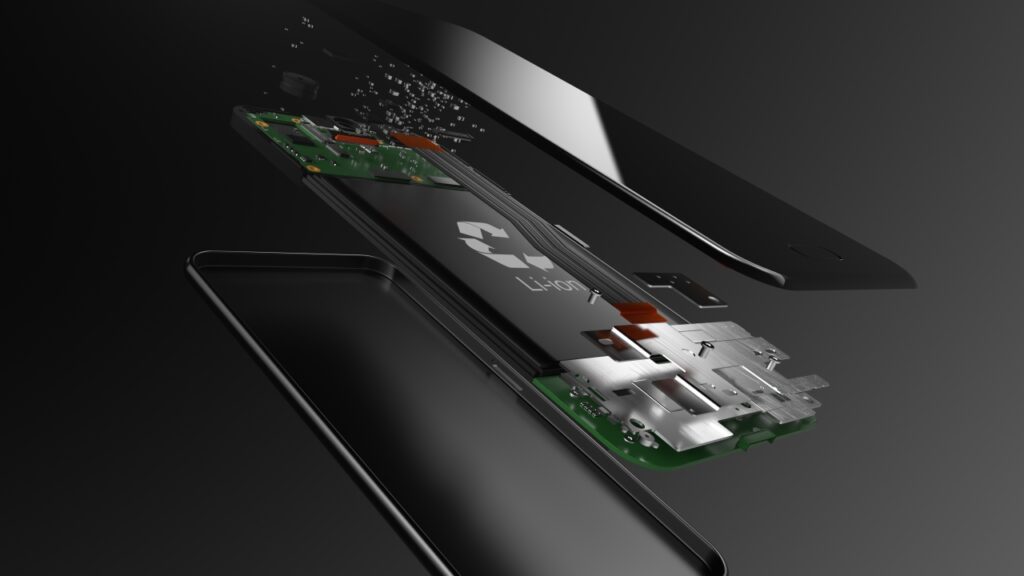
For example, suppose there is a small heat-generating component inside a smartphone.
If only the area around that component becomes hot, a hot spot occurs.
At this point, using a graphite sheet makes it possible to spread localized heat in the in-plane direction.
In other words, it works like this:
Small heat-generating point
↓
Graphite sheet
↓
Heat diffused over a wide area
This makes it easier to keep a single point from becoming extremely hot.
■ Graphite Is Well Suited to Hot Spot Control
One of the reasons graphite is often used is hot spot control.
In smartphones, tablets, and thin electronic devices, it is difficult to use large heat sinks or fans.
That is why it is important not to concentrate heat at one point, but to spread it across a surface.
This is where graphite sheets play an active role.
In other words, it is easier to understand graphite not as a material that cools,
but as a material that reduces temperature unevenness.
■ Graphite Is Light
Graphite is lighter than metal.
That is why it is advantageous in products that require weight reduction.
For example, in
● Smartphones
● Tablets
● Wearable devices
● Drones
● Small electronic devices
weight is important.
Inserting a metal plate might spread heat.
But it adds weight.
With graphite, it may be possible to spread heat while staying thin and light.
■ Graphite Can Be Made Thin
Graphite sheets are often used in very thin forms.
That is why they are easy to incorporate into limited spaces.
In products with limited internal space, such as smartphones and wearable devices, this thinness is of great value.
In other words, graphite is a material that makes it easy to achieve both thinness
and heat spreading.
■ However, Care Is Needed for Heat Dissipation in the Thickness Direction
While graphite excels at in-plane heat spreading, its thermal conductivity in the thickness direction may not be as high as in the in-plane direction.
That is why, when you want to release heat vertically from a heat source, graphite alone may not be sufficient.
For example,
Heat-generating component
↓
Graphite
↓
Cooling plate: when you want heat to flow in the thickness direction like this,
contact conditions and combinations with other materials become important.
In other words, graphite must be used with consideration of in which direction you want heat to flow.
■ Graphite Is Not an Insulating Material
Graphite is a carbon-based material and may have the property of conducting electricity.
That is why, when it is used in electronic devices, insulation design is important.
Its heat dissipation is high, but care is needed in places where electrical contact must not occur.
That is why, in actual products,
● Lamination with insulating films
● Lamination with PET films
● Adhesive-layer configurations
● Edge treatment
● Stacking with cover materials, and so on may be used.
In other words, graphite is often used not as a material alone, but in combination with insulation, protection, and adhesion.
■ Graphite Can Crack Easily and Shed Particles
Depending on the type and thickness, graphite sheets may crack easily or shed particles easily.
Particular care is needed during processing.
● Cracking during die-cutting
● Particle shedding at the edges
● Interlayer delamination
● Breakage when folded
● Scratches during transport
● Chipping during supply to automated machines, and so on can occur.
In other words, while graphite is a high-performance thermal material, it is also a material that is difficult to handle.
■ Graphite Performance Changes with How It Is Applied
When using graphite sheets, it is not enough simply to place them.
In reality,
● Where to apply it
● Over what area to apply it
● In which direction to spread heat
● What to do about the adhesive layer
● What to do about the insulating layer
● Whether air bubbles get in
● How to treat the edges
are important.
Because graphite is characterized by in-plane heat spreading in particular, layout design is important.
In other words, with graphite, not only the thermal conductivity of the material,
but also in which direction, in what shape, and how it is applied determines performance.
■ Graphite in AI Servers
In AI servers, localized heat generation around GPUs and memory is a problem.
Graphite is sometimes considered for applications such as mitigating hot spots and spreading heat in the in-plane direction.
However, in AI servers, the amount of heat generated is extremely large, so graphite alone rarely solves the problem.
In reality, it is important to use it in combination with
● TIM
● Cooling plates
● Liquid cooling
● Metal components
● Insulating materials, and so on.
In other words, in AI servers, graphite must be considered as part of the entire heat path.
■ Graphite in Smartphones and Wearables
In smartphones and wearable devices, graphite is an extremely important heat spreading material.
The reasons are that it is
● Thin
● Light
● Good at spreading heat in the in-plane direction
● Easy to fit into narrow spaces
In smartphones in particular, it is used to spread localized heat across the entire enclosure and suppress uneven surface temperatures.
In wearable devices, heat spreading design is also important for suppressing localized heat in parts that touch the human body.
■ Graphite in EVs and ESS
In EVs and ESS, graphite is sometimes considered as a heat spreading material.
However, around batteries,
● Electrical insulation
● Flame retardancy
● Compressibility
● Long-term reliability
● Vibration resistance
are important.
Graphite alone may have electrical and mechanical challenges, so combinations with insulating materials and protective films may be necessary.
In other words, in EVs and ESS, how to use graphite safely is important.
■ The Researcher's Perspective: Graphite Is an Anisotropic Thermally Conductive Material
In research and development, graphite is treated as an anisotropic thermally conductive material.
Anisotropy means that properties differ depending on direction.
Graphite has the characteristics of
● High in-plane thermal conductivity
● Thickness-direction conductivity not as high as in-plane
● Light weight
● Easy to make thin
That is why, from a researcher’s perspective, in which direction to place graphite is important.
■ The Shop-Floor Perspective: Difficulty in Processing Is a Challenge with Graphite
On the shop floor, not only graphite’s high thermal performance but also its ease of handling is important.
For example, there are challenges such as
● Cracking easily
● Shedding particles
● Requiring edge treatment
● Requiring an adhesive layer
● Requiring an insulating layer
● Getting scratched during transport
● Being difficult to handle with automated machines
In other words, graphite is also a material with high thermal performance but difficult to handle in volume production processes.
■ Problems That Tend to Occur in Volume Production of Graphite
On the volume production floor, the following kinds of problems can occur with graphite sheets.
● Cracking during die-cutting
● Particle shedding at the edges
● Chipping in fine shapes
● Interlayer delamination
● Lamination misalignment with adhesive materials
● Lamination defects with insulating films
● Cracking during winding
● Transport defects during supply to automated machines
When these occur, they affect not only thermal performance but also quality, yield, and ease of assembly.
In other words, with graphite,
not only material performance, but also processability, supply, and volume production stability are important.
■ OTIS's Perspective
OTIS is not a company that develops graphite materials themselves.
However, we may be able to contribute in the area of processing graphite sheets into a form that can be used in volume production processes.
What matters from OTIS’s perspective is
● Processing into the intended shape
● Suppressing cracking and chipping
● Taking particle shedding into account
● Laminating with insulating films
● Laminating with adhesive materials
● Laminating with dissimilar materials
● Supporting reel supply
● Making them into a form that is easy to handle in automated processes
It is not enough for graphite simply to have high thermal performance.
It is important to put it into a state in which it can actually be incorporated.
■ What OTIS Can Do
At OTIS, through
● Graphite sheet processing
● High-precision die-cutting
● Fine-shape processing
● Lamination with insulating films (pouch processing)
● Lamination with adhesive materials
● Lamination of dissimilar materials
● Irregular-shape processing
● Making lamination easier
● Reel supply
● Designing supply formats for automated processes
and more, we may be able to contribute to bringing graphite sheets closer to a state in which they can be used in volume production.
Especially in smartphones, AI servers, wearable devices, EVs, ESS, and the like, thinness, shape accuracy, insulation, lamination, and supply format are important.
■ Outside OTIS's Expertise
On the other hand, OTIS is not a company that specializes in
● Development of graphite materials themselves
● Development of graphite raw materials
● The firing process for synthetic graphite
● Improving thermal conductivity itself
● Dedicated thermal simulation analysis
However, in the area of making graphite into a form that can be used in volume production processes, we may be able to play an important role.
■ Industries Where This Technology Will Be Important
★★★★★ Smartphones
★★★★★ Wearable devices
★★★★★ AI servers
★★★★☆ GPUs and semiconductors
★★★★☆ EVs and batteries
★★★★☆ ESS and energy storage systems
★★★★☆ Communication equipment
■ Summary
Graphite is a material that is strong at spreading heat
Graphite is an important thermal management material.
It is particularly excellent at spreading heat in the in-plane direction, and is used for hot spot control and heat spreading in thin electronic devices.
On the other hand, graphite is not a cure-all.
Care is needed regarding
● Heat conduction in the thickness direction
● Electrical insulation
● Susceptibility to cracking
● Particle shedding
● Processability
● Ease of handling in automated processes
In other words, graphite is a high-performance heat spreading material and, at the same time,
a material that requires ingenuity to handle in volume production.
And the more heat density rises in AI servers, smartphones, wearable devices, EVs, ESS, and so on, the more important graphite will become.
The value of graphite is not determined by the performance of the material alone.
Only when it also works to the point of whether it can be incorporated stably, in the intended place and in the intended shape, does it become true thermal management.
Column Supervisor: Koji Kakumoto (President, OTIS Co., Ltd.)
After studying abroad and working in planning and development at a trading company, he joined OTIS Co., Ltd. in 2011. While primarily working in the Corporate Planning Department, he has also served concurrently in manufacturing and technical divisions, and since 2018 has served as President, working to drive business growth and strengthen the organization.
This article is a general technical explanation intended for educational purposes and does not refer to any specific company, product, or technology.