■ Prototyping and Volume Production Are Separate Technologies
The purpose of prototyping is to confirm the possibilities of a design or material.
The purpose of volume production, on the other hand, is to make products of a specified quality stably and repeatedly.
In prototyping, it is enough to carefully make one good item.
In volume production, the same quality must be reproduced thousands, tens of thousands, or hundreds of thousands of times.
In other words, being able to make one and
being able to keep making the same thing are different.
■ In Prototyping, Skilled Workers Can Make Adjustments
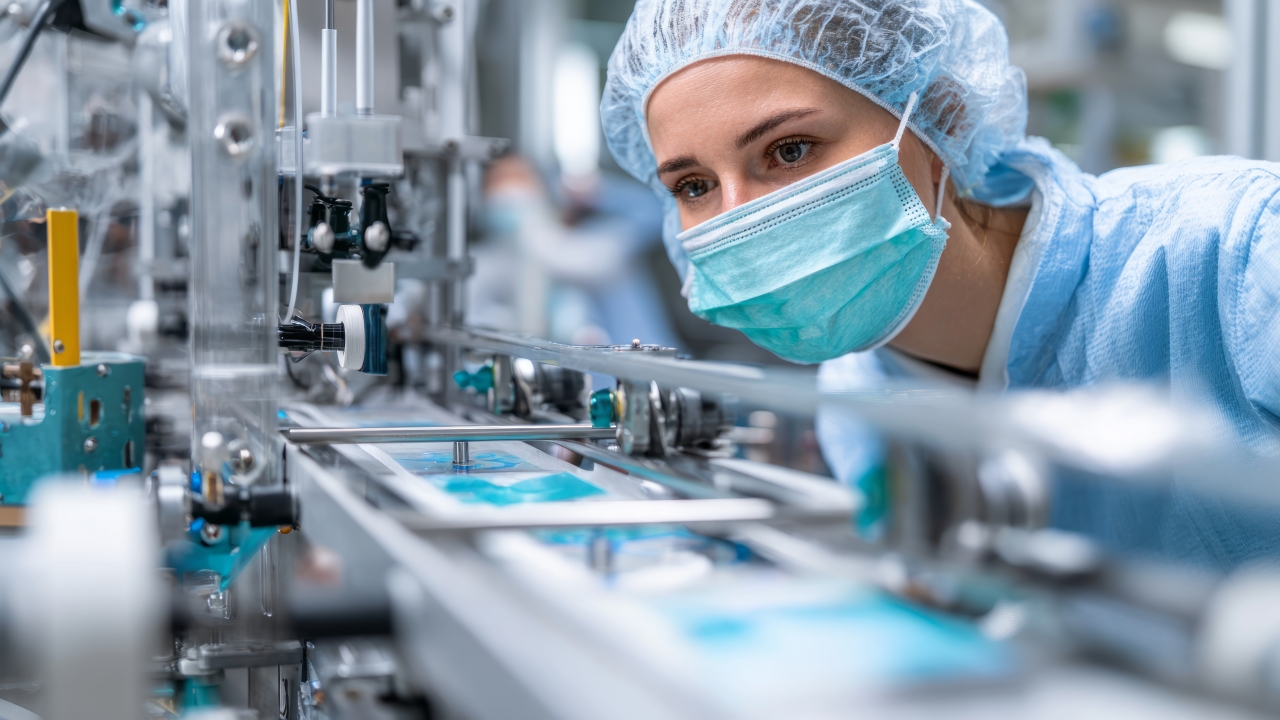
In prototyping, engineers and skilled workers can build things while checking them one by one.
For example, they can
● Fine-tune the application position
● Push out air bubbles
● Adjust pressure by hand
● Correct material warping
● Remove foreign matter
● Reapply if there is a problem
In other words, in prototyping, people are absorbing process variation.
In volume production, on the other hand, it is difficult to keep relying on fine adjustments by people.
The same state must be reproduced with equipment and standard conditions.
■ In Prototyping, Only Good Materials Can Be Selected
In prototyping, you can choose and use only the good parts of a material.
Parts with little warping.
Parts with stable thickness.
Parts without chipping or particle shedding.
In volume production, however, the entire material lot is used.
Then
● Thickness variation
● Hardness variation
● Adhesive strength variation
● Peeling force variation
● Differences in surface condition
appear.
In other words, in volume production, not only average performance but also the range of variation becomes a problem.
■ In Prototyping, Process Speed Is Slow
In prototyping, work can be done taking time.
Peeling slowly.
Positioning slowly.
Compression-bonding slowly.
In volume production, however, production speed is required.
When speed is increased, problems such as
● Air bubbles getting in
● Position shifting
● Material stretching
● Unstable suction
● Insufficient compression bonding time
● Unstable release liners
can occur.
In other words, a process that works at low speed is not necessarily going to work at volume production speed.
■ Manual Application in Prototyping, Automatic Application in Volume Production
In prototyping, people can apply things while looking with their eyes.
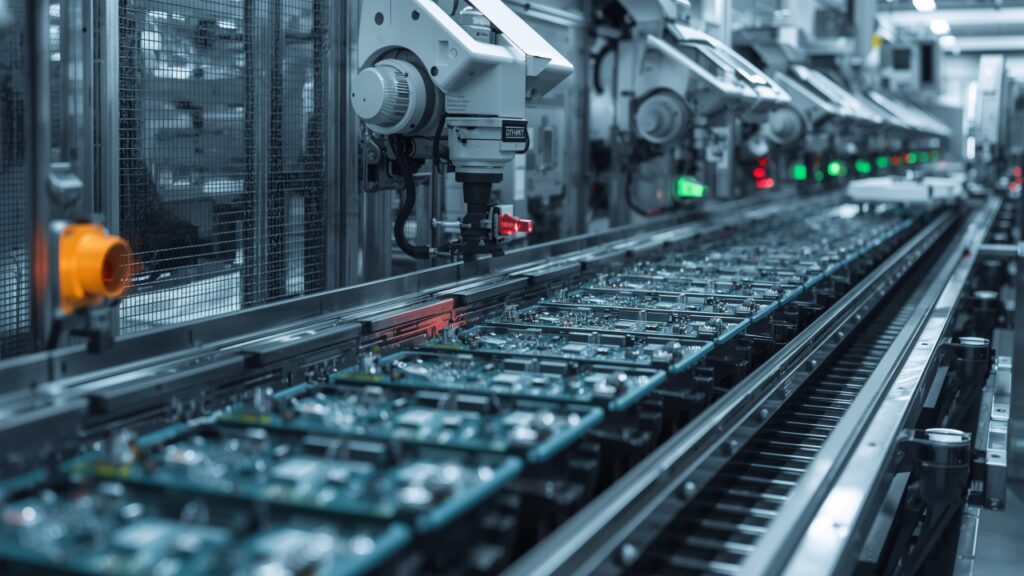
In volume production, however, application is often done by automated machines or jigs.
In automatic application,
● Whether it can be picked up by suction
● Whether the release liner peels stably
● Whether it can be reel-supplied
● Whether it deforms during transport
● Whether it is easy to position
● Whether compression bonding conditions are constant
are important.
In other words, even if a material is high-performance, if it cannot be handled by automated machines, it is hard to use in volume production.
■ In Prototyping, Tolerances Are Easily Overlooked
In prototyping, parts with dimensions close to the design values are often used.
In volume production, however, all parts have tolerances.
The height of heat-generating components.
The dimensions of the enclosure.
The flatness of the cooling plate.
The thickness of the TIM.
The thickness of the adhesive material.
When these combine, the gaps between components are not constant.
In other words, in volume production, the contact state changes due to the stacking of tolerances.
■ Tolerances Change Contact Thermal Resistance
In units with large gaps between components, the TIM is not sufficiently compressed.
In units with small gaps, the TIM is excessively compressed.
As a result,
● Contact area
● Pressure
● Thickness
● Air layers
● Squeeze-out
change.
In other words, in volume production, even with the same material,
contact thermal resistance may change from unit to unit.
■ Prototyping Sometimes Looks Only at Initial Performance
In prototype evaluation, the temperature immediately after assembly is often measured.
However, actual products are used for long periods.
During that time,
● Adhesive materials may degrade
● Gels may deform
● Grease may migrate
● TIM may be crushed
● Materials may warp
● Interfaces may delaminate
● Thermal expansion may be repeated
In other words, even if it cools in the initial state, it is not certain that the same performance can be maintained after long-term use.
■ The State Changes with Temperature Cycles
Products repeatedly heat up and cool down.
Due to these temperature cycles, different materials each expand and contract.
Metals.
Resins.
Ceramics.
Adhesive materials.
Graphite.
Each has a different coefficient of thermal expansion.
That is why, with repeated use,
● Lifting
● Peeling
● Cracks
● Warping
● Reduced pressure
● Poor contact
can occur.
In other words, in volume production evaluation, not only initial performance,
but also performance after thermal history must be looked at.
■ Prototype Materials and Volume Production Materials Can Differ
At the prototype stage, readily available materials or sample materials are sometimes used.
In volume production, however, materials may be changed due to
● Cost
● Supply capacity
● MOQ
● Delivery time
● Certification
● Stable procurement
Even if they look like similar materials, they differ in
● Hardness
● Thickness
● Adhesive strength
● Thermal conductivity
● Compressibility
● Processability
In other words, success with prototype materials
does not guarantee success with volume production materials.
■ When the Processing Method Changes, Performance Also Changes
In prototyping, processing is sometimes done with lasers, hand cutting, simple dies, and so on.
In volume production, this changes to die-cutting, continuous lamination, reel processing, and automatic application.
When the processing method changes,
● Edge condition
● Burrs
● Particle shedding
● Dimensional accuracy
● Warping
● Residual stress
● Condition of the adhesive layer
can change.
In other words, even with the same material, if the processing method changes, mounted performance also changes.
■ In Prototyping, Foreign Matter Can Be Avoided
In prototyping, small quantities are made carefully, so foreign matter is easy to remove.
In volume production, however, processing scrap, particles, adhesive residue, film fragments, and so on may be generated.
When foreign matter gets onto contact surfaces, it leads to
● Lifting
● Air layers
● Insulation defects
● Waterproofing defects
● Conduction risks
In other words, in volume production, processes that make it hard for foreign matter to get in and that do not leave foreign matter behind are necessary.
■ Conditions Also Change with Equipment Temperature
Volume production equipment warms up as it keeps running.
Right after start-up in the morning.
After several hours of operation.
Summer and winter.
The temperature and humidity of the factory.
These change the state of materials and equipment.
For example,
● Adhesive materials soften
● Films stretch
● Jigs expand
● Peeling force changes
● Transport tension changes
In other words, in volume production, it is necessary to check whether things can be made under the same conditions even after the equipment has warmed up.
■ The Gap Between Prototyping and Volume Production in AI Servers
In AI servers, prototype evaluation is sometimes done using high-performance TIM and liquid cooling components.
In prototyping, assembly can be done with uniform pressure and interfaces can be created carefully.
In volume production, however,
● Height variation from GPU to GPU
● Flatness of the cooling plate
● TIM thickness variation
● Differences in fastening force
● Assembly misalignment
may occur.
As a result, temperature differences arise from GPU to GPU even with the same design.
In other words, in AI servers, together with cooling design,
assembly reproducibility is important.
■ The Gap Between Prototyping and Volume Production in EVs and ESS
In EVs and ESS, many battery cells are handled.
Even if evaluation can be done with a few cells in prototyping, in volume production there are hundreds or thousands of contact points.
Even if each variation is small, the possibility of defects increases as the number increases.
Due to
● Cell height variation
● Thickness differences in gap fillers
● Warping of cooling plates
● Differences in compression force
● Positional misalignment of thermal insulation materials
temperature differences arise between cells.
In other words, in EVs and ESS, uniformity across all points is more important
than the performance at one point.
■ The Gap Between Prototyping and Volume Production in Smartphones and Wearables
In smartphones and wearable devices, components are small and thin.
In prototyping, they can be applied carefully while looking through a microscope.
In volume production, however, they must be applied continuously at high speed.
As a result,
● Application misalignment of tens of μm
● Minute air bubbles
● Edge lifting
● Adhesive squeeze-out
● Graphite chipping
can occur.
In small devices, these small differences affect surface temperature and wearing comfort.
■ The Researcher's Perspective: Prototype Evaluation Does Not Include Volume Production Variation
At the research stage, evaluation is often done under conditions close to ideal.
In volume production, however,
● Material lot differences
● Dimensional tolerances
● Equipment variation
● Work variation
● Environmental changes
● Changes over time
are added.
In other words, prototype performance is performance under ideal conditions, and volume production performance is
performance that includes variation.
That is why evaluation that assumes maximum and minimum conditions is necessary from the research stage.
■ The Shop-Floor Perspective: Look at the Lowest Performance Rather Than the Highest
In prototyping, attention tends to focus on the best results.
In volume production, however, what matters is whether even the worst unit meets the requirements.
Even if the average temperature is low, it is a problem if some units become hot.
In other words, in volume production,
● Average value
● Maximum value
● Minimum value
● Variation
● Defect rate
must be looked at.
In thermal management, rather than best performance,
it is important to manage worst performance.
■ What to Check Before Moving from Prototyping to Volume Production
Even if prototype evaluation is good, the following must be checked before volume production.
● Whether the same performance is achieved with volume production materials
● Whether material lot differences can be absorbed
● Whether component tolerances are taken into account
● Whether it can be applied at volume production speed
● Whether it can be supplied stably on automated machines
● Whether air bubbles and application misalignment can be suppressed
● Whether foreign matter can be managed
● Whether it can withstand changes in temperature and humidity
● Whether contact is maintained after thermal cycling
● Whether defects can be detected within the process
In other words, in the transition to volume production, not only material evaluation but also process evaluation is necessary.
■ A Way of Thinking to Avoid Failure in Volume Production
To avoid failure in volume production, it is necessary to assume volume production from the prototype stage.
For example, it is important to
● Make shapes that are easy to automate
● Provide positioning references
● Use thicknesses that can absorb tolerances
● Examine release liner configurations
● Assume reel supply
● Make shapes in which foreign matter is unlikely to remain
● Allow a tolerance range for application misalignment
● Design so that inspection is possible
In other words, volume production is not something to think about after prototyping.
It is something to think about from the prototype stage.
■ OTIS's Perspective
OTIS is not a company that develops thermal materials themselves.
However, we may be able to contribute in the area of converting thermal management confirmed in prototyping into components that can be reproduced in volume production processes.
What matters from OTIS’s perspective is
● High-precision die-cutting
● Microfabrication
● High-precision lamination
● Lamination of dissimilar materials
● Dimensional tolerance management
● Release liner design
● Reel supply
● Supply formats for automated processes
● Lamination accuracy
● Reducing variation in volume production
In prototyping, engineers can make corrections.
In volume production, however, the components themselves must be easy to apply, unlikely to shift, and stable.
■ What OTIS Can Do
At OTIS, we aim for manufacturing that assumes volume production processes from the prototype stage, and through
● TIM processing
● Heat dissipation sheet processing
● Graphite processing
● Insulating material processing
● Adhesive material processing
● EMI material processing
● Metal foil processing
● High-precision die-cutting
● Microfabrication
● High-precision lamination
● Stacking of irregular shapes
● Reel supply
● Designing supply formats for automated processes
and more, we may be able to contribute to bringing thermal management that works in prototyping closer to a form that is easy to reproduce in volume production.
■ Outside OTIS's Expertise
On the other hand, OTIS is not a company that specializes in
● Development of materials themselves
● Thermal design of entire finished products
● Equipment design for customers’ entire lines
● Dedicated thermal simulation analysis
● Reliability assurance for entire finished products
However, in the area of processing and designing thermal management materials into a form that can transition from prototyping to volume production,
we may be able to play an important role.
■ Industries Where This Technology Will Be Important
★★★★★ AI servers
★★★★★ GPUs and semiconductors
★★★★★ EVs and batteries
★★★★★ ESS and energy storage systems
★★★★★ Smartphones
★★★★☆ Wearable devices
★★★★☆ Robots
■ Summary
Cooling in prototyping does not mean cooling in volume production
In prototyping, you can choose good materials, skilled workers can build carefully, and adjustments can be made if there are problems.
In volume production, however,
● Material lot differences
● Component tolerances
● Production speed
● Equipment variation
● Changes in temperature and humidity
● Application misalignment
● Air bubbles
● Foreign matter
● Changes over time
are added.
That is why, even if good results come out of prototyping, the same performance may not be achieved in volume production.
In other words, in thermal management, the real goal is not making one good item,
but continuing to make good items with the same performance.
Thermal management is not completed by prototype evaluation.
It is completed only when materials, shapes, processing, supply, automation, and inspection are designed and it can be reproduced in volume production.
Column Supervisor: Koji Kakumoto (President, OTIS Co., Ltd.)
After studying abroad and working in planning and development at a trading company, he joined OTIS Co., Ltd. in 2011. While primarily working in the Corporate Planning Department, he has also served concurrently in manufacturing and technical divisions, and since 2018 has served as President, working to drive business growth and strengthen the organization.
This article is a general technical explanation intended for educational purposes and does not refer to any specific company, product, or technology.