■ What Is Waste Heat?
When machines and electronic devices use energy, part of it ultimately becomes heat.
For example,
Power
↓
Computation
↓
Heat
AI servers use a large amount of power to compute.
Much of that power is ultimately released as heat.
Normally,
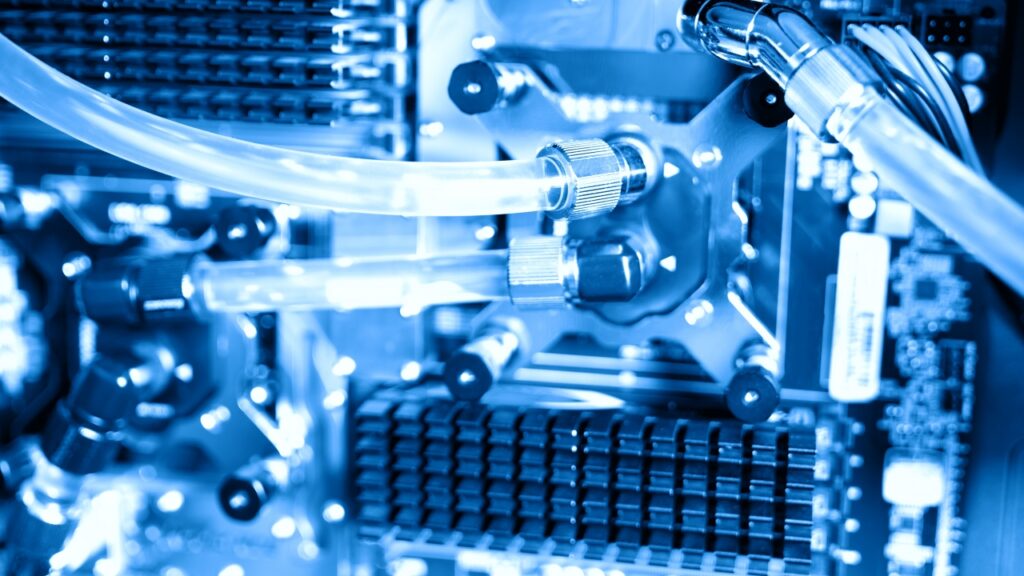
that heat is carried outside by fans or liquid cooling,
and ultimately discarded to the atmosphere.
However, energy still remains in that heat.
That is where the idea arises of moving that heat to another use.
■ What Matters in Using Waste Heat Is "Temperature"
Having heat does not mean anything can be done with it.
What matters is
what temperature the heat is.
High-temperature waste heat is easy to use.
For example, it can be used to
● Make steam
● Generate power
● Provide process heating
On the other hand, heat from electronic devices and data centers is often relatively low in temperature.
Low-temperature heat does not have as many uses as high-temperature heat sources.
That is why, in using waste heat, not only the amount of heat but also the temperature level is important.
■ The New Challenge of Large Amounts of Low-Temperature Heat
AI data centers consume a very large amount of power.
As a result, a large amount of heat is generated.
However, the heat coming out of servers is
not as hot as that of steelmaking furnaces or boilers.
In other words, heat that is plentiful but not very high in temperature is produced.
How to use this heat will become an important theme going forward.
■ Liquid Cooling Is a Good Match for Using Waste Heat
In air cooling, heat is dispersed into a large amount of air.
That is why it can be difficult to recover heat collectively.
In liquid cooling, on the other hand, heat is gathered into the coolant.
In other words, heat is easy to carry while gathered in one place.
That is why liquid cooling is a good match not only for cooling but also for waste heat recovery.
For example, a flow such as
Server
↓
Coolant
↓
Heat exchanger
↓
Building heating
can be considered.
■ Using Data Center Heat for Heating
In cold regions, there is the idea of using data center waste heat for
● Offices
● Housing
● Commercial facilities
● District heating
Heat that would otherwise have been discarded is used for building heating.
This makes it possible to recover the energy used for cooling in another use.
The more AI data centers increase, the more waste heat also increases.
In the future, data centers may come to be treated as huge heat sources.
■ It Can Also Be Used for Hot Water Supply
If the waste heat temperature is suitable, it can also be considered for hot water supply in
● Factories
● Hotels
● Hospitals
● Sports facilities
When it falls short of the required temperature,
there is the method of raising the temperature using a heat pump.
In other words, even low-temperature waste heat is not completely unusable.
By combining it with other technologies, the range of uses can be expanded.
■ What Is a Heat Pump?
A heat pump is a device that moves heat at a low temperature to a higher temperature.
Air conditioners are also a type of heat pump.
It collects slightly warm waste heat
and raises it to the required temperature.
This may make it possible to use low-temperature waste heat that is hard to use as is for
● Heating
● Hot water supply
● Process heating
In other words, in using waste heat, it is important not only to use heat as is,
but also to change the temperature of heat before using it.
■ In Factories, Heat Is Reused Between Processes
In manufacturing, heat is sometimes discarded in one process while new heating is done in another.
For example,
waste heat is generated in process A.
Heating is needed in process B.
If these two can be connected, it can be used as
Waste heat from process A
↓
Heat source for process B
In other words, it is the idea of viewing the entire factory as a single thermal system.
Rather than optimizing each piece of equipment alone,
consider across the entire factory where heat is generated and where heat is needed.
■ There Are Also Ways to Generate Power from Waste Heat
When waste heat temperature is relatively high,
turning heat back into electricity
can also be considered.
For example, there are
● Thermoelectric generation
● Steam utilization
● Organic Rankine cycle
However, there is the problem of conversion efficiency when turning heat back into electricity.
Especially with low-temperature waste heat, the amount of power obtained may be small.
That is why it may be more efficient to first consider whether it can be used as heat.
■ What Is Thermoelectric Generation?
In thermoelectric generation, electricity is generated using a temperature difference.
When thermoelectric materials are placed between a hot side and a cold side, a voltage arises from the temperature difference.
It has the characteristic of having no moving parts.
On the other hand, there are challenges in extracting large amounts of power with high efficiency.
That is why it may be used in
● Sensors
● Small devices
● Auxiliary power supplies
■ In EVs Too, Heat Is Not Just Discarded
In EVs, heat is generated from
● Batteries
● Motors
● Inverters
In winter, cabin heating is also needed.
In engine vehicles, engine waste heat could be used for heating.
EVs have no large engine waste heat, so power is used for heating.
So
heat from batteries and motors,
heat in the outside air,
and the like are recovered with heat pumps and used for cabin heating.
In other words, in EVs, not only discarding heat,
but moving heat within the vehicle is becoming important.
■ In ESS Too, the Use of Heat Can Be Considered
In ESS, many battery cells must be maintained at a constant temperature.
The heat generated by charging and discharging is in many cases discharged outside.
However, as large-scale ESS spread, waste heat will also increase.
Across the entire facility, heat may be usable for
● Heating
● Hot water supply
● Nearby facilities
However, economic viability changes greatly depending on temperature level and operating hours.
■ Heat Can Also Be "Stored"
Electricity is stored in batteries.
In the same way,
heat can also be stored.
For example, heat is temporarily stored in
● Hot water
● Phase change materials
● Heat storage materials
Store the heat left over in the daytime.
Use it for heating at night.
Store waste heat while equipment is operating.
Use it when needed.
This makes it possible to adjust the gap between the time heat is generated and the time you want to use heat.
■ Using Phase Change Materials for Heat Storage
Phase change materials absorb and release a lot of heat when they change
from solid to liquid,
and from liquid to solid.
Using this property, it is possible
to store a large amount of heat near a constant temperature.
For example, heat is absorbed at the peak of equipment heat generation,
and released after the load drops.
This is also a technology for shifting heat peaks in the time direction.
■ Reusing Heat May Also Reduce Cooling Loads
The purpose of using waste heat is
not only to reuse energy.
Actively moving heat to another place
also leads to lowering temperatures on the heat-generating equipment side.
In other words, cooling and heat utilization can be designed as a single system.
For example,
heat is recovered from AI servers with liquid cooling.
The recovered heat is used for building heating.
The server side is cooled.
The building side can reduce heating energy.
There are benefits for both.
■ However, Heat Is Hard to Carry Far
Electricity can be carried relatively easily over long distances using transmission lines.
Heat, however, tends to lose more the longer the distance.
Running piping.
Keeping it insulated.
Running pumps.
Capital investment is also needed.
That is why, in using waste heat,
whether there is a place nearby that uses the heat
is extremely important.
If next to a data center there are
● Housing
● Hospitals
● Factories
● Greenhouses
it is easier to use.
The farther it is carried, the worse the economics tend to become.
■ "Heat Demand" and "Heat Supply" Need to Match
There is a large amount of waste heat.
That alone does not mean it can be used.
Heating demand increases in winter.
But data centers operate all year round.
Factory waste heat may be only in the daytime.
Equipment that needs heat may run at night.
In other words, the time heat is generated and the time heat is needed must match.
Or the time difference must be absorbed by heat storage.
■ The Temperature of Heat Also Needs to Match
Even if there is 50°C waste heat, it cannot be used as is for a process that needs 300°C.
Conversely, it is easy to use for applications where hot water of around 40°C is sufficient.
In other words, in using waste heat, it is necessary to look at the combination of
● Waste heat temperature
● Required temperature
● Amount of heat
● Distance
● Time
It does not work just because there is surplus heat.
■ In the AI Era, "Computation" and "Heat Utilization" May Be Considered as a Set
As AI data centers become huge, they consume large amounts of power and emit large amounts of heat.
Until now,
data centers have been considered computing facilities,
and district heating has been considered energy facilities,
separately.
In the future, however, the idea of
incorporating computing facilities themselves into cities and factories as heat sources
may become important.
For example, combinations such as
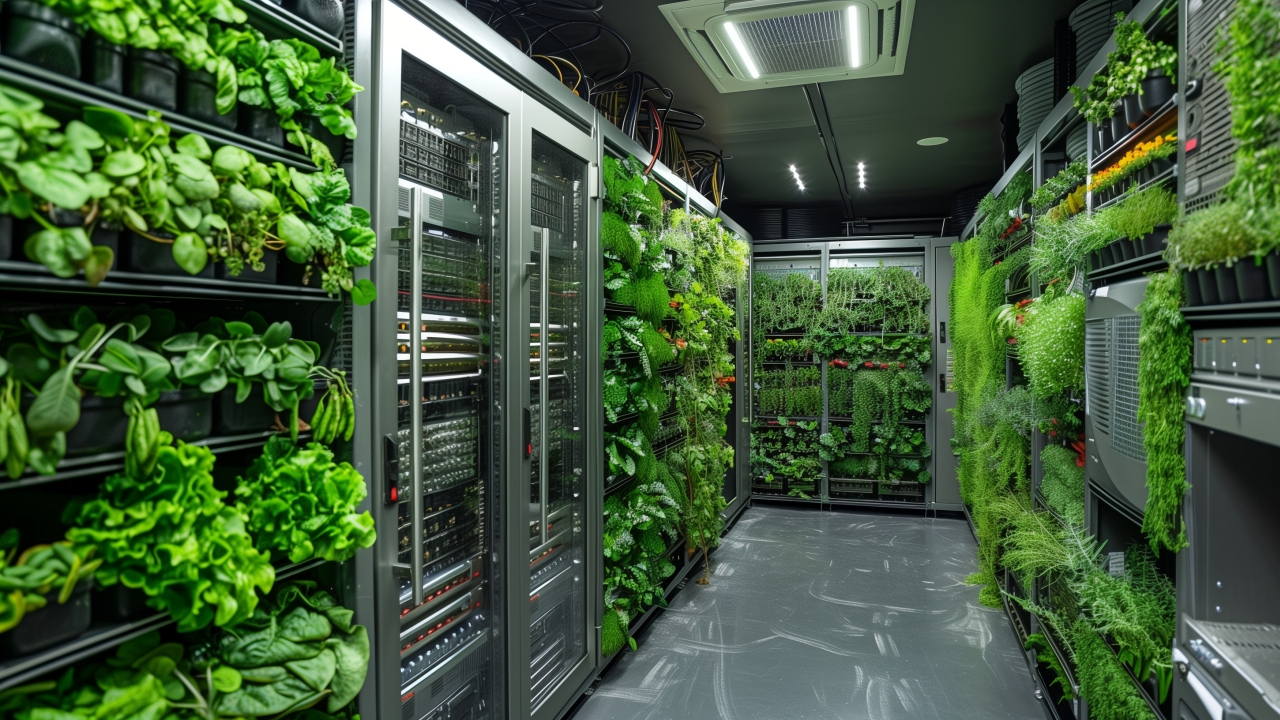
Data center
+
District heating
Data center
+
Agricultural greenhouses
Data center
+
Factory hot water supply
In other words, the siting of AI infrastructure may also come to be considered not only in terms of communications and power, but from the perspective of
where waste heat can be used.
■ Considering Heat Utilization Also Changes Cooling Methods
When you want to reuse waste heat,
how to cool also becomes important.
In air cooling, heat tends to diffuse into a large amount of air.
In liquid cooling, heat can be concentrated into the liquid.
That is why, if you want to use heat, a cooling method that makes it easy to recover may be advantageous.
In other words, future cooling systems may be evaluated not only from the perspective of
the method that cools best,
but also of the method that can recover heat in the most usable form.
■ The Researcher's Perspective: Heat Has Not Only "Quantity" but Also "Quality"
Even for heat equivalent to the same 1 kWh,
high-temperature heat
and low-temperature heat
have different utility value.
High-temperature heat can be used for many applications.
Low-temperature heat is limited in its uses.
In other words, heat has a “quality”:
at what temperature it exists.
In using waste heat, it is necessary not just to count the amount of heat, but to look at
what it can be used for at that temperature.
■ The Shop-Floor Perspective: "There Is Heat Being Discarded" Alone Does Not Make a Business
There is a large amount of waste heat in factories and data centers.
So let’s use it.
That alone does not make it work.
What should be checked is
● What temperature is it?
● How many kW are there?
● For how many hours is it produced?
● Who nearby needs it?
● How long is the piping distance?
● Are there seasonal fluctuations?
● How much is the capital investment?
In other words, using waste heat is a technical problem and, at the same time, a problem of economics and location.
■ OTIS's Perspective
Waste heat recovery systems and power generation systems themselves are not OTIS’s area of expertise.
OTIS is not
● A company that designs district heating
● A heat pump manufacturer
● A heat exchanger manufacturer
● A waste heat power generation manufacturer
On the other hand, inside waste heat recovery equipment and thermal management devices, materials such as
● Thermally conductive materials
● Insulating materials
● Adhesives
● Seal materials
● Metal foils
● Components around sensors
may be used.
That is why it is appropriate to think of OTIS’s role as not the waste heat utilization system itself,
but processing the functional components used within it.
■ What OTIS Can Do
At OTIS, through
● Thermally conductive sheet processing
● Insulating film processing
● Adhesive processing
● Seal material processing
● Metal foil processing
● High-precision lamination
● High-precision die-cutting
● Reel supply
we may be able to contribute to functional components used in waste heat recovery and thermal management devices.
■ Outside OTIS's Expertise
OTIS is not a company that specializes in
● Waste heat recovery system design
● District heating design
● Heat pump design
● Heat exchanger design
● Waste heat power generation systems
● Design of overall energy management
■ Industries Where This Technology Will Be Important
★★★★★ AI data centers
★★★★★ Factories and manufacturing equipment
★★★★☆ Energy facilities
★★★★☆ EVs and mobility
★★★★☆ ESS
★★★★☆ Construction and district energy
★★★☆☆ Agriculture and greenhouse facilities
■ Summary
Heat: from “something to discard” to “something to use”
Until now, thermal management has centered on
how to discard heat to the outside.
However, as AI data centers and large-scale energy facilities increase, waste heat also becomes large.
If that heat can be used for
heating,
hot water supply,
factory processes,
heat storage,
power generation,
and so on, overall energy efficiency may be increased.
Of course, not all waste heat can be used.
Temperature.
Amount of heat.
Distance.
Time.
Where it is used.
These conditions must match.
That is why, in next-generation thermal design, it is important to think not only about how to cool,
but also about what to do with the heat after cooling.
Heat is not merely a loss.
If the place and temperature match, it becomes an energy resource that can be used again.
And cooling technology, too, will evolve from “a technology for discarding heat” into “a technology for moving heat to where it is needed and using it to the very end.”
Column Supervisor: Koji Kakumoto (President, OTIS Co., Ltd.)
After studying abroad and working in planning and development at a trading company, he joined OTIS Co., Ltd. in 2011. While primarily working in the Corporate Planning Department, he has also served concurrently in manufacturing and technical divisions, and since 2018 has served as President, working to drive business growth and strengthen the organization.
This article is a general technical explanation intended for educational purposes and does not refer to any specific company, product, or technology.