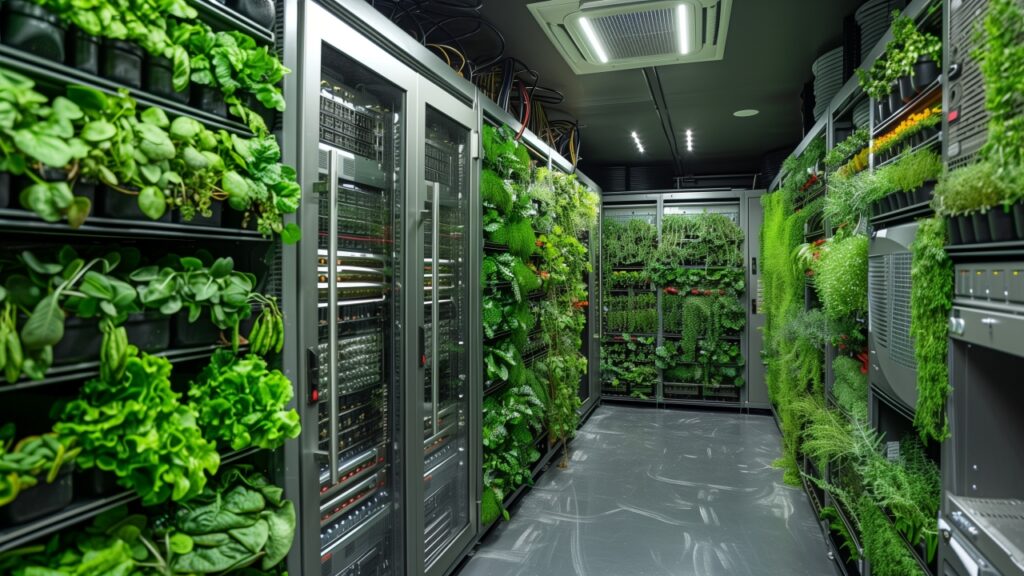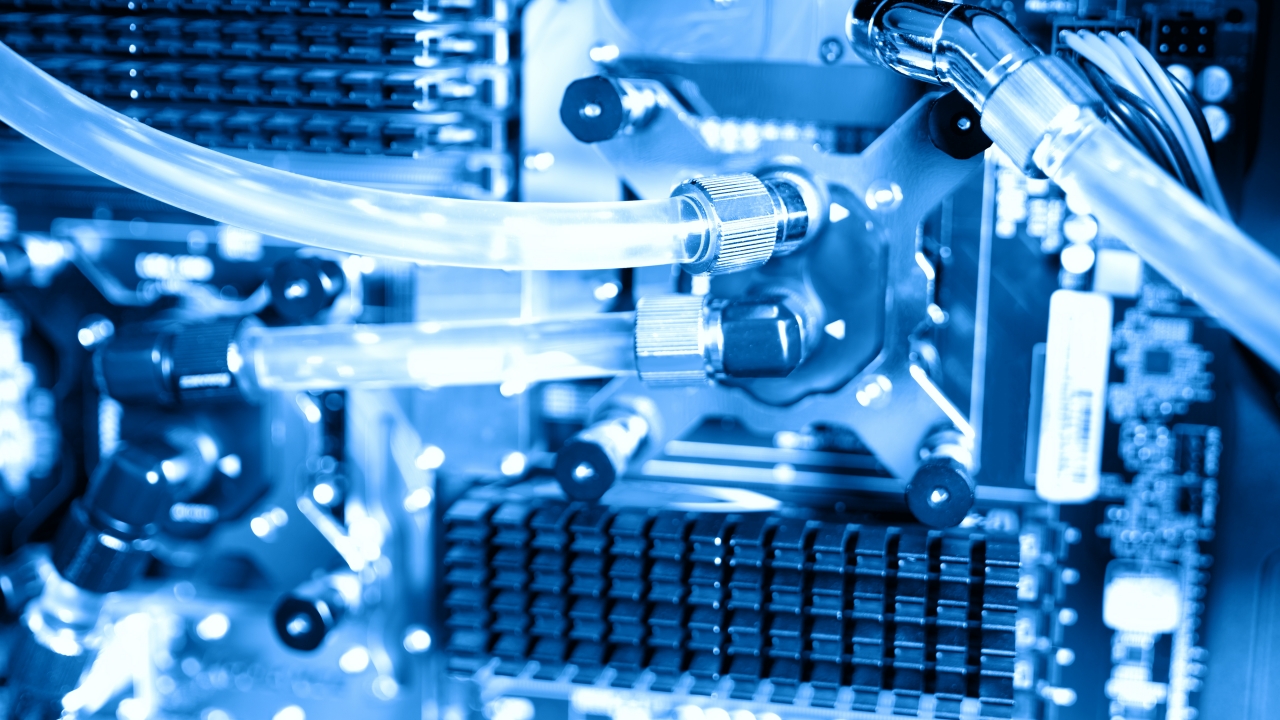
■ What Is Liquid Cooling?
Liquid cooling is a cooling method that uses liquids such as water or dedicated coolants to recover heat from a heat-generating body and carry it to another place.
The basic flow is
Heat-generating body
↓
TIM
↓
Cold plate
↓
Coolant
↓
Piping
↓
Heat exchanger
In air cooling, heat is transferred from the heat-generating body to a heat sink and finally handed to the air.
In liquid cooling, coolant is passed near the heat-generating body, and heat is handed to the liquid.
This difference is significant.
■ Why Do Liquids Carry Heat Easily?
Compared with air, liquids generally have the characteristics of
・Higher density
・Larger heat capacity
・A larger amount of heat that can be received
That is why, when moving the same volume, they can carry more heat than air.
In air cooling, a large amount of air is flowed, so large fans and flow paths are needed.
In liquid cooling, on the other hand, a lot of heat can be transported even through relatively small flow paths.
This is a major reason liquid cooling is attracting attention in high-density AI servers and the like.
■ The Greatest Strength of Liquid Cooling Is That "It Can Cool Near the Heat Source"
The great advantage of liquid cooling is not only cooling capacity.
It is that the place of cooling can be brought closer to the heat source.
In air cooling, heat is transferred
Semiconductor
↓
TIM
↓
Heat sink
↓
Air
Furthermore, the air inside the server must be sent out of the rack and handled by the entire data center.
In liquid cooling, heat can be recovered near the heat source:
Semiconductor
↓
TIM
↓
Cold plate
↓
Coolant
In other words, before heat spreads inside the enclosure, it is possible to capture the heat and carry it to another place.
■ What Is a Cold Plate?
What is typically used in liquid cooling is the cold plate.
A cold plate is a component that has passages for coolant inside a metal plate or the like, and recovers heat by being placed in contact with heat-generating components.
For example, in the case of a GPU, the structure is
GPU
↓
TIM
↓
Cold plate
↓
Coolant
Heat generated by the GPU is handed to the cold plate via the TIM, and that heat is carried away by the coolant flowing inside.
The coolant is carried to a heat exchanger, where the heat is released outside.
■ TIM Is Important Even in Liquid Cooling
When people hear liquid cooling, it is sometimes thought that
“Since the liquid cools directly, TIM is no longer important.”
However, in many liquid cooling structures,
an interface exists between the heat-generating body and the cold plate.
In between, materials such as
・TIM
・Thermally conductive sheets
・Thermal grease
・Phase change materials
are used.
If poor contact occurs here, heat does not sufficiently reach the cold plate.
In other words,
even if liquid cooling performance is high, it will not cool if the interface before it is poor.
Even with liquid cooling, the importance of
・Lifting
・Air bubbles
・Thickness
・Contact pressure
・Flatness
does not disappear.
Rather, the higher the heat generation, the greater the influence of the interface.
■ Liquid Cooling Is Not Just One Type
There are multiple methods of liquid cooling.
Typical ones include
・Direct-to-Chip liquid cooling
・Cold plate method
・Immersion cooling
・Rear-door heat exchange
・Hybrid air/liquid cooling
Even if the purpose is the same,
how close the liquid is brought to the heat source
differs.
■ Direct-to-Chip Liquid Cooling
In Direct-to-Chip, cold plates are attached directly to high-heat components such as CPUs and GPUs.
Because heat can be recovered right next to the heat source, high cooling capacity can be expected.
On the other hand, many components are needed, such as
・Cold plates
・Piping
・Pumps
・Fittings
・Seals
・TIM
In other words, it has the characteristic that cooling capacity is high, but connections and interfaces increase.
And the more connections increase, the more the risks of leakage and assembly defects also increase.
■ What Is Immersion Cooling?
In immersion cooling, the electronic equipment itself is immersed in an insulating coolant.
Because liquid flows directly around electronic components, it has the characteristics that
・Fans can be reduced
・Cooling can be done near the heat source
・It easily handles high heat generation density
On the other hand, challenges include
・Compatibility between coolant and materials
・Durability of cables and resins
・Maintenance
・Liquid management
・Handling when replacing parts
In other words, in immersion cooling, the liquid must not only be
electrically safe,
but also a liquid that does not degrade surrounding materials over long periods.
■ Even in Liquid Cooling, Heat Must Ultimately Be Discharged
Liquid cooling does not make heat disappear.
The liquid is merely
carrying heat to another place.
The heat received by the coolant must ultimately be released to
・Outside air
・Cooling towers
・Chillers
・Water systems
In other words, even in liquid cooling, there is the heat path
Heat source
↓
Coolant
↓
Heat exchanger
↓
Outside
It is better to think of liquid cooling not as a technology for discarding heat, but as a technology for moving heat efficiently.
■ The Major Challenge of Liquid Cooling Is Leakage
One of the most obvious risks in liquid cooling is leakage.
As long as liquid flows near electronic equipment, the possibility of liquid leaking from
・Pipe connections
・Fittings
・O-rings
・Seal areas
・Cold plate joints
must be considered.
If leakage occurs, it may lead to
・Electronic component failure
・Corrosion
・Insulation failure
・Equipment stoppage
That is why, in liquid cooling, as much as cooling performance,
seal reliability becomes important.
■ Seal Materials Become Important Components Even If Small
In liquid cooling systems,
・O-rings
・Gaskets
・Seal films
・Adhesives
・Waterproof tapes
are used.
These components look small compared with cold plates and pumps.
However, if the seal area does not function, the entire liquid cooling system does not hold up.
In particular, if there is
・Insufficient thickness
・Misalignment
・Insufficient compression
・Foreign matter
・Burrs
・Steps in joining surfaces
local gaps may form.
In other words, in liquid cooling, both components that determine cooling capacity and
components that do not let liquid leak are important.
■ For Seals, the Amount of Compression Is Important
Gaskets and foam seal materials require appropriate compression.
If compression is insufficient,
gaps remain, which may lead to leakage.
On the other hand, if compressed too much,
・The material is crushed
・It becomes hard to recover after long-term use
・Excessive force is applied to surrounding components
・Seal material squeezes out to the outside
That is why, for seal components,
material thickness
processing accuracy
the amount of compression during assembly
must be considered together.
■ Heat and Waterproofing/Sealing Exist in the Same Place
In liquid cooling, you want to transfer heat efficiently.
But you do not want liquid to leak.
These two requirements sometimes contradict each other.
For example, making the seal material thicker makes it easier to absorb steps.
However, if seal material enters the heat path, thermal resistance may increase.
Conversely, making components thinner to reduce thermal resistance may result in insufficient sealing.
In other words, in liquid cooling, heat dissipation performance and sealing performance must be achieved at the same time.
■ Insulation Also Becomes Important
In liquid cooling systems, the approach to electrical insulation differs depending on the type of liquid and the structure.
Especially near electronic components,
・Metal cold plates
・Piping
・Conductive components
・Electrodes
・Circuits
are in close proximity.
That is why
・Insulating films
・Insulating sheets
・Insulating coatings
・Insulating adhesives
may be needed.
Here too, the combined challenge arises of wanting heat to pass,
but not wanting electricity to pass.
■ Thinner Is Not Always Better for Insulating Materials
Making insulating film thinner makes it easier to lower thermal resistance.
However, if made too thin,
・It becomes more susceptible to burrs
・It becomes more easily damaged by foreign matter
・There is no margin left in insulation distance
・The effect of pinholes becomes larger
In liquid cooling, high-voltage and high-current components may also be present near cooling components.
That is why the balance of
thermal performance
insulation
long-term reliability
is important.
■ The Combination of Metal Parts and Coolant Is Also Important
In liquid cooling, the coolant comes into contact with various materials such as
・Copper
・Aluminum
・Stainless steel
・Resin
・Rubber
・Adhesives
Depending on the combination of material and coolant,
・Corrosion
・Swelling
・Hardening
・Degradation
・Precipitation
may occur.
In other words, in liquid cooling, materials cannot be chosen on thermal performance alone.
Chemical compatibility with the coolant must also be considered.
■ With Dissimilar Metals, Also Watch Out for Corrosion
In liquid cooling systems, multiple metal materials are sometimes used.
For example, copper and aluminum.
When different metals are in contact via a liquid that can act as an electrolyte, electrochemical corrosion may occur depending on conditions.
If corrosion progresses,
・Flow paths may become clogged
・Surface conditions may change
・Leakage may occur
・Heat transfer performance may change
That is why, in liquid cooling, material combinations, coolant management, surface treatment and the like are also important.
■ The Finer the Flow Paths, the Easier It Is to Raise Cooling Performance, but the Harder Control Becomes
Inside cold plates, the heat exchange area can be increased by designing fine coolant flow paths.
However, as flow paths become finer, problems arise such as
・Pressure loss increases
・Pump load increases
・It becomes easier to clog with foreign matter
・Manufacturing accuracy is required
In other words, a balance is needed between
raising cooling capacity with fine flow paths and
flowing liquid stably.
■ Pumps Also Need Power
Liquid cooling may make it possible to reduce fans.
However, a pump is needed to flow the liquid.
If flow path resistance becomes large, a stronger pump is needed.
In other words, even in liquid cooling,
power for cooling
is necessary.
When considering the advantages of liquid cooling, it is necessary to look not only at
“fewer fans”
but at the efficiency of the entire cooling system, including
・Pumps
・Heat exchangers
・Chillers
・Control equipment
■ Liquid Cooling Also Changes the Approach to Maintenance
In air cooling, the main maintenance items are
・Fan replacement
・Filter cleaning
・Heat sink cleaning
In liquid cooling, management of
・Coolant condition
・Piping
・Fittings
・Pumps
・Seal materials
・Leak detection
is needed.
In other words, moving to liquid cooling means that
not only the cooling method, but the maintenance method itself changes.
It is necessary to consider not only cooling capacity at the time of equipment introduction, but also long-term operation.
■ A Mechanism for Detecting Leakage Is Also Needed
In liquid cooling, “designing so that it does not leak” is important.
At the same time, however, it is also important to detect leakage quickly if it occurs.
For example, abnormalities are detected using
・Leak sensors
・Pressure monitoring
・Flow monitoring
・Coolant level monitoring
・Temperature monitoring
In liquid cooling, the cooling system itself becomes an object of monitoring.
■ AI Servers Are a Good Match for Liquid Cooling
In AI servers, a large amount of heat is generated from
・GPUs
・CPUs
・HBM
・Power supply components
Furthermore, heat generation per rack also becomes large.
In air cooling, a large amount of air must be flowed.
With liquid cooling, heat can be recovered near the heat source and carried outside through piping.
That is why liquid cooling is a good match for the AI server characteristics of high heat generation and high density.
The further the performance of AI servers advances, the more the importance of liquid cooling is expected to increase.
■ In 3D Semiconductors, "How Close to the Heat Source" Becomes Important
In 3D semiconductors, multiple chips and memories are stacked at close distances.
Because heat sources concentrate inside, cooling only from the outside may not sufficiently extract internal heat.
That is why, in the future,
cooling technologies that recover heat at positions closer to the heat source will become important.
Liquid cooling is one of the promising options.
However, the closer cooling components are brought to the chip, the stricter the requirements for
・Insulation
・Contact accuracy
・Sealing
・Thinner films
・Microfabrication
become.
This is covered in more detail in 7-6, “Thermal Management for 3D Integration.”
■ Liquid Cooling Is Also Important in EVs and ESS
In EV and ESS batteries, many cells generate heat.
When temperature differences between cells become large, this may affect
・Performance differences
・Differences in degradation speed
・Service life
・Safety
So a method is used in which coolant is flowed inside cooling plates to manage the temperature of the entire battery.
In this case too, the contact state between
Cell
↓
Thermally conductive material
↓
Cooling plate
is important.
In other words, even with liquid cooling, components that connect the cooling plate and the heat source are necessary.
■ Thin-Film Components That Become Important in Liquid Cooling
In liquid cooling systems, it is not only large cold plates and pumps that matter.
Around them, many thin-film and sheet components may be used, such as
・TIM
・Thermally conductive sheets
・Insulating films
・Gaskets
・Seal materials
・Adhesives
・Metal foils
・EMI materials
・Components for leak detection
Each of these is small.
However,
if even one does not function, it affects the reliability of the entire liquid cooling system.
The more liquid cooling spreads, the more important the high-precision functional components around it also become.
■ The Researcher's Perspective: In Liquid Cooling, Look at "Thermal Resistance" and "Fluid Resistance" at the Same Time
In liquid cooling, if flow paths are made finer in an attempt to raise only cooling performance, fluid resistance increases.
If fluid resistance increases, more pump power is needed.
Conversely, if flow paths are widened, liquid flows easily, but the heat exchange area and heat transfer may be insufficient.
In other words, in liquid cooling, making heat transfer easy and
making liquid flow easy must be considered at the same time.
Furthermore, when including
・Leakage
・Corrosion
・Material compatibility
・Seal durability
liquid cooling becomes a highly complex design.
■ The Shop-Floor Perspective: Liquid Cooling Troubles Are Not Just "It Doesn't Cool"
In air cooling troubles, problems often appear in the form of “the temperature is high.”
In liquid cooling, in addition, problems such as
・Leaking
・Clogging
・Corroding
・The pump stopping
・Seals degrading
・Coolant deteriorating
may occur.
In other words, in liquid cooling, not only thermal performance, but continuing to manage liquid safely becomes quality.
■ Things to Check at the Design Stage
When considering liquid cooling, at least the following points need to be checked.
Heat
・Where is the greatest heat generation?
・How close does the coolant need to be brought?
・Is the thermal resistance of the TIM and thermally conductive materials appropriate?
・Is contact pressure sufficient?
・Are there air bubbles or lifting?
Liquid
・What coolant will be used?
・Is the flow rate sufficient?
・Is flow path resistance too large?
・Does the coolant have long-term stability?
・Is there clogging due to foreign matter or precipitation?
Seals
・Where are leaks likely?
・Is the seal material thickness appropriate?
・Is the amount of compression appropriate?
・Can sealing be maintained after thermal cycling?
・Are there effects from foreign matter or burrs?
Materials
・Is there compatibility with the coolant?
・Is there a risk of dissimilar metal corrosion?
・Do resins and adhesives swell or degrade?
・Is insulation sufficient?
Volume production
・Can seal components be processed stably?
・Can the TIM be applied in the correct position?
・Is the shape compatible with automated assembly?
・Has a leak inspection method been decided?
Liquid cooling is not just a cooling device.
It is a system in which heat, liquid, insulation, sealing and materials are designed as one.
■ OTIS's Perspective: OTIS's Point of Contact Lies Less in the Liquid Cooling Equipment Itself Than in the Surrounding Components
OTIS is not
・A pump manufacturer
・A cold plate manufacturer
・A chiller manufacturer
・A liquid cooling system design company
However, liquid cooling systems need many functional components such as
・TIM
・Heat dissipation sheets
・Insulating materials
・Gaskets
・Seal materials
・Adhesives
・Metal foils
・EMI materials
And these require
・Thickness
・Position
・Hole shape
・Seal width
・Burr control
・Lamination accuracy
・Suitability for automated supply
For example, if seal material shifts by 0.5 mm, the positional relationship between the liquid flow path and the seal line changes.
If there are burrs or foreign matter, the gasket may not be compressed over its entire surface.
If the TIM lifts, the cooling capacity of the cold plate cannot be fully used.
In other words, even in liquid cooling,
the performance of large cooling equipment is supported by small processed components.
This is an area where OTIS is highly likely to be able to contribute.
■ What OTIS Can Do
At OTIS, through
・TIM processing
・Thermally conductive sheet processing
・Graphite processing
・Insulating film processing
・Gasket and seal material processing
・Foam processing
・Adhesive processing
・Copper foil and aluminum foil processing
・EMI material processing
・High-precision lamination
・Lamination of dissimilar materials
・Partial lamination
・High-precision die-cutting
・Half-cut processing
・Reel supply
・Designing supply formats for automated assembly
we may be able to contribute to processing the functional components around liquid cooling systems into a state that can be used in volume production.
In particular, integrating
components that pass heat
components that stop electricity
components that stop liquid
in the required positional relationships has a strong connection with OTIS’s processing technologies.
■ Outside OTIS's Expertise
OTIS is not a company that specializes in
・Flow path design of cold plates themselves
・Pump design
・Coolant development
・Design of entire liquid cooling systems
・Data center cooling facility design
・Dedicated CFD analysis
However, by working with material manufacturers, cold plate manufacturers, equipment manufacturers and customers, we may be able to contribute in the area of
processing the thin-film, insulating, sealing and thermally conductive components that make liquid cooling systems work into forms that can be mass-produced.
■ Industries Where This Technology Will Be Important
★★★★★ AI servers and data centers
★★★★★ Semiconductors and advanced packaging
★★★★★ EVs and next-generation batteries
★★★★★ ESS
★★★★☆ Communication equipment
★★★★☆ Industrial computers
★★★★☆ Robots
★★★★☆ High-output power supply equipment
■ Summary
Liquid cooling can carry heat well, but liquids must be handled safely
The great appeal of liquid cooling is
that heat can be recovered near the heat source and large amounts of heat can be carried efficiently to another place.
The higher the heat generation density of AI servers and high-performance semiconductors, the greater this advantage becomes.
However, liquid cooling creates new challenges:
・Leakage
・Sealing
・Insulation
・Corrosion
・Piping
・Pumps
・Material compatibility
・Maintenance
And even with liquid cooling,
TIM.
Insulating films.
Gaskets.
Adhesives.
Seal materials.
The importance of these small components does not disappear.
Rather, the higher the cooling capacity, the more important
correctly connecting the heat source and the cooling equipment
and never letting liquid leak become.
In other words, liquid cooling is not just a cooling technology that is stronger than air cooling.
It is a technology that achieves heat, liquid, insulation and sealing at the same time.
And within it, the area OTIS should aim for is not the pumps or cooling equipment themselves.
It is the “thin functional components” that support the performance and reliability of liquid cooling systems.
Column Supervisor: Koji Kakumoto (President, OTIS Co., Ltd.)
After studying abroad and working in planning and development at a trading company, he joined OTIS Co., Ltd. in 2011. While primarily working in the Corporate Planning Department, he has also served concurrently in manufacturing and technical divisions, and since 2018 has served as President, working to drive business growth and strengthen the organization.
This article is a general technical explanation intended for educational purposes and does not refer to any specific company, product, or technology.