■ Why Is Heat Important in Semiconductor Manufacturing Equipment?
In semiconductor manufacturing, many processes are repeated, such as
● Deposition
● Etching
● Lithography
● Cleaning
● Inspection
● Bonding
● Annealing
● Transport
In each process,
temperature,
pressure,
vacuum,
gas,
light,
power,
and time are finely controlled.
Among these, temperature affects many processes.
For example, if temperature changes,
● Chemical reaction rates
● Gas reactions
● Material viscosity
● Thermal expansion
● Dimensions
● Adhesion
● Film formation state
may change.
In other words, in semiconductor manufacturing equipment, temperature itself is a process condition.
■ It Is Not That "Cooling Is Enough"
In semiconductor manufacturing equipment,
it is not the case that
the lower the temperature, the better.
Depending on the process, processing may be done at
200°C,
300°C,
or even higher temperatures.
Conversely, there are also processes performed while cooling to a constant temperature.
What matters is creating the necessary temperature, in the necessary place, for the necessary time.
In other words, it is closer to the essence to think of it as temperature control rather than thermal management.
■ Semiconductor Manufacturing Equipment Has Many Heat Sources
Inside the equipment, heat is generated by
● Heaters
● RF power supplies
● Plasma
● Lasers
● Motors
● Power supply units
● Vacuum pumps
● Control boards
● Sensors
● High-speed drive units
Furthermore, the manufacturing process itself may generate heat.
In other words, inside the equipment, places that intentionally create heat and
places where heat is generated unintentionally exist at the same time.
These two must be considered separately.
■ There Is Heat for the Process and Heat That Gets in the Way
For example, a heater for heating a wafer to a constant temperature produces necessary heat.
On the other hand, if the heater’s heat is transferred to surrounding sensors or frames and changes positional accuracy, it becomes unwanted heat.
In other words, in semiconductor manufacturing equipment, it is important not only to generate heat,
but also to confine heat only to the necessary places.
■ Temperature Unevenness Becomes Process Unevenness
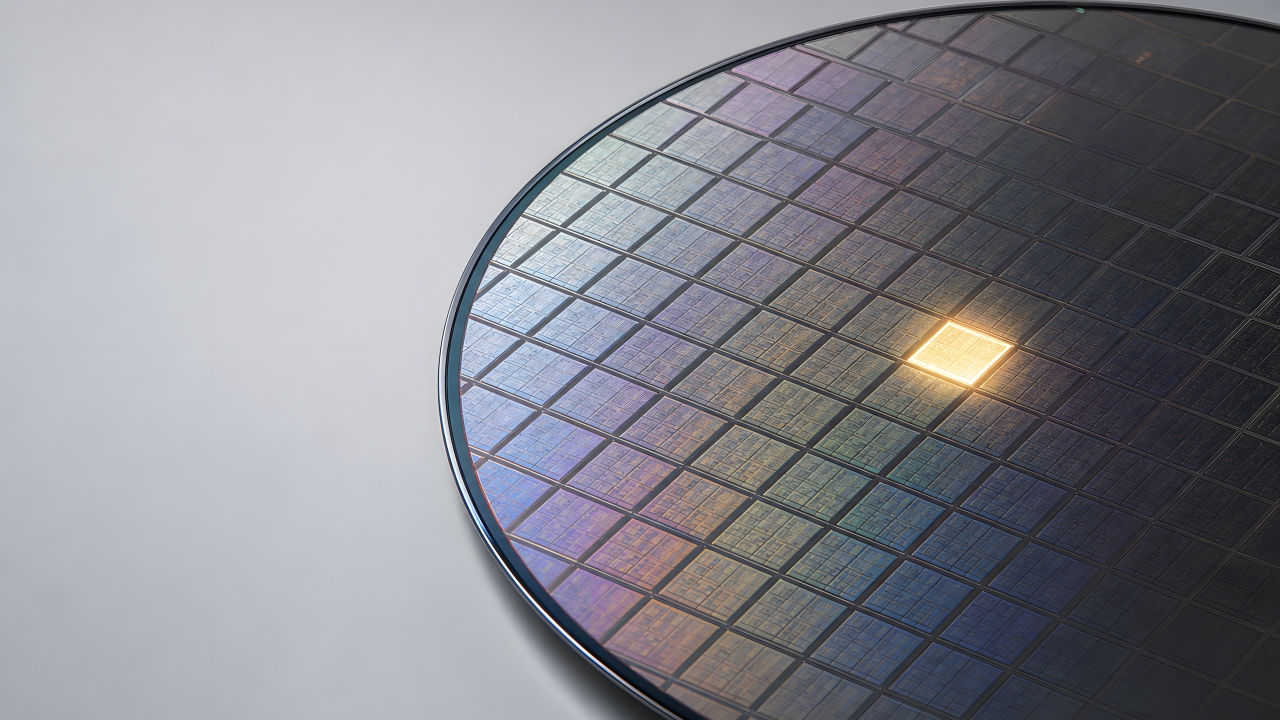
Suppose you want to heat an entire wafer to 300°C.
But if there is temperature unevenness such as
300°C at the center
and 295°C at the periphery,
chemical reactions and film formation conditions may vary by location.
In other words, the temperature distribution leads to the product quality distribution.
In semiconductor manufacturing, not only the average temperature but in-plane temperature uniformity is important.
■ The Larger the Wafer, the Harder Uniform Heating Becomes
In large wafers, heat escapes differently at the center and at the periphery.
The periphery easily releases heat to its surroundings.
Heat tends to build up at the center.
Temperature distribution also changes depending on
● Clamps
● Gas
● Electrodes
● Support structures
That is why it is difficult to create a uniform temperature just by placing a single heater.
Heaters are controlled in multiple zones.
Cooling paths are divided.
Multiple temperature sensors are placed.
Such control becomes necessary.
■ A Difference of a Few Degrees Affects Yield
In semiconductor manufacturing,
even a temperature difference of a few degrees may change
● Film thickness
● Etching rate
● Reaction rate
● Bonding quality
The finer the process becomes, the smaller the allowable variation.
In other words, in semiconductor manufacturing equipment, temperature accuracy itself becomes manufacturing accuracy.
■ Thermal Expansion Changes Positional Accuracy
Objects expand when their temperature rises.
Equipment frames.
Stages.
Metal plates.
Shafts.
Jigs.
All change in dimension with temperature.
For example, even a slight extension of a 500 mm long metal part
may move the tip position by a few μm.
In semiconductor manufacturing, positional differences of a few μm, or even smaller positional differences, matter.
In other words, thermal expansion is not just a dimensional change.
It becomes a cause that destroys alignment accuracy.
■ Accuracy May Change Until the Equipment Warms Up
Right after the equipment is started.
After it has been running for several hours.
The temperature distribution inside the equipment can differ between these.
Motors warm up.
Power supplies warm up.
Frames warm up.
Cooling water stabilizes.
Then the equipment dimensions change little by little.
In other words,
positional accuracy may differ between right after start-up and after the equipment has thermally stabilized.
That is why, in high-precision equipment, the idea of waiting until it is thermally stable is also important.
■ What Is "Thermal Drift"?
Equipment temperature changes over time, and positions and measured values change slowly.
This can generally be thought of as thermal drift.
Thermal drift is not a sudden failure.
It changes little by little.
That is why it is hard to detect.
For example,
the position is correct in the morning.
It shifts a little in the afternoon.
A different correction value is needed at night.
Such phenomena may occur.
In semiconductor manufacturing, both stabilizing temperature and
correcting positional changes due to temperature changes are important.
■ Thermal Drift Is Especially Important in Lithography and Inspection
In lithography equipment and high-precision inspection equipment, extremely high positional accuracy is required.
In such equipment,
heat from motors,
heat from illumination,
heat from electronic circuits,
and even heat from people and the surrounding environment
may have an effect.
In other words,
it is not the case that only large heat sources need to be cooled.
It is necessary to manage small heat sources one by one and stabilize the temperature of the entire equipment.
■ Summary
As we have seen, the heat problems of semiconductor manufacturing equipment differ in nature from the question of “how to cool high-heat components,” as in AI servers.
Temperature itself is a process condition, and a difference of a few degrees affects yield.
Inside the equipment, places that intentionally create heat and places where heat is generated unintentionally exist at the same time.
And when temperature changes, equipment components expand slightly, and stages and positional accuracy move on the order of μm.
Accuracy differs between right after start-up and after thermal stabilization.
This change that progresses slowly over time is thermal drift.
In other words, in semiconductor manufacturing equipment, “being hot” is not itself the problem.
Temperature moving is what destroys accuracy.
In Part 2, we look at how heating and cooling coexist around this temperature, and how they become entangled with conditions such as vacuum, sealing and clean environments.
Column Supervisor: Koji Kakumoto (President, OTIS Co., Ltd.)
After studying abroad and working in planning and development at a trading company, he joined OTIS Co., Ltd. in 2011. While primarily working in the Corporate Planning Department, he has also served concurrently in manufacturing and technical divisions, and since 2018 has served as President, working to drive business growth and strengthen the organization.
This article is a general technical explanation intended for educational purposes and does not refer to any specific company, product, or technology.