■ Integrating Metal Foil and Insulating Material
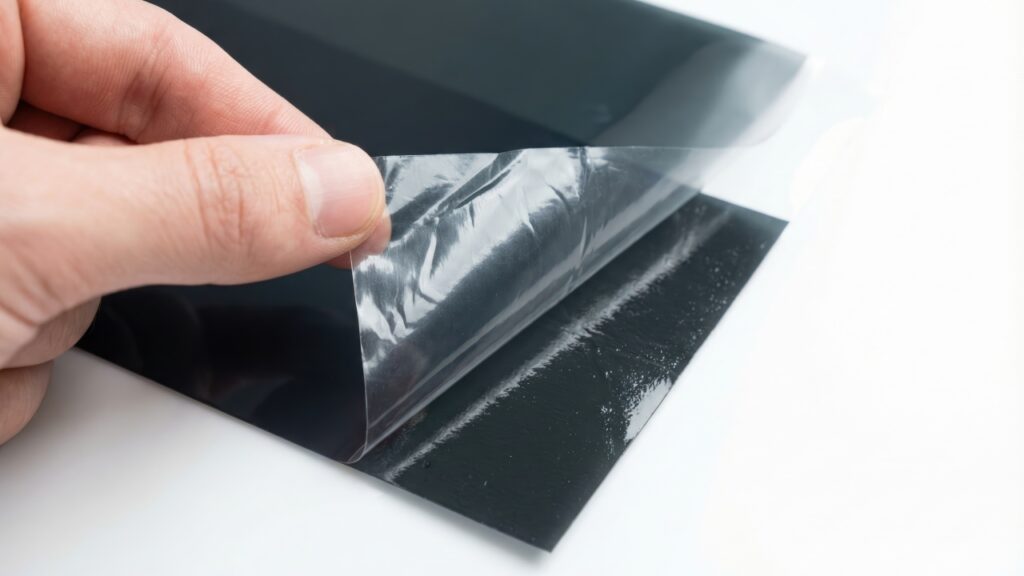
Copper foil alone is conductive.
So it is laminated with insulating film.
Then a component may be made that
spreads heat,
suppresses EMI,
but is insulated from the outside.
In other words, metal foil + insulating film becomes a representative composite component composition.
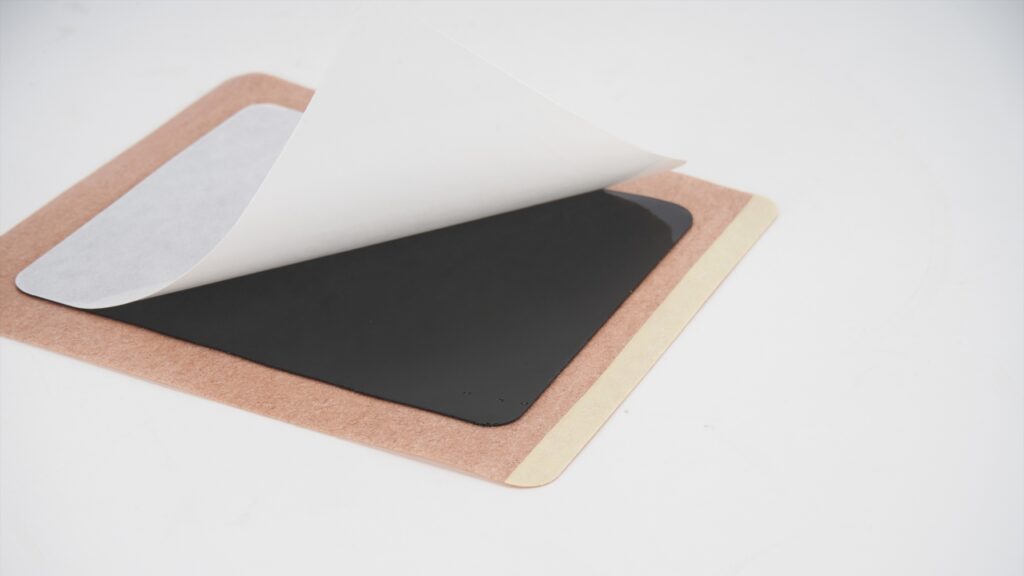
■ Adding Adhesive Further
Metal foil,
insulating film,
and adhesive
are integrated.
The customer can apply it as is.
In other words,
heat dissipation,
EMI,
insulation,
and fixing
can sometimes be integrated into one component.
This is where the value of high-precision lamination emerges.
■ The More Functions Are Added, the More Complex the Laminate Structure Becomes
Copper foil,
insulating material,
adhesive,
and protective film
are stacked.
Functions increase.
But
thickness,
warping,
thermal resistance,
and tolerance accumulation
also increase.
In other words, in combining functions, keeping only the necessary functions rather than increasing the number of functions is also important.
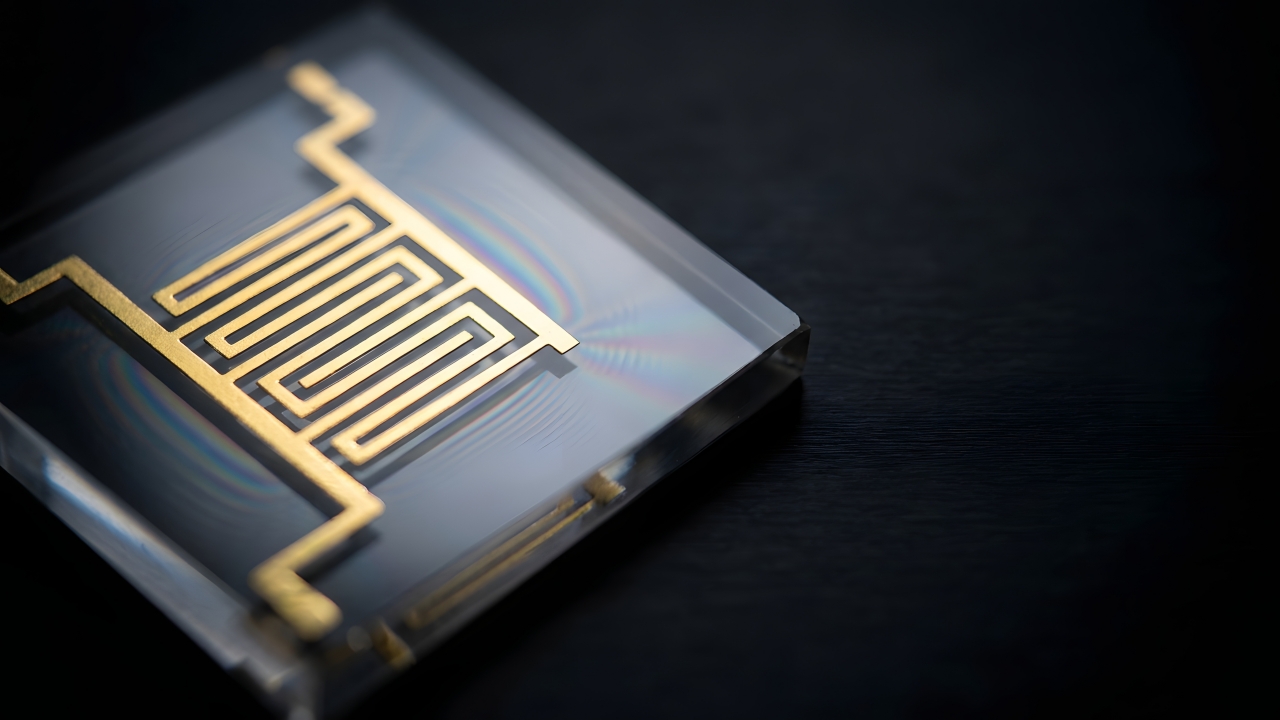
■ The Concept of Partial Metal Foil
Sometimes the entire surface does not need to be copper foil.
Only the path from the heat source to the enclosure.
Only the area where EMI is a problem.
It is placed only where needed.
This reduces
weight,
material cost,
and unnecessary conductive areas.
In other words, partial lamination makes it possible to limit functions to the places they are needed.
■ Insulating Material Also Sometimes Does Not Need to Cover the Entire Surface
Only the high-voltage area.
Only around metal edges.
Insulating film is placed where needed.
This may keep
thermal resistance,
thickness,
and weight
down.
In other words, from the idea of covering the entire surface with the same material,
one can move on to designs that place necessary functions locally.
■ Combining Partial Adhesion, Partial Insulation and Partial Metal Foil
For example, within a single component, a structure is made with
center = copper foil,
around it = insulating film,
perimeter = adhesive.
Then different functional areas are created within a single component.
This is not just lamination.
It is processing that designs functions within the surface.
■ Good Compatibility with Irregular-Shape Processing
The inside of actual products is not just
squares
and circles.
Screws are avoided.
Connectors are avoided.
Sensors are avoided.
That is why
insulating materials,
metal foils,
and adhesives
all require irregular-shape processing.
In other words, the materials in 10-6 lead naturally to irregular-shape lamination in 10-7.
■ Increasing Conformability with Slits in Insulating Material
A large-area film is applied to a curved surface.
As is, it wrinkles.
Slits are added partially.
Then it may conform more easily.
In other words, even without changing the material itself, it is possible to change applicability through shape processing.
■ Releasing Air Bubbles Through Openings in Adhesive
With full-surface adhesion, air remains in the center.
So
openings,
slits,
and non-adhesive areas
are provided.
A path for air to escape outward is created.
In other words, the processed shape of adhesive also becomes a means not only for bonding, but for designing application quality.
■ Stress Is Sometimes Relieved with Slits in Metal Foil
Large-area metal foil is applied to resin.
The thermal expansion difference is large.
Warping appears.
Depending on the application, methods of dispersing stress with slits or divided shapes can also be considered.
In other words, metal foil shape relates not only to
heat paths
and EMI,
but also to thermal stress.
■ Material Orientation Is Also Important
Film materials can differ in elongation and mechanical properties between the machine and transverse directions.
Metal foil can also be affected by the rolling direction.
That is why, depending on
which direction components are cut from,
warping,
strength,
and dimensional stability
may change.
In other words, the cutting direction sometimes cannot be decided by material yield alone.
■ Balancing Material Yield and Function
The arrangement with the best yield.
But the material direction is poor.
Warping increases.
This can also happen.
In other words, the arrangement must be decided by considering
material cost,
function,
and volume production quality
together.
■ Foreign Matter Control Is Extremely Important
Metal foreign matter gets between insulating material and metal foil.
Insulation risk.
Foreign matter between adhesive and substrate.
Lifting.
Thermal resistance.
These occur.
In other words, in multifunctional components, the more interfaces there are, the greater the foreign matter risk.
■ Adhesive Locks Foreign Matter in Place
Foreign matter on the film surface.
Adhesive is applied.
The foreign matter is sealed inside.
It cannot be removed afterward.
That is why cleanliness must be ensured before lamination.
Here too, the value of clean processing emerges.
■ Be Especially Careful with Metal Foreign Matter
Even when resin foreign matter would just be an appearance defect, metal foreign matter may lead to
short circuits,
dielectric breakdown,
and noise.
Especially in high-voltage components,
foreign matter control becomes safety performance itself.
■ Static Electricity Attracts Foreign Matter
When insulating film
and liners
are peeled, static electricity is generated.
It attracts foreign matter in the air.
It is laminated as is.
Sealed inside.
This can happen.
In other words, in processing insulating materials and adhesives, static elimination is also part of quality control.
■ Adhesive Stringing Also Becomes Foreign Matter
Adhesive is die-cut.
Adhesive sticks to the blade.
It strings.
It breaks off and sticks somewhere else.
This adhesive residue transfers to
equipment
and products.
In other words, in adhesive processing, it is necessary to consider that the material itself can be a source of foreign matter.
■ Adhesion to Processing Equipment Also Affects Mass Producibility
Adhesive sticks to rollers.
It sticks to guides.
It sticks to dies.
Then
positional deviation,
contamination,
and equipment stoppages
increase.
In other words, in adhesive processing, not only the quality of each product, but
being able to run equipment stably for long periods is also important.
■ Slug Control Is Also Important in Metal Foil Processing
Small holes in copper foil.
Narrow notches.
The slugs are also metal.
If they remain on the product, they may cause electrical problems.
That is why
waste stripping,
suction,
and inspection
are important.
■ In Automated Volume Production, Stabilize the Posture of Components
If thin insulating films,
metal foils,
and adhesive components
are supplied loose, they may
warp,
overlap,
and have mixed front and back.
So they are arranged at fixed positions on liners or carriers.
In other words, by considering processing + supply format, automation becomes easier.
■ Feeding Composite Components Directly into Equipment with Reel Supply
For example,
insulating material + copper foil + adhesive
are integrated in advance.
Arranged on a reel at a fixed pitch.
The customer’s equipment peels and applies them one at a time.
The customer does not need to manage three materials separately.
In other words, reel conversion may make it possible to turn multifunctional components into a single process.
■ Reducing Part Count Also Helps Inventory Management
Material A,
material B,
and material C
are managed separately.
Each needs to be
ordered,
stocked,
and lot-managed.
With an integrated component, it can sometimes be a single part number.
In other words, combining functions leads not only to reduced assembly man-hours, but also to simplified procurement and inventory management.
■ However, Integration Reduces Flexibility for Changes
After converting to a composite component,
if one wants to change only the adhesive,
or only the insulating material,
the entire component must be re-evaluated.
In other words, the scope of integration and modularization is important.
■ Also Consider the Customer's Frequency of Changes
In early development, there are many specification changes.
At this stage, full integration is not done.
Volume production specifications are fixed.
Then integration proceeds.
That is one way of thinking.
In other words, component design changes with the product life cycle.
■ Supply Formats Are Sometimes Changed Between Prototyping and Volume Production
Prototyping:
loose parts.
Volume production:
reel products.
Such an arrangement can also be considered.
However, if the shape is changed significantly at volume production, evaluation must be redone.
That is why from the prototyping stage, the shape is made with future reel conversion in mind.
In other words, it is important to keep the prototype shape and volume production shape as close as possible.
■ Failure Example: Cutting Insulation Margin Too Much in Favor of Heat
The insulating film was made thinner to lower thermal resistance.
The temperature went down.
But the margin against metal burrs and foreign matter in volume production decreased, and insulation problems appeared in some units.
In other words, safety margin was cut too much to improve thermal performance.
■ Failure Example: Increasing Fixing Strength Increased Thermal Resistance
To fix graphite securely, thick adhesive was added over the entire surface.
Assembly became stable.
But heat transfer from the heat source to the graphite worsened.
In other words, improving the fixing function worsened the thermal function.
■ Failure Example: Enlarging Copper Foil Caused Noise Problems
The copper foil was enlarged to increase heat dissipation area.
The temperature went down.
But electromagnetic characteristics changed near high-frequency circuits.
In other words, the problem was placing metal foil based on thermal design alone.
■ Failure Example: The Relative Position of Metal Foil and Insulating Material Shifted
The dimensions of each material alone passed.
But it shifted by 0.4 mm during lamination.
The insulating film that was supposed to cover the metal edge was insufficient.
In other words, it was not individual dimensions but the positional relationship between functional materials that mattered.
■ Failure Example: People Could Apply It in Prototyping, but It Could Not Be Peeled in Volume Production
A small component of insulating material + adhesive.
In prototyping, it was peeled from the liner with tweezers.
On volume production equipment, the component remained on the liner.
In other words, there was no problem with product performance, but the supply design did not suit the volume production process.
■ The Researcher's Perspective: Insulation, Adhesives and Metal Foils Are Not "Peripheral Materials of Heat"
TIM and graphite, which have thermal conductivity, are the main players.
Insulating materials and adhesives are peripheral materials.
It is easy to think this way.
But in reality,
without insulating material, it cannot be used safely.
Without adhesive, it cannot be fixed.
Metal foil creates the heat path.
In other words, these are constituent materials that establish the thermal management component itself.
■ The Shop-Floor Perspective: Ask About the Role, Not the Material Name
“Please die-cut PET.”
That alone does not tell what processing is really needed.
Is that PET for
insulation,
protection,
or as a spacer?
“Please process copper foil.”
Is that copper foil for
heat,
EMI,
or conduction?
If the purpose is known, proposals for
shape,
tolerance,
and processing method change.
In other words, understanding the purpose of use rather than the material name is important.
■ Prioritize Processing Accuracy
The insulation edge.
Very important.
The adhesive outer shape.
No problem if it shifts somewhat.
This can be the case.
Not all dimensions need the same accuracy.
Identify the important dimensions from function.
This is where the value of processing design lies.
■ OTIS's Perspective: Turning Different Material Functions into "a Single Process Component"
OTIS’s value is not just material-specific capabilities such as
being able to cut PET,
being able to cut adhesives,
and being able to cut copper foil.
Insulating film,
adhesive,
and metal foil
are laminated
in the required positions,
in the required shapes,
and in the required order.
And turned into a component the customer can handle in one go.
In other words, there is great value in integrating multiple material functions into a single volume production process component.
■ OTIS Connects Material Manufacturers
Insulating material manufacturers.
Adhesive tape manufacturers.
Metal foil manufacturers.
Each has high expertise.
But customer products use those multiple materials at the same time.
By
procuring,
processing,
laminating,
and converting each material into components,
OTIS can become a processing platform that connects material manufacturers with one another.
■ Do Not Make Not Having Its Own Materials a Weakness
OTIS is not a material manufacturer.
That is exactly why it can combine
material company A,
material company B,
and material company C
according to customer challenges.
In other words, rather than being in a position to sell specific materials,
it can take the position of selecting materials based on required functions and establishing them as components.
■ What OTIS Can Do
At OTIS, by combining
● Insulating film processing
● Thermally conductive insulating material processing
● Adhesive processing
● Low-tack adhesive processing
● Partial adhesive processing
● Copper foil processing
● Aluminum foil processing
● EMI material processing
● High-precision die-cutting
● Microfabrication
● Small-diameter hole processing
● Opening processing
● Slit processing
● Half-cutting
● Thin-film processing
● High-precision lamination
● Partial lamination
● Lamination of dissimilar materials
● Carrier design
● Reel-to-reel processing
● Supply formats for automatic application
● Image inspection
● Foreign matter control
● Process design from prototyping to volume production
we can contribute to volume production of components with multiple functions such as insulation, fixing, heat spreading and EMI.
■ Outside OTIS's Expertise
OTIS is not a company that specializes in
● Material development of insulating resins themselves
● Formulation development of adhesives themselves
● Rolling production of copper foil and aluminum foil themselves
● Dedicated EMI analysis
● Designing electrical circuits themselves
As needed, we work with the respective material manufacturers and customers’ design departments.
What OTIS takes on is
the area of combining each high-performance material into a single mountable volume production component.
■ Summary: It Is Not Only TIM and Graphite That Establish Thermal Management
Releasing heat.
For that alone, choosing a thermally conductive material would be enough.
But in actual products,
stopping electricity,
fixing components,
suppressing noise,
not adding weight,
and being applicable automatically
are also needed.
That is where
insulating materials,
adhesives,
copper foil,
and aluminum foil become important.
These are not supporting players in thermal management.
They are constituent materials for establishing thermal management as a product.
Insulating materials stop electricity while passing heat.
Adhesives fix components without breaking the heat path.
Metal foils carry heat while also handling EMI and conductive functions.
And through processing, they are made
only where needed,
in the required shape,
at the required thickness.
Furthermore, multiple materials are integrated and turned into a state that can be handled as is in the customer’s process.
In other words, what matters is not “whether this material can be cut.”
It is whether multiple requirements, such as heat, insulation, fixing and EMI, can be established within a single volume production component.
For that,
high-precision die-cutting,
microfabrication,
thin-film processing,
high-precision lamination,
partial processing,
and reel supply
must be combined.
Material manufacturers create individual functions.
OTIS places them where needed and brings them together into a single component.
That role is precisely OTIS’s value in processing insulating materials, adhesives and metal foils.
Column Supervisor: Koji Kakumoto (President, OTIS Co., Ltd.)
After studying abroad and working in planning and development at a trading company, he joined OTIS Co., Ltd. in 2011. While primarily working in the Corporate Planning Department, he has also served concurrently in manufacturing and technical divisions, and since 2018 has served as President, working to drive business growth and strengthen the organization.
This article is a general technical explanation intended for educational purposes and does not refer to any specific company, product, or technology.