【1】What Is ESG?
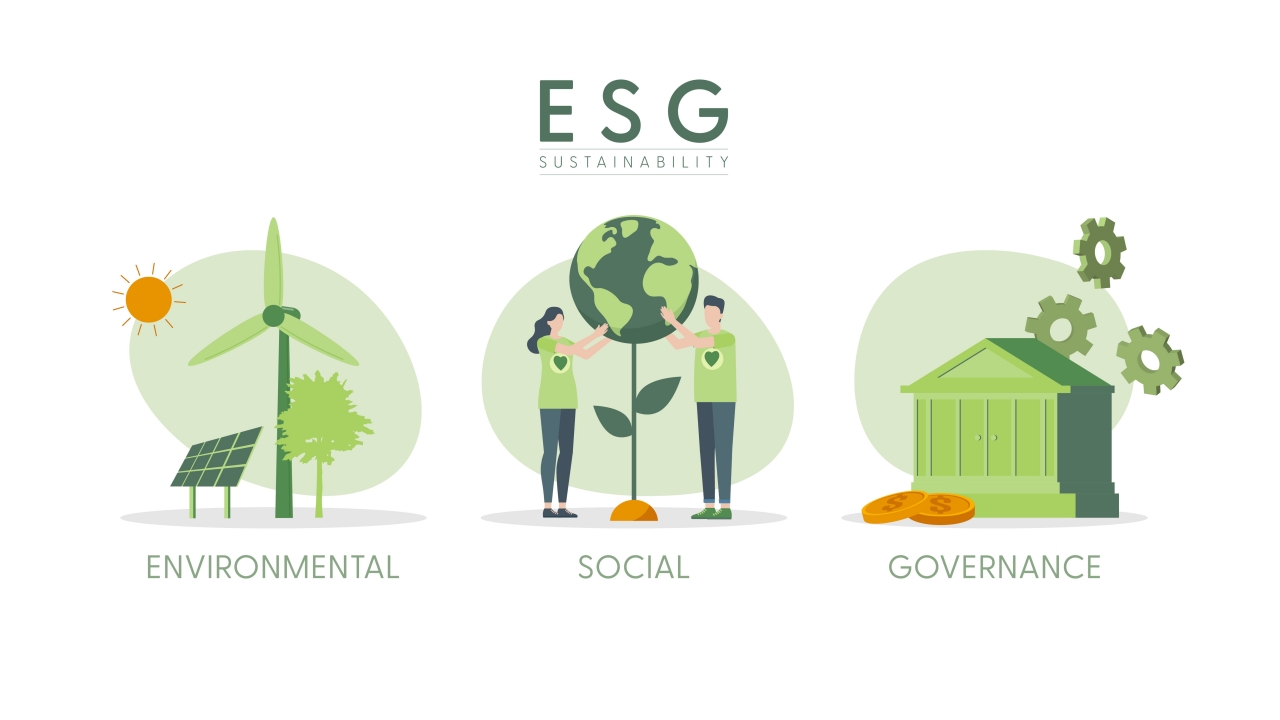
ESG refers to three perspectives for evaluating corporate activities.
・Environment
・Social
・Governance
It is the idea that, for a company to grow over the long term, it must consider not only profit but also its impact on society and the environment.
【2】Environment
In the semiconductor industry, environmental issues are a major theme.
Because semiconductor factories use large amounts of electricity and water and also emit chemicals and greenhouse gases, reducing environmental impact has become an important challenge.
Main initiatives:
・Introducing renewable energy
・Water recycling
・Reducing greenhouse gases
【3】Social
From the social perspective, consideration for working conditions and human rights is important.
Because the semiconductor industry has supply chains around the world, the working conditions at manufacturing sites and suppliers are also subject to evaluation.
Main themes:
・Occupational safety
・Respect for human rights
・Coexistence with local communities
【4】Governance
Governance refers to the mechanisms of corporate governance.
Companies are required to have mechanisms for highly transparent management that prevent fraud and inappropriate management.
Main elements:
・Oversight by the board of directors
・Compliance systems
・Information disclosure
【5】The Expansion of ESG Investment
Investment that emphasizes ESG is expanding worldwide.
Investors evaluate companies’ environmental measures and social responsibility to judge long-term corporate value.
Typical investors:
・Pension funds
・Asset management companies
・Sovereign wealth funds
【6】The Impact on Semiconductor Companies
ESG ratings also affect semiconductor companies’ fundraising and corporate value.
When their environmental measures and social responsibility efforts are recognized, it becomes easier to attract investment.
Evaluation items:
・Greenhouse gas emissions
・Energy use
・Working conditions
【7】Corporate ESG Strategies
Many semiconductor companies have placed ESG strategy at the center of their management.
They aim for sustainable management through setting environmental targets, managing their supply chains, and more.
Typical measures:
・Carbon neutrality targets
・Supplier audits
・Publishing ESG reports
【8】The Relationship with Government Policy
ESG is also closely related to government policy.
Because decarbonization policies and environmental regulations affect corporate activities, companies also need to respond to policy trends.
Related policies:
・Decarbonization policies
・Environmental regulations
・Industrial support policies
【9】Semiconductors and Social Issues
Semiconductor technology also contributes to solving social issues.
Semiconductors play an important role in many fields, such as improving energy efficiency and realizing a smart society.
Representative examples:
・Electric vehicles
・Renewable energy
・Smart grids
【10】The Impact on Corporate Value
ESG initiatives also affect corporate brands and corporate value.
Companies that emphasize highly transparent management and social responsibility can earn trust over the long term.
【11】Future Challenges
Going forward, ESG responses will become important in the semiconductor industry alongside technological competition.
Companies need to achieve lower environmental impact, ethical supply chains, and highly transparent management.
【12】Summary
・ESG is an important indicator for evaluating companies
・Companies are evaluated on three elements: environment, social, and governance
・It is important for the semiconductor industry because of its large environmental impact
・ESG investment affects corporate value
・Sustainable management is required
Comprehension Check
1.What are the three elements of ESG?
2.Why are environmental issues important in the semiconductor industry?
3.What impact does ESG investment have on companies?
Column Supervisor: Koji Kakumoto (President, OTIS Co., Ltd.)
After studying abroad and working in planning and development at a trading company, he joined OTIS Co., Ltd. in 2011. While primarily working in the Corporate Planning Department, he has also served concurrently in manufacturing and technical divisions, and since 2018 has served as President, working to drive business growth and strengthen the organization.
This article is a general technical explanation intended for educational purposes and does not refer to any specific company, product, or technology.