■ The Smaller the Component, the Harder Automation Becomes
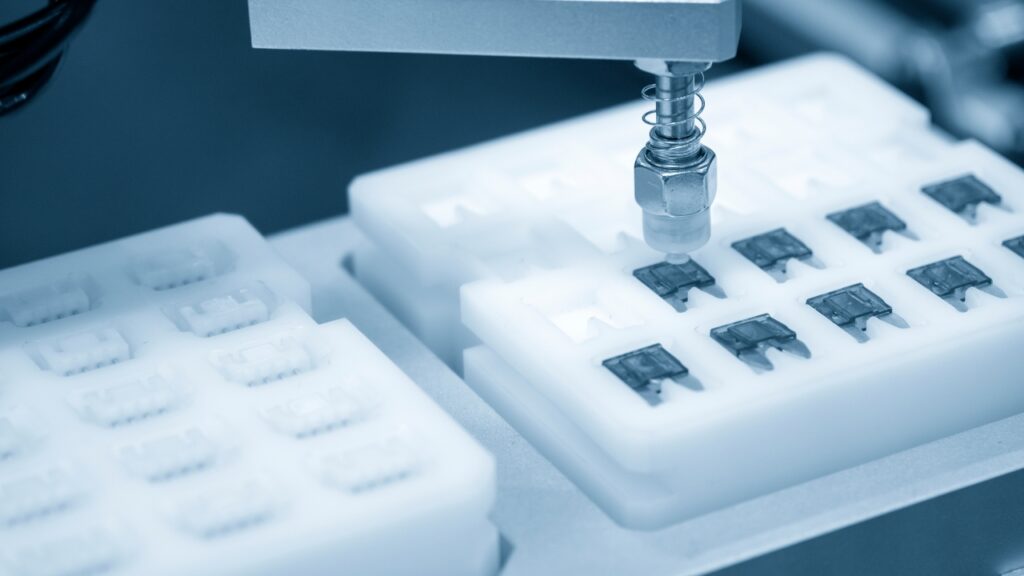
The component is small.
It can be held with tweezers.
But with automatic machines, problems arise:
the suction position is small,
image recognition is difficult,
and it is susceptible to static electricity.
In other words, the more miniaturized it is,
the more being able to supply and transport it, rather than being able to process it, becomes the difficulty in some cases.
■ Reel Supply Can Be Effective for Tiny Components
Small components of a few mm are supplied loose.
The customer must align them one by one.
On the other hand, if they are arranged at a fixed pitch on a reel,
the equipment can pick components from a fixed location.
In other words, by combining microfabrication and reel supply,
it becomes easier to connect small components to volume production processes.
■ Front/Back and Orientation Are Also Hard to Identify for Tiny Components
The smaller the component, the harder it is even for people to tell its orientation.
If the shape is perfectly symmetrical, automatic machines may also be unable to recognize orientation.
So
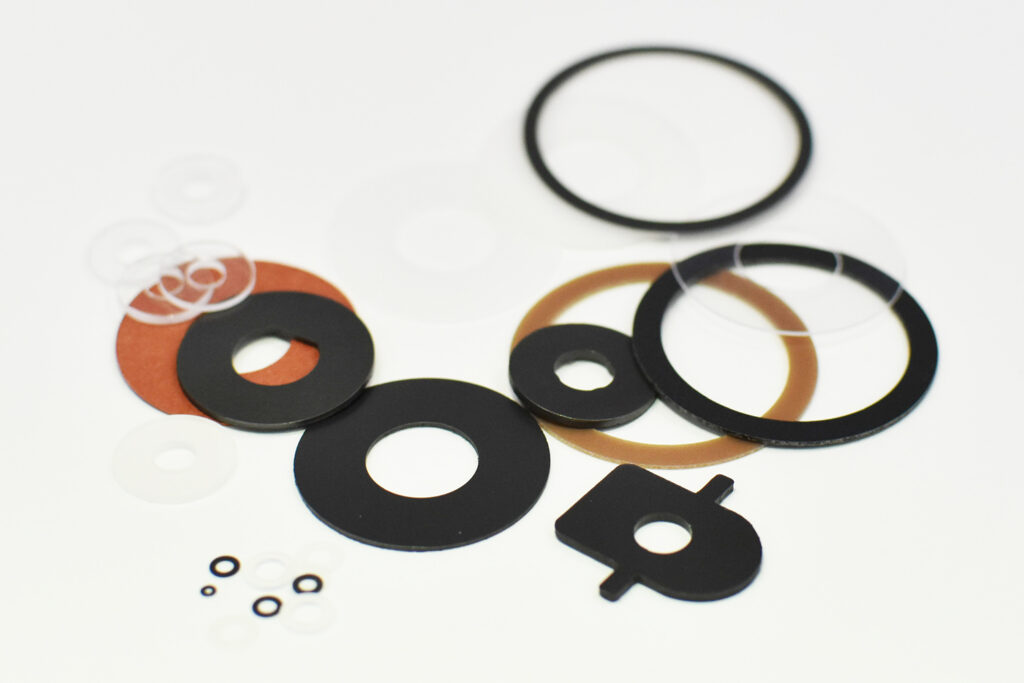
small notches,
positioning holes,
and tabs
are added.
In other words, part of the fine shape can also be used as information for automation.
■ Chasing Only Processing Limits Loses Mass Producibility
Narrower.
Smaller.
Tighter.
Being able to process this is technical capability.
But miniaturizing into areas the customer does not need worsens
cost,
yield,
die life,
and inspection.
What matters is
not making the world’s smallest, but stably making the fine shapes required for the customer’s function.
■ Inspection Methods Also Become Difficult in Microfabrication
As components get smaller,
calipers
and ordinary visual inspection
may not be sufficient for evaluation.
Image measurement,
magnified observation,
image inspection,
and so on become necessary.
In other words, if processing capability is raised,
measurement capability must also be raised at the same time.
■ Accuracy That Cannot Be Measured Cannot Be Guaranteed
Positional accuracy of 0.05 mm is required.
But the measurement system has an error of 0.05 mm.
Then it cannot be guaranteed accurately.
In microfabrication,
not only processing equipment
and dies,
but also the accuracy of the measurement system is important.
In other words, processing accuracy and measurement accuracy are a set
and must be considered together.
■ Good Compatibility with Image Inspection
For tiny components,
outer shape,
holes,
position,
and chips
can sometimes be inspected by imaging.
Especially in mass production, this tends to be more stable than people checking one by one.
Furthermore, by accumulating inspection data,
die wear,
positional deviation trends,
and material lot changes
can also be seen.
In other words, image inspection also becomes
a monitoring technology for maintaining microfabrication in volume production.
■ In Microfabrication, the Relative Impact of Foreign Matter Is Also Greater
1 mm of foreign matter is obviously large.
But 50 μm of foreign matter is hard to notice.
However, relative to a 200 μm-wide component, it is a large proportion.
In other words, the smaller the product, the more foreign matter sizes that were not previously a problem become a problem.
That is why miniaturization
also raises requirements for cleanliness.
■ Tiny Foreign Matter Breaks Thermal Contact
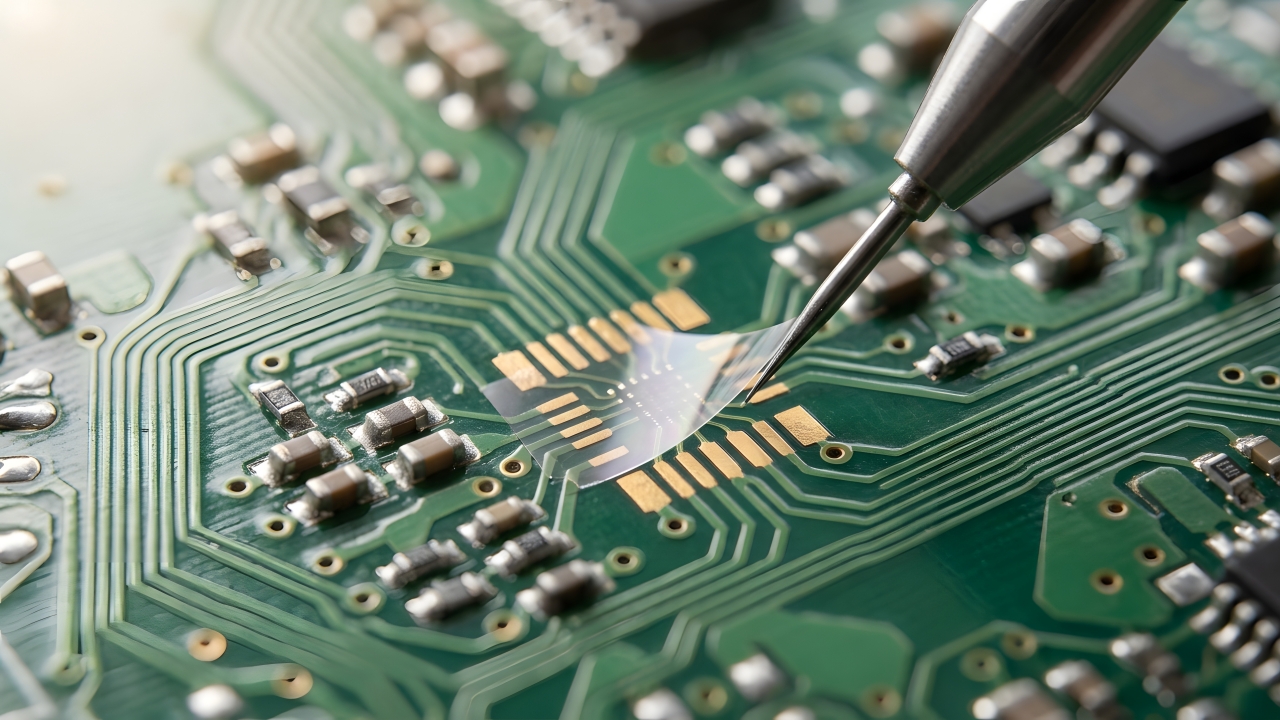
Foreign matter of tens of μm gets under fine TIM.
Because the entire component is small, the lifting caused by that foreign matter may take up a large proportion of the contact area.
In other words, foreign matter is not only an appearance problem,
but a cause of contact thermal resistance.
■ In Microfabrication, Material Handling Becomes Technology
Processing.
Measuring.
Transporting.
Packaging.
Components must not be damaged along the way.
With small and thin-film components,
even touching with fingers
or grabbing with tweezers
may deform them.
In other words, in microfabrication, handling before and after processing is also process technology.
■ Packaging Methods Also Affect Quality
Small components are put in a bag.
They move during transport.
They overlap.
Edges bend.
Foreign matter sticks to adhesive surfaces.
Such problems occur.
That is why appropriate supply and packaging formats are chosen, such as
trays,
separators,
and reels.
In other words, microfabrication does not end the moment the part leaves the processing machine.
The shape must be maintained until the moment the customer uses it.
■ Failure Example: The Fine Shape Could Be Made, but It Deformed During Transport
A long, narrow graphite component was processed with high precision.
Dimensions right after processing passed.
But it bent when peeled from the liner.
Automatic transport deformed it further.
As a result, the application position was not stable.
In other words,
only processability was considered, not the shape stability of the entire process.
■ Failure Example: Slugs from Small Holes Remain on the Product
Tiny holes were processed in large volume.
All hole dimensions passed.
But some slugs stuck to the adhesive surface.
In the customer’s process, that foreign matter got into the interface and caused lifting.
In other words,
dimensional quality passed.
But functional quality failed.
■ Failure Example: Excessive Miniaturization Shortens Die Life
A very narrow shape was designed to meet the customer’s request.
Initial processing succeeded.
But the narrow part of the die wore and broke early.
Maintenance frequency increased.
Costs rose.
In other words, shapes that can be made and shapes that can be mass-produced economically are different.
■ Failure Example: High Dimensional Accuracy, but It Cannot Be Applied
TIM a few mm in size was processed to ±0.05 mm.
Component accuracy was high.
But because it was very small, automatic suction pickup was not stable.
Positional deviation occurred in the customer’s process.
In other words,
raising component accuracy alone does not necessarily raise final application accuracy.
■ The Researcher's Perspective: Microfabrication Is "a Technology for Placing Functions in Space"
If microfabrication is thought of as a technology for
making small holes
and cutting narrow,
its value is seen too narrowly.
In reality, functions such as
heat passes through here,
insulate here,
apply here,
release air here
are being placed in very small spaces.
In other words, microfabrication can be thought of as
a technology that spatially designs material performance.
■ The Shop-Floor Perspective: Look Not at Whether It Can Be Processed, but at Whether It Works Across the Entire Process
A customer asks,
“Can you process it at 0.3 mm width?”
If the question is only whether it can be processed, the answer may be YES.
But what one really wants to confirm is
what the quantity is,
what the material is,
how long it is,
how it will be peeled,
how it will be applied,
and whether it will be automated.
In other words, as for whether it can be processed,
answering with everything up to the final process included is more valuable.
■ OTIS's Perspective: Microfabrication Is a Technology That Creates the Functional Arrangement of Heat
For OTIS, microfabrication is not just small parts processing.
TIM,
graphite,
insulating film,
metal foil,
and adhesive
are made
only where needed,
at the required width,
in the required shape.
This places functions such as
heat,
insulation,
fixing,
and EMI.
In other words, OTIS’s microfabrication is
a processing technology for accurately placing functional materials inside products.
■ Why OTIS Does Not Stop at Microfabrication
Processing fine shapes.
That alone is parts processing.
Furthermore,
leaving them on a carrier,
arranging them on a liner,
converting them to reels,
inspecting them by imaging,
and making them into a form automatic machines can handle.
Going this far,
microfabrication connects to the customer’s volume production process.
In other words, it becomes volume production value only when microfabrication + supply format are included.
■ Division of Roles with Material Manufacturers
Material manufacturers develop
thin films,
high-thermal-conductivity graphite,
high-insulation materials,
and high-performance TIM.
OTIS takes those materials and
processes them into fine shapes,
combines multiple materials,
and makes them into a state that can be handled in the customer’s process.
In other words,
material manufacturers create material performance, and OTIS creates functional shapes.
This division of roles is important.
■ Understanding the Purpose of the Customer's Drawing
A 0.5 mm hole.
Why is it needed?
A narrow slit.
Why is it needed?
Rather than simply making it per the drawing, ask about the purpose.
Is it for air release?
Insulation?
Positioning?
A heat path?
If the purpose is understood,
shape changes,
processing method changes,
and mass producibility improvements
can be proposed.
In other words, understanding the meaning of fine shapes leads to proposal capability.
■ What OTIS Can Do
At OTIS, by combining
● Fine die-cutting
● Small-diameter hole processing
● Narrow-width processing
● Fine slits
● Fine openings
● Thin film processing
● Fine processing of TIM
● Fine processing of graphite
● Fine processing of copper foil and aluminum foil
● Insulating film processing
● Fine processing of adhesives
● Half-cutting
● Partial adhesion
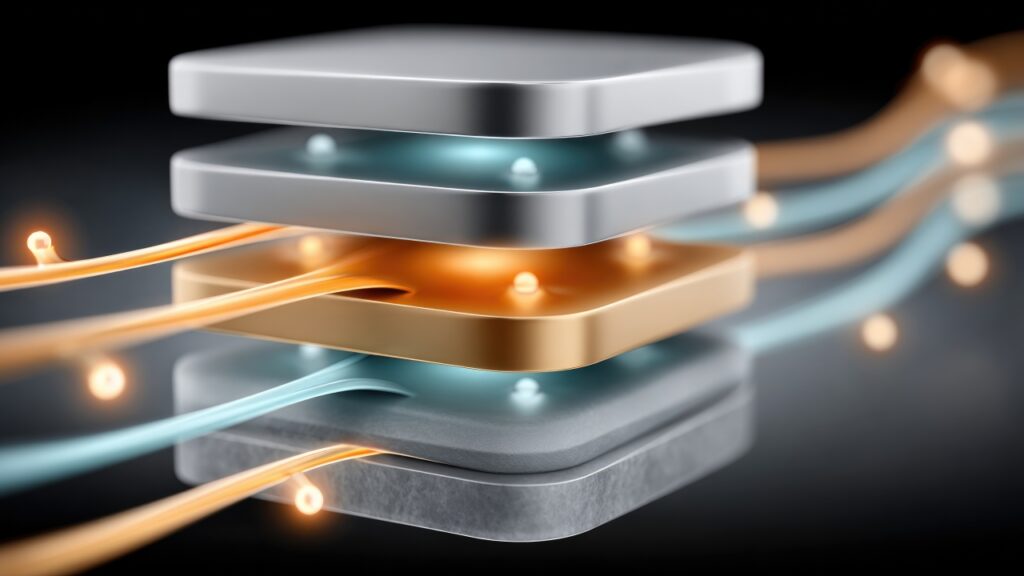
● High-precision lamination
● Lamination of dissimilar materials
● Carrier design
● Reel-to-reel processing
● Image inspection
● Supply formats for automation
we can bring fine functional components into volume production processes.
■ Outside OTIS's Expertise
OTIS is not a company that specializes in
● Microfabrication of semiconductor wafers themselves
● Nano-level semiconductor pattern formation
● Designing MEMS devices themselves
● Molecular design of materials themselves
What OTIS excels at is
the area of processing thin-film functional materials such as films, adhesives, metal foils and TIM into mountable fine components.
■ Summary: Microfabrication Is Not a Technology for Cutting Small
Products get smaller.
Component spacing gets narrower.
Heat sources become denser.
Then thermal management components also require
smaller holes,
narrower widths,
tighter spacing,
and more complex shapes.
But being able to process small is not the end.
It must
not deform,
not have burrs,
not leave slugs,
align in position,
insulate,
maintain thermal performance,
be handled automatically,
and be reproducible in volume production.
In other words, microfabrication is
not a technology for making small shapes, but a technology for establishing the necessary functions within small spaces.
Even with high-performance materials, they cannot be used if they do not fit where needed.
If they cannot be placed in the required position, performance does not come out.
That is why, as products are miniaturized, the role of processing companies does not shrink.
Rather, it grows.
Between materials and products,
in just a few mm,
or a few hundred μm,
functions such as
heat,
insulation,
adhesion,
and fixing
are placed.
Continuing to make those “small functions” in volume production.
That is the value of microfabrication at OTIS.
Column Supervisor: Koji Kakumoto (President, OTIS Co., Ltd.)
After studying abroad and working in planning and development at a trading company, he joined OTIS Co., Ltd. in 2011. While primarily working in the Corporate Planning Department, he has also served concurrently in manufacturing and technical divisions, and since 2018 has served as President, working to drive business growth and strengthen the organization.
This article is a general technical explanation intended for educational purposes and does not refer to any specific company, product, or technology.