■ Why Is Thinning Important in Thermal Management?
Heat passes through materials.
For the same material, generally the thicker it is, the longer the distance heat travels.
In other words, with TIM and insulating materials,
if they can be made thinner while maintaining the required functions,
thermal resistance may be reduced.
For example, in a structure of
Semiconductor
↓
TIM
↓
Cooling plate
the TIM is thicker than necessary.
Then heat travels a long distance.
On the other hand, if it can be made thinner while maintaining the required contact, the heat path can be shortened.
In other words, thinning is one of the basic means of lowering thermal resistance.
■ However, Thinner Is Not Always Better
TIM also has the role of absorbing steps and conforming to surfaces.
If it is too thin,
it cannot fill irregularities.
It cannot absorb warping.
Parts lift.
Such problems occur.
In other words,
we want to make it thinner.
But we want contact.
There is this contradiction.
What matters is not aiming for the thinnest.
It is achieving the optimal thickness within the range that can maintain the required contact.
■ We Also Want to Make Insulating Films Thinner
Power semiconductors and high-voltage equipment require insulating films.
Making them thicker is advantageous for insulation.
But it tends to be disadvantageous for heat.
So the idea emerges of
securing the required withstand voltage
while using as thin a film as possible.
In other words, with insulating components, thickness must be optimized between thermal performance and electrical safety.
■ Thinning Reduces the Safety Margin of Insulation
Small burrs that were not a problem with thick insulating films.
Small foreign matter.
Tiny scratches.
These can become major risks with thin films.
In other words, the thinner it gets,
not only the performance of the material itself, but
processing quality,
foreign matter control,
and edge quality become important.
Thinning can raise requirements for process quality more than requirements for material performance.
■ In Smart Devices, Tens of μm Become Design Margin
In smartphones and wearables, product thickness is very limited.
TIM.
Graphite.
Insulating material.
Adhesive.
Protective film.
If each layer becomes tens of μm thicker, they add up to a large thickness.
For example, even at 50 μm per layer, four layers make 200 μm.
In thin products, this 200 μm is large.
In other words, thinning a single sheet leads to design freedom for the entire product.
■ In EVs, Large Areas Make the Weight Effect of Thinning Large Too
Making a small component 10 μm thinner makes little weight difference.
But it is different with large-area insulating films and metal foils.
Hundreds of mm.
Sizes close to 1 m.
Used in large quantities.
In this case, even a slight thickness difference affects total weight.
In EVs, weight relates to driving range and energy efficiency.
In other words, thinning leads not only to heat benefits but also to weight reduction.
■ In Robots, Weight Has a Chain Effect
In robots, it does not end with one component getting heavier.
The arm gets heavier.
The required motor gets bigger.
Power consumption increases.
The battery gets bigger.
Weight increases further.
This chain occurs.
That is why, for functional components for robots, it is important to be
thin,
light,
and have the required performance.
In other words, thin-film processing is also a technology that connects thermal performance with the weight design of the entire machine.
■ Graphite Works Well in Thin Form
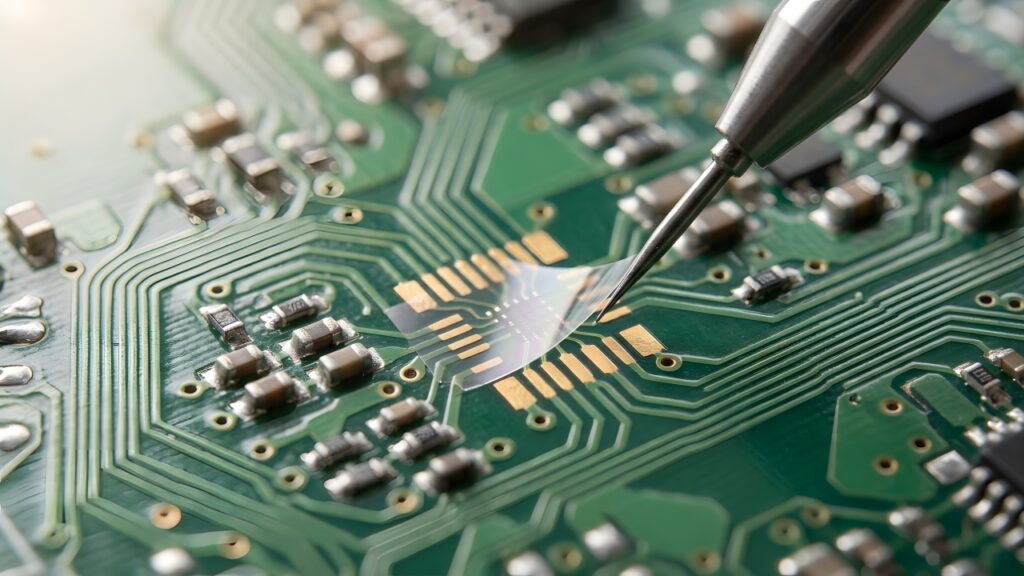
Graphite sheets can spread heat in the in-plane direction even when thin.
That is why they work well with
smartphones,
wearables,
and thin electronic devices.
But the thinner they get, the more problems increase:
brittleness,
breaking easily,
and chipping at the edges.
In other words, the higher the performance of thin-film materials, the more important processing and transport technologies become.
■ Edge Protection Is Also Important for Thin Graphite
If graphite edges are exposed, they may
chip,
shed powder,
and expose conductive parts.
That is why methods such as
covering with insulating film,
laminating protective film,
and treating only the edges
can be considered.
In other words, in thin-film processing, it is important not only to process the material alone, but
to make it into a component that includes the protective structure.
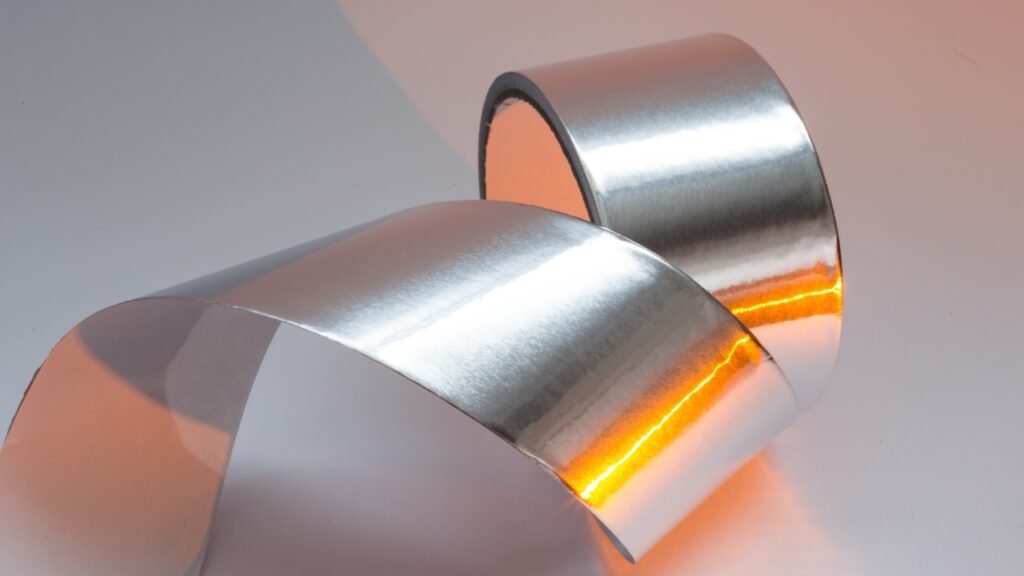
■ Copper Foil and Aluminum Foil Are Also Getting Thinner
Heat spreading.
EMI countermeasures.
Electrical conduction.
Metal foils are used for these.
Compared to thick metal plates, they have the advantages of being
thin,
light,
and easy to bend.
On the other hand, the thinner they get,
burrs,
deformation,
wrinkles,
and folds become problems.
In other words, in thin-film processing of metal foil, not only cutting accuracy but flatness is important.
■ Thin Metal Foil Deforms Easily Under Processing Stress
It is die-cut.
The blade enters.
The foil is pressed locally.
As a result, it may
warp,
wave,
and curl up at the edges.
Even if the dimensions pass, if it is not flat, lamination becomes difficult.
In other words, with thin metal foil, quality cannot be judged by two-dimensional dimensions alone.
■ Thin Films Stretch Under Tension
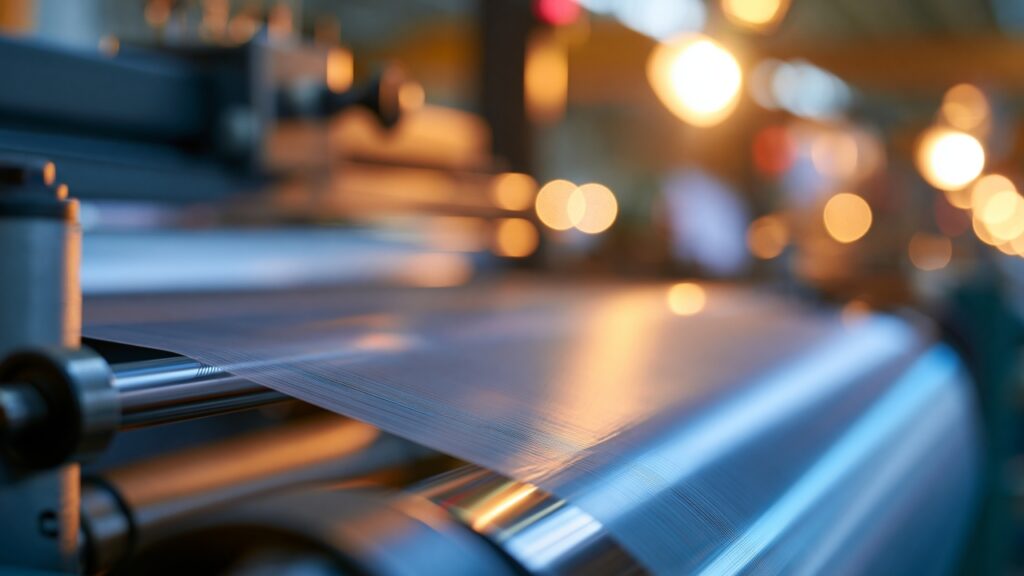
When transporting thin film in roll form, a certain tension is applied.
But the thinner it is, the more susceptible it is to tension.
It stretches a little.
It is processed in that state.
The tension is released.
It shrinks.
Then dimensions may differ between during and after processing.
In other words, in thin-film processing, tension control becomes dimensional accuracy itself.
■ Lowering Tension Is Not the Answer
Weakening tension makes the material less likely to stretch.
But if too weak, problems arise:
it meanders,
it wrinkles,
and feed accuracy worsens.
In other words,
too strong tension is no good.
Too weak is no good either.
What is needed is the appropriate tension that allows the material to be transported stably.
■ In Thin-Film Processing, "Transport" Is as Important as Processing
A thick plate holds its shape when placed.
Thin films are different.
They sag just by being held.
They sway when transported.
They stick due to static electricity.
In other words, before and after cutting on the processing machine,
feeding,
support,
suction,
and winding
affect quality.
In thin-film processing, moving the material stably is itself a technology.
■ Support Materials Are Sometimes Used
Very thin films and foils are hard to process as they are.
So they are supported with
liners,
carrier films,
protective films,
and so on.
By keeping the support material until after processing,
deformation,
tearing,
and transport defects are prevented.
In other words, materials that do not remain in the final product play an important role in thin-film processing.
■ Carrier Design Is Also Part of Thin-Film Processing
The carrier is too hard.
It is hard to peel.
It is too thin.
Transport is unstable.
The surface does not match.
Then thin-film components cannot be handled stably.
In other words, not only
product materials,
but process materials must also be included in optimization.
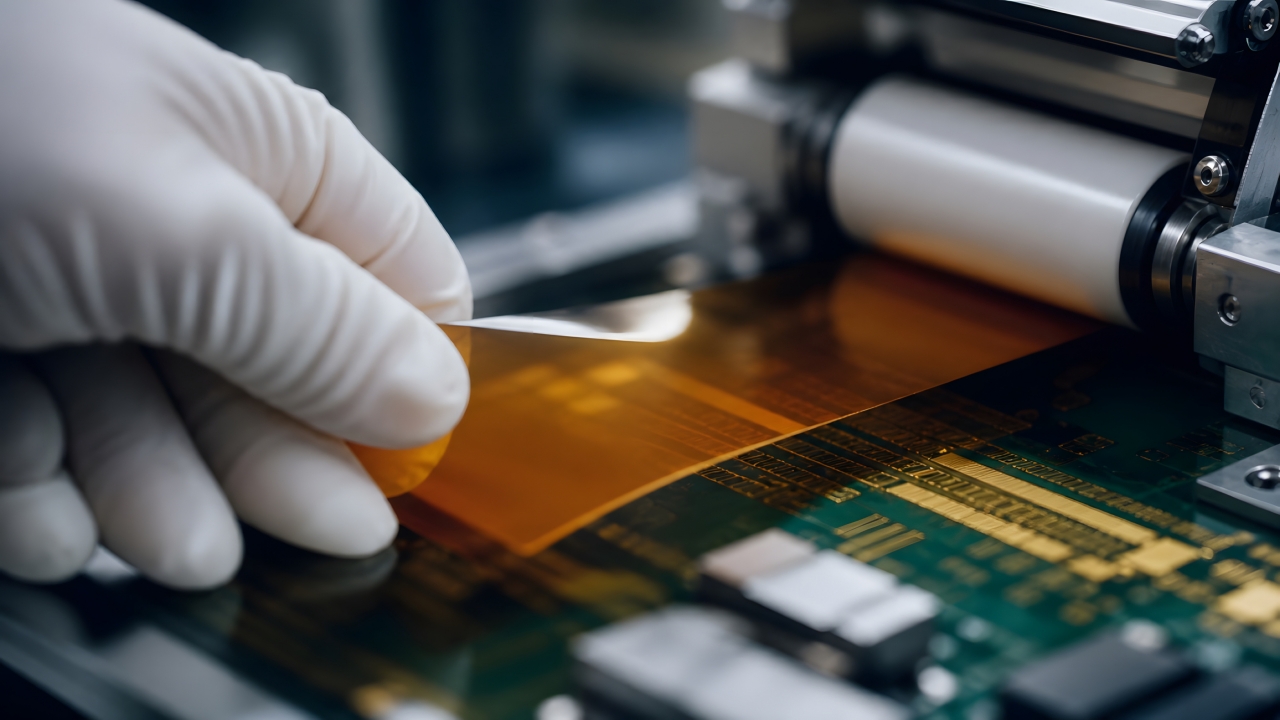
■ Good Compatibility with Half-Cutting
If thin adhesives or insulating films are completely cut apart, they become hard to handle.
So only the product layer is cut, and the liner is left.
This way,
components can be held in fixed positions,
they are easy to transport,
and easy to peel with automatic machines.
In other words, half-cutting is an important processing method for connecting thin-film components to volume production processes.
■ With Thin Films, Half-Cut Depth Becomes Even Stricter
In a composition such as
upper layer 50 μm,
lower liner 75 μm,
the difference in cutting depth is small.
Too deep damages the liner.
Too shallow does not cut the product.
In other words, the thinner it gets, the smaller the control margin for blade depth becomes.
■ The Impact of Blade Wear Also Increases
With thick materials, it cuts even with some blade wear.
But in thin-film and fine processing, changes in blade edge condition affect
burrs,
uncut portions,
and adhesive stringing.
In other words, the thinner the film processing, the more important die and blade maintenance becomes.
■ Thin Adhesives Seem Easy to Handle but Are Difficult
Thin double-sided tapes have the advantages of
saving space
and being lightweight.
However, problems include:
no stiffness,
curling when peeled,
sticking due to static electricity,
and wrinkling.
In other words, with thin adhesives, handling can become a problem before adhesive performance.
■ The Thinner It Is, the Larger Air Bubbles Appear in Impact
For example, 50 μm of foreign matter gets into a 100 μm thin adhesive.
That is very large relative to the thickness.
If that part lifts, the contact state also changes greatly.
In other words, with thinning, the effects of
foreign matter,
air bubbles,
and surface roughness
become relatively larger.
■ In Thin Films, Wrinkles Become Functional Defects
There is a small wrinkle in the film.
It looks like an appearance-only problem.
But if that wrinkle
gets under the TIM,
into the insulated area,
or into the seal area,
it may lead to
poor contact,
changes in insulation distance,
and waterproofing failure.
In other words, wrinkles in thin films are not about appearance but functional quality.
■ Wrinkle Prevention During Lamination Is Important
A thin film is laminated.
The upper and lower materials have different tensions.
Roller pressure is uneven.
Speeds do not match.
Then wrinkles form.
Once wrinkled, thin films can be hard to fully correct afterward.
That is why in thin-film lamination, process design that prevents wrinkles from forming, rather than correcting them, is important.
■ Air Release Also Becomes Difficult
A thin, large-area film is applied.
Air bubbles get in.
Because it is thin, only the bubble area swells locally.
So
application direction,
rollers,
slits,
and openings
are devised.
In other words, in thin-film processing, it is necessary to consider even the escape path for air during application.
■ Thinning Also Makes Warping More Likely
Dissimilar materials are laminated.
The upper and lower layers have different coefficients of thermal expansion.
Or tension during lamination differs.
Because thin laminates have low rigidity, even slight stress causes large warping.
In other words, with thinning, the effects of
thermal expansion differences
and residual stress
tend to come to the surface.
■ Even Adhesive on Only One Side Can Cause Warping
An adhesive layer is added to one side of a thin film.
The top-bottom composition becomes asymmetric.
The adhesive and film differ in shrinkage behavior.
Then warping may appear.
In other words, in thin-film components, an additional layer of tens of μm can change the overall shape.
■ In Thin-Film Lamination, Thickness Tolerance Is Important
Film 50 μm.
Adhesive 25 μm.
Graphite 40 μm.
Total 115 μm.
But each layer has a tolerance.
In volume production, the final thickness also varies.
This thickness difference may affect
assembly clearance,
compression ratio,
and contact thermal resistance.
In other words, in thin-film processing, small tolerances of each layer affect the final function.
■ Summary of Part 1: Making It Thinner Changes Everything Other Than Heat
Making it thinner makes it easier to lower thermal resistance.
It becomes lighter. Smaller. Internal space increases too.
But the moment it is made thinner, other problems begin.
Making TIM thinner means it can no longer absorb steps and warping.
Making insulating film thinner makes small burrs and foreign matter fatal.
Graphite chips, metal foil waves, and film stretches under tension.
Thin adhesives have no stiffness and curl when peeled.
Furthermore, with thin films, transport itself becomes a technology.
Hold it and it sags. Move it and it sways. It sticks due to static electricity.
That is why materials that do not remain in the product, such as liners and carriers, become important.
And wrinkles become functional defects, not appearance issues.
Warping occurs even just by adding an adhesive layer to one side.
Thickness tolerances, though small per layer, affect the final function.
In other words,
thinning is not the work of reducing dimensions.
It is a change that raises requirements for process quality.
Then, looking at the entire laminate structure rather than a single sheet,
how should thinning be designed?
In Part 2, we consider this.
Column Supervisor: Koji Kakumoto (President, OTIS Co., Ltd.)
After studying abroad and working in planning and development at a trading company, he joined OTIS Co., Ltd. in 2011. While primarily working in the Corporate Planning Department, he has also served concurrently in manufacturing and technical divisions, and since 2018 has served as President, working to drive business growth and strengthen the organization.
This article is a general technical explanation intended for educational purposes and does not refer to any specific company, product, or technology.