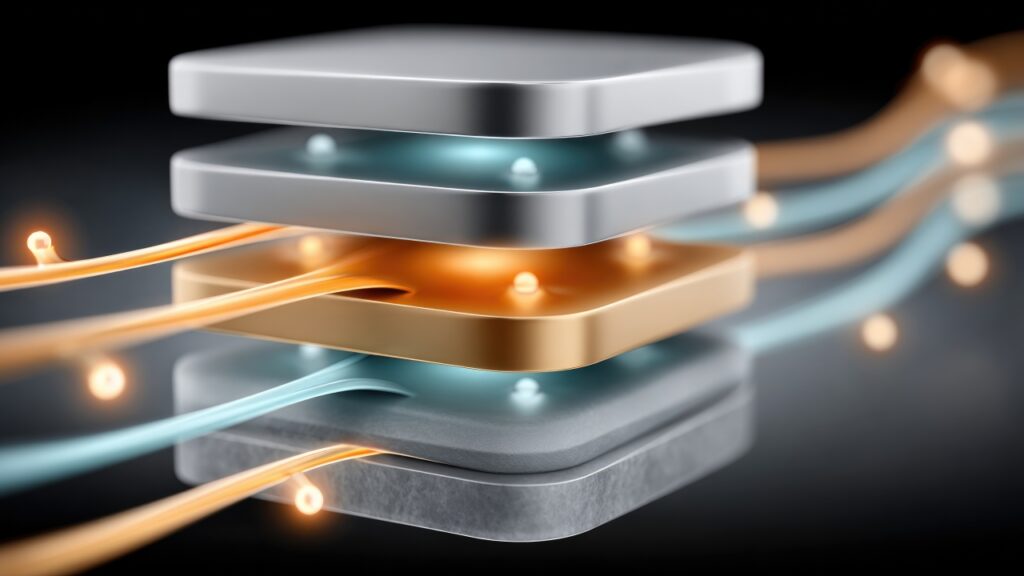
■ Look at Total Laminate Thickness
What the customer wants is not only the information
“this film is 50 μm.”
In actual products,
protective film,
adhesive,
TIM,
and insulating material
are stacked.
That is why it is necessary to look at
what the final laminate thickness is.
Thinning should be considered not for a single material, but for the entire laminate structure.
■ Thinning Raises the Value of Combining Functions
If multiple components are applied separately,
each component needs a liner,
alignment is needed,
and processes increase.
So
graphite + insulation + adhesive
and so on are integrated.
This way,
total processes can be reduced,
and positional accuracy can be increased.
That is the possibility.
In other words, the thinner the components, the greater the value of combining functions and high-precision lamination.
■ However, Combining Too Much Makes It Thicker
Functions are added.
Insulating layers,
adhesive layers,
and protective layers
are increased.
Then it gets thicker.
It moves away from the goal of making things thinner.
That is why designs such as
keeping only necessary functions
and placing them partially
are needed.
In other words, in thin-film composite components, reducing unnecessary layers is also important, rather than adding functions.
■ Partial Lamination Becomes Effective
Adhesive is not necessarily needed over the entire surface.
Insulating film is not necessarily needed over the entire surface.
Placing them only where needed may reduce
thickness,
weight,
and thermal resistance.
In other words, in thin-film processing, processing that places functions partially has value.
■ Smartphones Become "an Assembly of Thin Films"
Looking inside a smartphone,
heat dissipation,
insulation,
EMI,
waterproofing,
and fixing
are largely handled by thin films, foils and adhesives.
Each one is tens of μm.
But their accumulation establishes product functions.
In other words, in smart devices, film materials themselves have become part of the structural components.
■ Wearables Also Need Flexibility
Being thin alone is not enough.
It must
follow the body,
bend,
and deform repeatedly.
In this case, ease of bending changes depending on
material thickness,
laminate composition,
and adhesive hardness.
In other words, in wearables, thinning and flexibility must be considered as a set.
■ In Medical Devices, It Also Connects to Wearability
Devices attached to patients for long periods.
If they are thick,
hard,
or heavy,
wearing comfort worsens.
Thinning can make them
lighter,
softer,
and reduce discomfort.
In other words, thin-film processing connects not only to thermal performance, but also to product design that people can keep using.
■ EV Insulating Components Require Large-Area Thin Films
Around
battery cases,
cells,
and busbars,
large-area insulating films are sometimes used.
Large, thin materials are difficult in terms of
wrinkles,
warping,
dimensional change,
and transport.
In other words, in EVs, large-area thin-film processing is important in a sense different from microfabrication.
■ With Large Areas, Deviations of Several mm Tend to Occur
Small films are easy to align.
As they get larger, to 500 mm or 1,000 mm,
edge positions tend to change due to
material elongation,
tension differences,
and temperature and humidity.
In other words, with large-area thin films, it is necessary to look not only at local accuracy, but
at the dimensional stability of the entire surface.
■ In Aerospace, Thinning Directly Leads to Weight Reduction
In spacecraft and aircraft, weight constraints are strict.
Thin-film insulation,
metal foil,
graphite,
and insulating materials
are used only where needed.
This keeps weight down while maintaining function.
In other words, thin-film processing can also be an important foundational technology in aerospace.
■ Thin Films Are Also Susceptible to Thermal Cycling
A thin-film material is bonded to a dissimilar material.
The temperature rises.
Stress is applied due to expansion differences.
Because it is thin, it deforms.
The temperature drops.
It returns again.
This repetition may cause
delamination,
cracks,
and warping.
In other words, thin-film components need not only initial shape but also long-term dimensional stability.
■ Static Electricity Becomes a Major Problem
Thin films are light.
That is why they are susceptible to static electricity.
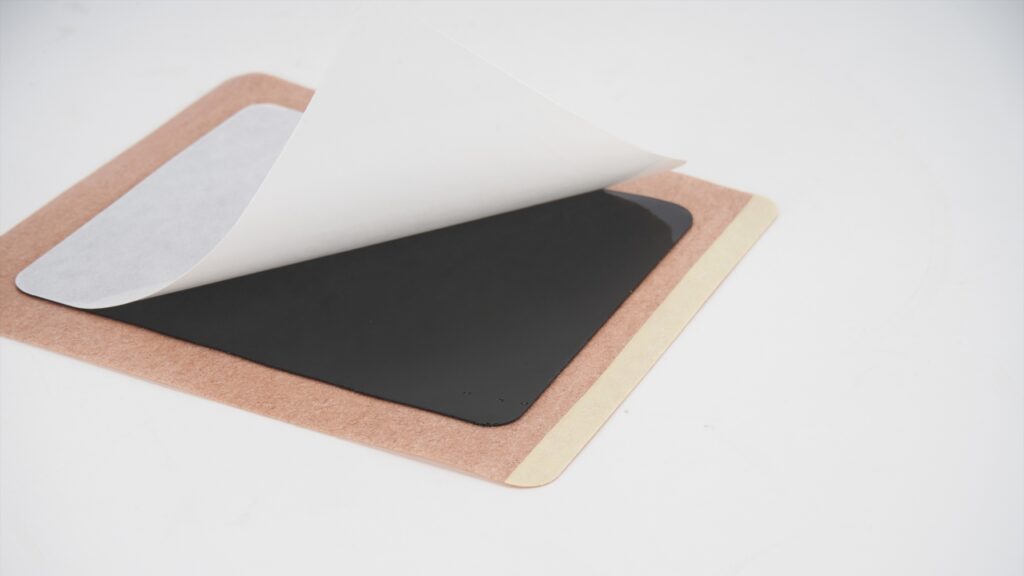
The moment it is peeled from the liner,
it sticks somewhere else,
sticks to the suction head,
or attracts foreign matter.
Such things happen.
In other words, in thin-film volume production, static electricity countermeasures can become transport quality itself.
■ It Does Not End with Static Elimination
Just installing a static eliminator
is not necessarily enough.
The amount of charge changes depending on
material,
humidity,
peeling speed,
and contact materials.
That is why it is necessary to look at
where in the process charging occurs
and where to eliminate it.
In thin-film processing, static electricity is also part of process design.
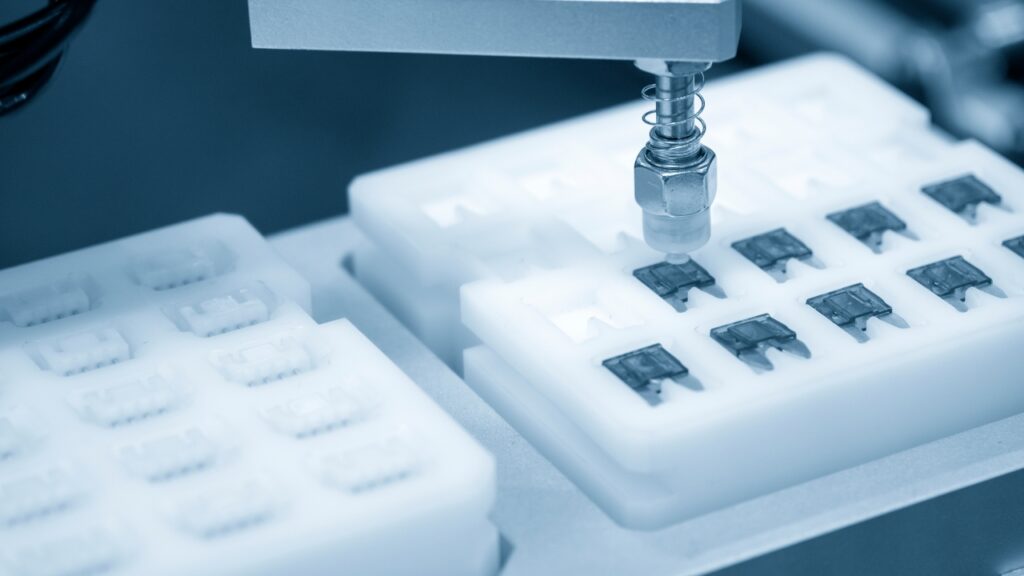
■ Thin-Film Components Are Hard to Pick Up by Automatic Suction
With vacuum suction, they may
sag,
be pulled into the suction holes,
and warp.
Also, with small films, the suction area itself is small.
That is why methods such as
transporting together with the carrier,
devising the suction head,
and applying right after peeling
are considered.
In other words, thin-film processing has high value when designed together with automation.
■ Good Compatibility with Reel Supply
If thin-film components are separated into loose pieces one by one,
static electricity,
deformation,
loss,
and mixed front/back orientation
are likely to occur.
If held at fixed positions on a reel,
it is easier to maintain shape
and easier to supply continuously to equipment.
In other words, for thin-film components, reel supply can have great value.
■ Also Consider Winding Set from Reels
Being thin does not mean anything can be wound onto small-diameter reels.
With
graphite,
metal foil laminates,
and multilayer films,
if the winding diameter is too small, a bending set may remain.
That is why
reel diameter,
winding tension,
and layer composition
must also be considered.
In other words, the supply format affects final flatness.
■ Thinning Also Makes Inspection Difficult
On thin films,
scratches,
wrinkles,
foreign matter,
and chips
are hard to see.
With transparent materials, it is even more difficult.
That is why
lighting,
background,
and image inspection conditions
must be devised.
In other words, in thin-film processing, processing technology and inspection technology must be created at the same time.
■ Transparent Films Are Especially Difficult to Inspect
With transparent insulating films,
outer shape,
scratches,
and foreign matter
are hard to see under ordinary lighting.
But in insulation applications, even small defects can be important.
That is why
oblique light,
transmitted light,
background color,
and so on are used selectively.
In other words, inspection methods must also be changed depending on material properties.
■ In Thin Films, the Height of Foreign Matter Has Great Meaning
Suppose film thickness is 50 μm
and foreign matter is 30 μm.
The foreign matter is equivalent to 60% of the film thickness.
Foreign matter that could be ignored with thick components becomes a large step with thin films.
As a result, it may lead to
lifting,
local pressure,
and dielectric breakdown.
In other words, the thinner it gets, the higher the requirements for cleanliness.
■ Failure Example: Making the TIM Thinner Caused Loss of Contact
To lower thermal resistance, the TIM was changed from 0.5 mm to 0.2 mm.
The material alone was thermally advantageous.
But the mating part had 0.3 mm of warping.
As a result, part of it no longer made contact.
The temperature actually rose.
In other words, this is an example where
thinning broke the interface contact.
■ Failure Example: Making the Insulating Film Thinner Made Burrs an Issue
To improve thermal performance, the insulating film was made thinner.
Initial evaluation was good.
But insulation failures occurred in some units in volume production.
On investigation, the cause was tiny burrs on the edges of the metal foil.
Protrusions that could be absorbed by the thick film became a problem with thinning.
In other words, thinning raised the quality requirements for another process.
■ Failure Example: Thin Graphite Was Adopted but Could Not Be Applied Automatically
To make the product thinner, it was changed to thinner graphite.
It was ideal from a product design standpoint.
But it bent when peeled from the liner.
It deformed under suction.
The application position was not stable.
As a result, the volume production process needed to be changed.
In other words, the optimal thickness within the product and the optimal thickness in the volume production process were different.
■ Failure Example: Thinning Increased Wrinkles
The insulating film was made thinner to reduce weight.
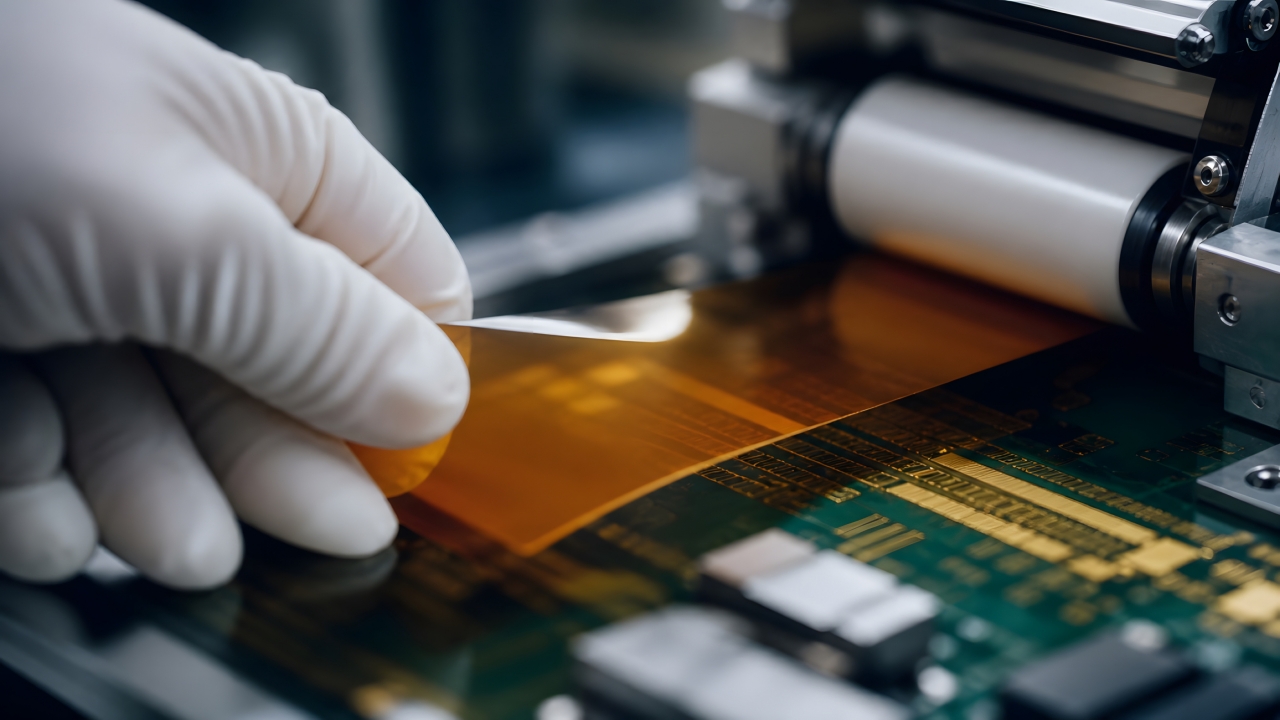
But in the lamination process, the same tension and roller conditions as before were used.
Wrinkles increased.
In other words, processing conditions were not reviewed in response to the material change.
In thinning, it is necessary to think of material change = process condition change.
■ Failure Example: Each Sheet Was Made Thinner Without Looking at Total Thickness
Each component was made slightly thinner.
But an adhesive layer was added to compensate for insufficient fixing strength.
A film was added for protection.
In the end, it became thicker than before.
In other words, only thinning of individual materials was pursued, and the entire laminate structure was not looked at.
■ The Researcher's Perspective: Thinning Is Not Just "Reducing Thickness"
When thinned,
thermal resistance,
rigidity,
heat capacity,
electrical insulation,
bending characteristics,
and stress
all change.
In other words, thickness is not just a dimension.
It is a design parameter that changes many physical properties at once.
That is why the decision to make something thinner should not be made based on just one performance aspect.
■ The Shop-Floor Perspective: When Making It Thinner, Reset the Process Conditions Once
The material thickness was halved.
The outer shape is the same.
So the same processing conditions are fine.
That is not necessarily so.
Tension,
blades,
feed speed,
roller pressure,
static electricity,
and suction
are all reviewed.
For the processing floor, thinning can be a change close to a different material.
■ In Thin-Film Processing, Consider Volume Production from the Prototyping Stage
It can be applied by hand.
It can be handled with tweezers.
But volume production uses automatic machines.
If so, from the start, consider
liners,
carriers,
reels,
suction,
and application methods.
In other words, for thin-film components, it is necessary to design not only the final shape but also its form during the process.
■ OTIS's Perspective: Thin-Film Processing Is a Technology for "Making It Handleable While Protecting Material Performance"
For OTIS, thin-film processing is not just a matter of
being able to cut thin films.
Thin TIM,
graphite,
insulating film,
metal foil,
and adhesive
are processed into the required shape
without stretching,
without tearing,
without wrinkling,
and without shifting position.
Furthermore,
laminating,
holding on the liner,
reel supply,
and inspection
are carried out.
In other words, thin-film processing is a technology that maintains the thinness of high-performance materials even in volume production processes.
■ "Making Thin Materials" Is the Job of Material Manufacturers
Material manufacturers develop
10 μm films,
thin graphite,
thin adhesives,
and thin metal foils.
OTIS, without destroying that thinness,
processes them into the required shape,
laminates multiple materials,
and makes them into a supply format the customer can use.
In other words, material manufacturers create thinness, and OTIS makes thinness usable.
This is the division of roles.
■ Thinning Consultations Are Worth Getting Involved in Before Processing
A customer consults:
“We want to go from 100 μm to 50 μm.”
Here, rather than simply saying
we can process it,
check
warping,
tension,
transport,
automatic application,
and insulation margin.
In some cases, a proposal such as
70 μm gives a better balance of mass producibility and function
is also possible.
In other words, OTIS’s value lies not in processing to the thinnest, but in establishing the optimal thickness in volume production.
■ Combining Thinning with Partial Processing
Sometimes the entire surface does not need to be thin.
We want to make only a certain part thinner.
We want to eliminate adhesive in only some areas.
We want to place metal foil only where needed.
Such partial designs can optimize
heat,
weight,
and thickness.
In other words, thin-film processing gains value when combined with partial lamination and irregular-shape processing.
■ What OTIS Can Do
At OTIS, by combining
● Thin film processing
● Thin TIM processing
● Graphite processing
● Copper foil and aluminum foil processing
● Insulating film processing
● Thin adhesive processing
● High-precision die-cutting
● Microfabrication
● Half-cutting
● High-precision lamination
● Partial lamination
● Lamination of dissimilar materials
● Tension control
● Carrier design
● Reel-to-reel processing
● Supply formats for automatic application
● Image inspection
● Foreign matter and appearance control
● Development from prototyping to volume production conditions
and more, we can process thin-film functional materials into components usable in volume production.
■ Outside OTIS's Expertise
OTIS is not a company that specializes in
● Film formation of film materials themselves
● Development of graphite raw materials themselves
● Formulation development of adhesives themselves
● Rolling production of metal foil itself
These are the domain of material manufacturers.
What OTIS takes on is the area of turning thin-film materials into shapes, laminates and supply formats that can be built into products.
■ Summary: Thin-Film Processing Is "a Technology for Maintaining Thinness"
Making it thinner
makes it easier to lower thermal resistance,
makes it lighter,
allows miniaturization,
and increases space inside the product.
But making it thinner increases problems:
stretching,
wrinkling,
warping,
tearing,
moving due to static electricity,
difficulty with suction,
and difficulty with application.
In other words, between making thin-film materials
and using thin-film materials in volume production
there is a large technological gap.
Even with high-performance thin-film materials, if
they stretch during processing,
warp when laminated,
cannot be handled by automatic machines,
or deform before reaching the customer,
that thinness cannot be turned into product performance.
That is why what matters in thin-film processing is
not cutting the thinnest.
Mass-producing the required thinness while maintaining shape, flatness, cleanliness and positional accuracy.
High-performance materials of tens of μm made by material manufacturers.
Without destroying that thinness,
turning them into the required shape,
stacking them with other materials,
and making them handleable automatically.
This is where the role of processing companies lies.
The thinner products get, the thinner the materials processing companies handle.
And the thinner materials get, the presence of processing does not become smaller.
Rather, it becomes larger.
Turning the material performance of “thin” into the product performance of “usable.”
That is the value of thin-film processing at OTIS.
Column Supervisor: Koji Kakumoto (President, OTIS Co., Ltd.)
After studying abroad and working in planning and development at a trading company, he joined OTIS Co., Ltd. in 2011. While primarily working in the Corporate Planning Department, he has also served concurrently in manufacturing and technical divisions, and since 2018 has served as President, working to drive business growth and strengthen the organization.
This article is a general technical explanation intended for educational purposes and does not refer to any specific company, product, or technology.